




- We were always Ek Bharat, Ek Sanskriti
- CM sips tea, shares heartwarming moments
- Hundreds of Umrah pilgrims await refunds after flight cancellations
- HC rules Maha police notice to state tobacco firms illegal
- FM releases book ‘‘Village Boy to Global Rice Techie’’
- Outstation fuel tankers barred to ease traffic congestion
- HYDRAA clears encroachments, reclaims 2 parks in RR, Medchal
- Eight lakh devotees visit Hassanamba temple; revenue touches Rs 6.5 crore
IMCT audits kharif 2026 drought in Nandyal
In Short
Team inspects damaged maize, red gram, onion, and cotton crops

Share :
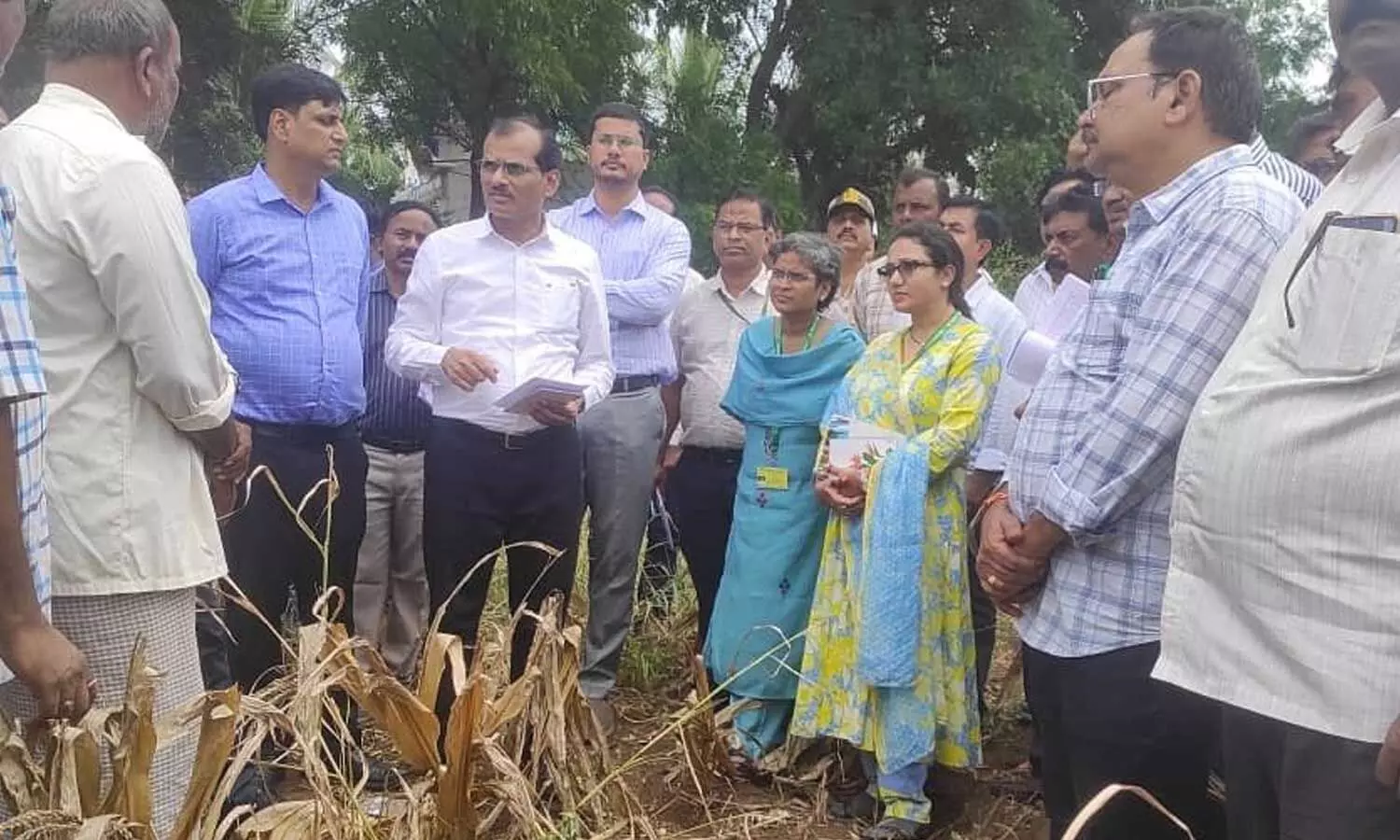
Central Inter-Ministerial Team touring drought-affected villages in Nandikotkur, Jupadubunglow and Pamulapadu mandals of Nandyal district on Tuesday
Nandyal: A Central Inter-Ministerial Team (IMCT) toured drought-affected villages across Nandikotkur, Jupadubunglow, and Pamulapadu mandals in Nandyal district on Tuesday to conduct a field assessment of severe Kharif-2026 crop losses.
The delegation inspected agricultural fields where standing crops of maize, red gram, cotton, onion, and soybean suffered extensive damage due to acute rainfall deficits. Interacting directly with farmers in Mandlem and Tarturu villages of Jupadubunglow mandal, team members inquired about cultivation expenditures, weather conditions, and yield destruction.
The IMCT later visited Krishna Rao Peta and Rudravaram villages in Pamulapadu mandal to assess withered cotton fields, before proceeding to Yerraguduru to inspect dried-up soybean crops. The team also conducted an on-site review of the SRMC canal, where irrigation officials briefed them on canal water availability, supply distribution, and challenges facing ayacut farmers.
Subsequently, accompanied by Nandyal District Collector G Rajakumari, the central team inspected a comprehensive photo exhibition arranged at the Forest Guest House in Atmakur. The display featured photographic evidence, media clippings, and departmental documentations highlighting ground-level rural distress, depleted groundwater tables, dried-up borewells, and drinking water shortages. Displays also featured relief interventions by Agriculture, Horticulture, Animal Husbandry, and VB–G RAM departments.
Concluding the assessment, central team members stated that the field observations, statistical data, and farmer interactions gathered across Nandyal district will be compiled into a detailed report and submitted to the Union Government to determine central financial relief allocations.
Telangana home to whopping 2-lakh belt shops
TG looks to expedite Tummidihetti plans
Now, basmati cheaper than Sona Masuri as rice prices soar
Don’t ignore fossil fuels while promoting clean energy
Dark money on Dalal Street: The court shuts the door on sunlight
The larger the number of devotees, bigger the need for a strong security cover


