




- Pak politicians funding campaign against SIR: Min
- Congress conspiring to finish Siddaramaiah politically: Kumaraswamy
- Bhatti bats for full utilisation of Central scheme funds by state
- Paid holiday tomorrow for MPTC and ZPTC elections
- NDA sweeps Kalyandurg civic polls
- IMCT audits kharif 2026 drought in Nandyal
- BJP wins Tirupati ward 52
- NDA poised to win NMC, Atmakur and Buchireddypalem
Dark money on Dalal Street: The court shuts the door on sunlight
In Short
The Supreme Court disposes of Mahua Moitra’s plea demanding public disclosure of foreign fund owners, citing the lack of a legal framework for Article 32 relief.

Share :
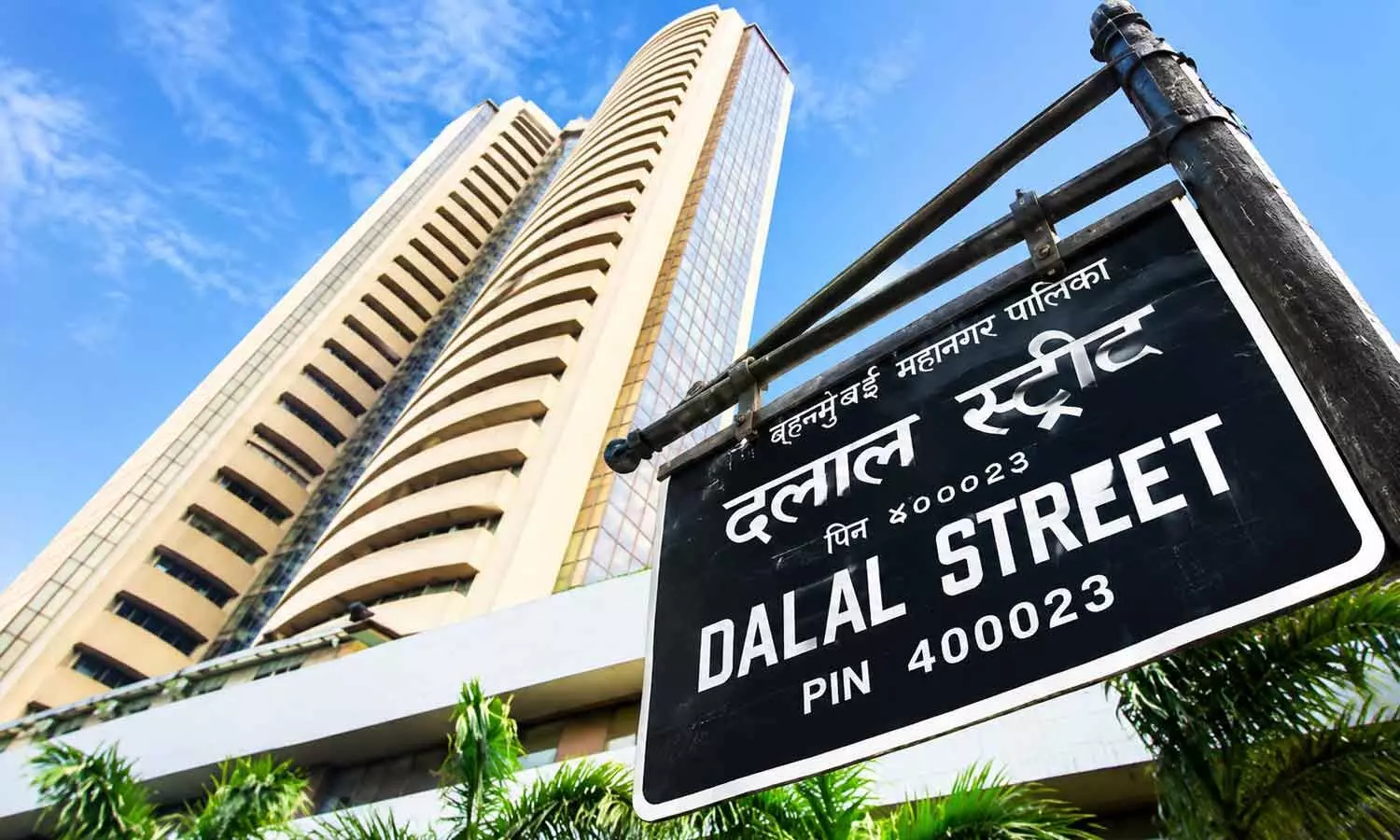
Dark money on Dalal Street: The court shuts the door on sunlight
The Supreme Court has said no.
It will not force SEBI to reveal the real owners behind foreign investment funds. The bench disposed of the petition. The judges were Justice B V Nagarathna, Justice R Mahadevan and Justice D K Upadhyaya. The petitioner was Mahua Moitra, who is a Trinamool Congress MP. Her lawyer was Prashant Bhushan. They wanted full public disclosure. The court refused.
This is not a small matter. It touches the health of our stock markets. It touches the safety of every retail investor. The court’s reasoning was simple. There is no law that forces public disclosure. So, the court cannot create one.
But should that be the end of the story? No. The concerns raised by Bhushan are real. They deserve a hearing. They deserve action.
The core worry
Bhushan argued one central point. Foreign money pours into Indian companies. It comes through alternative investment funds and foreign portfolio investors. But we do not know who the real people are. The ultimate beneficial owners remain hidden.
This creates a dark space. In that dark space, manipulation can grow. Bhushan said there is a lot of suspicion today. Stock markets may be manipulated by companies that invest huge sums. We cannot see who they are. We cannot know if they break SEBI rules.
He gave a sharp example. Promoters of a company can buy shares through hidden foreign entities. They can boost the price. The public sees the price rising. Brokers tell small investors to jump in. The small investor does not know the truth. He does not know that the promoter himself is driving the price up. If he knew, he would not buy. Later, the price may crash. The retail investor is left holding the loss.
This is not a wild theory. Bhushan cited the expert committee in the Adani-Hindenburg matter. That committee noted the danger. The requirement for disclosure existed before 2018. Then it was removed. Now only the Prevention of Money Laundering Act applies. That is not enough. The regulatory framework has become weaker.
The right to know
Bhushan took his argument further. Information is a fundamental right. Citizens have a right to know who owns what. Many countries already demand public disclosure of beneficial owners. India should not be found lagging.
He cited past Supreme Court judgments. In the ADR case, the court forced election candidates to reveal their assets, liabilities, criminal records and education. There was no existing law then. The court still acted. In the PUCL case, similar principles were upheld. Bhushan said the court could do it again. He said he could produce a dozen such judgments.
He also asked a direct question. How does privacy trump the right of citizens to know who is investing money? Mere disclosure cannot hurt anybody.
The bench was unmoved. It said this prayer needed an existing legal framework. Under Article 32, it could not create one from thin air.
The government’s fear
Solicitor General Tushar Mehta opposed the plea fiercely. He said relief would harm the national economy. He asked if the petitioner wanted to destroy it. He called the impact “devastating.” He argued that investors are smart. He said they wake up at 3 am to study the market. They do not need protection. Justice Nagarathna also observed that investors are not naive.
Bhushan disagreed. He said ordinary investors are very naive. Even major investors cannot see hidden hands behind foreign funds. How can information be devastating, he wondered. Transparency only informs people. It shows who is unnaturally boosting prices. It protects the small investor from fraud.
Mehta also alleged a hidden motive. He said the petitioner wanted to stop foreign investment from coming to India. Bhushan denied this. He said mere disclosure cannot hurt anyone.
The court’s dilemma
The bench faced a genuine dilemma. Justice Nagarathna acknowledged two things. Greater transparency could bring something good. But the absence of any existing regime made it a herculean task to grant the prayer. She asked a valid question. If there is no policy at all, can the court issue a mandamus to create one?
The court also noted Bhushan’s earlier step. He had made a representation to SEBI. He had challenged SEBI’s reply. The reply showed that disclosures are made to SEBI and custodians. That enables regulation. But there is no legal framework for public disclosure of entity-wise investments. Therefore, under Article 32, the court cannot direct it. The writ petition was disposed of.
The bench left a small window open. It said the respondents should consider the matter in light of the hearing. But it issued no direction. It passed no order forcing change.
A missed opportunity
This is deeply disappointing. The court is not wrong as regards law. The writ of mandamus usually enforces an existing right. It does not create a new regime. But the Supreme Court has stretched before. It has created a law where Parliament slept. It has done so to protect democracy. It has done so to protect the voter. Why can’t it do so to protect the investor?
The stock market runs on trust. When foreign money enters through black boxes, trust cracks. When a promoter can hide behind an AIF or an FPI, the playing field tilts. The retail investor becomes prey. He is not naive because he is foolish. He is naive because he lacks information. No amount of waking up at 3 am can reveal a name that SEBI itself does not make public.
The government says disclosure will scare away foreign capital. Bhushan called this out. He said the implication would be no worse than before 2018. Disclosure was required then. The economy did not collapse. Investment did not flee. The expert committee recommended bringing it back. Yet the government resists.
The court had a chance to nudge the nation toward cleaner markets. It chose caution over courage.
Balance and the path ahead
To be fair, the court’s caution has roots. Judicial overreach is a real danger. Judges should not write financial laws. That is the job of Parliament and SEBI. Creating a full public disclosure regime involves complex choices. What exactly must be revealed? At what threshold? How to balance privacy? These are all policy questions.
The court could have issued a narrower direction. It could have asked SEBI to frame regulations within a fixed time. It could have tested the privacy claim against the fundamental right to information. Instead, it simply closed the file. These fears are not baseless. But they are not strong enough to justify opacity.
The real fight
The fight is not over. Bhushan has shone a light on a dark corner. He has shown how removal of the 2018 disclosure rule hurt India. He has shown that the Adani-Hindenburg committee agreed with him. He has shown that retail investors need shields, not slogans.
Now the ball is in SEBI’s court. It is in Parliament’s court. They must ask a simple question. If disclosure was fine before 2018, why is it dangerous now? If foreign investors have nothing to hide, why fear the sun? If our markets are clean, why not prove it?
Justice should not stop at the courtroom door. The Supreme Court has spoken. Its word is final on this petition. But its word need not be final on the issue. The people who trade in India’s future deserve to know who owns India’s present. Transparency is not devastation. It is the foundation of every honest market. Let the law change. Let SEBI act. Let the names come out. Until then, the small investor remains in the dark. And darkness is where fraud thrives.
(The writer is with the Cholleti BlackRobe Chambers, Hyderabad, and writes on the economy, politics and law.)
Telangana home to whopping 2-lakh belt shops
TG looks to expedite Tummidihetti plans
Now, basmati cheaper than Sona Masuri as rice prices soar
Don’t ignore fossil fuels while promoting clean energy
Dark money on Dalal Street: The court shuts the door on sunlight
The larger the number of devotees, bigger the need for a strong security cover


