




Don’t ignore fossil fuels while promoting clean energy
In Short
PM Narendra Modi highlights India’s clean energy progress at the Bharat Renewable Energy Summit, emphasizing the need to balance renewable expansion with crude refining strength and import resilience.

Share :
Don’t ignore fossil fuels while promoting clean energy
Prime Minister Narendra Modi has underlined an important national feat attained in the last few years: India’s success in producing clean energy has provided it a cushion against the oil shocks emanating from the perpetually tense West Asia. Speaking at the inauguration of the Bharat Renewable Energy Summit in Delhi on Monday, the Prime Minister said the ongoing energy crisis had underscored the link between energy security and economic security: “This global crisis has given every country a clear message that energy security is directly linked to economic security.
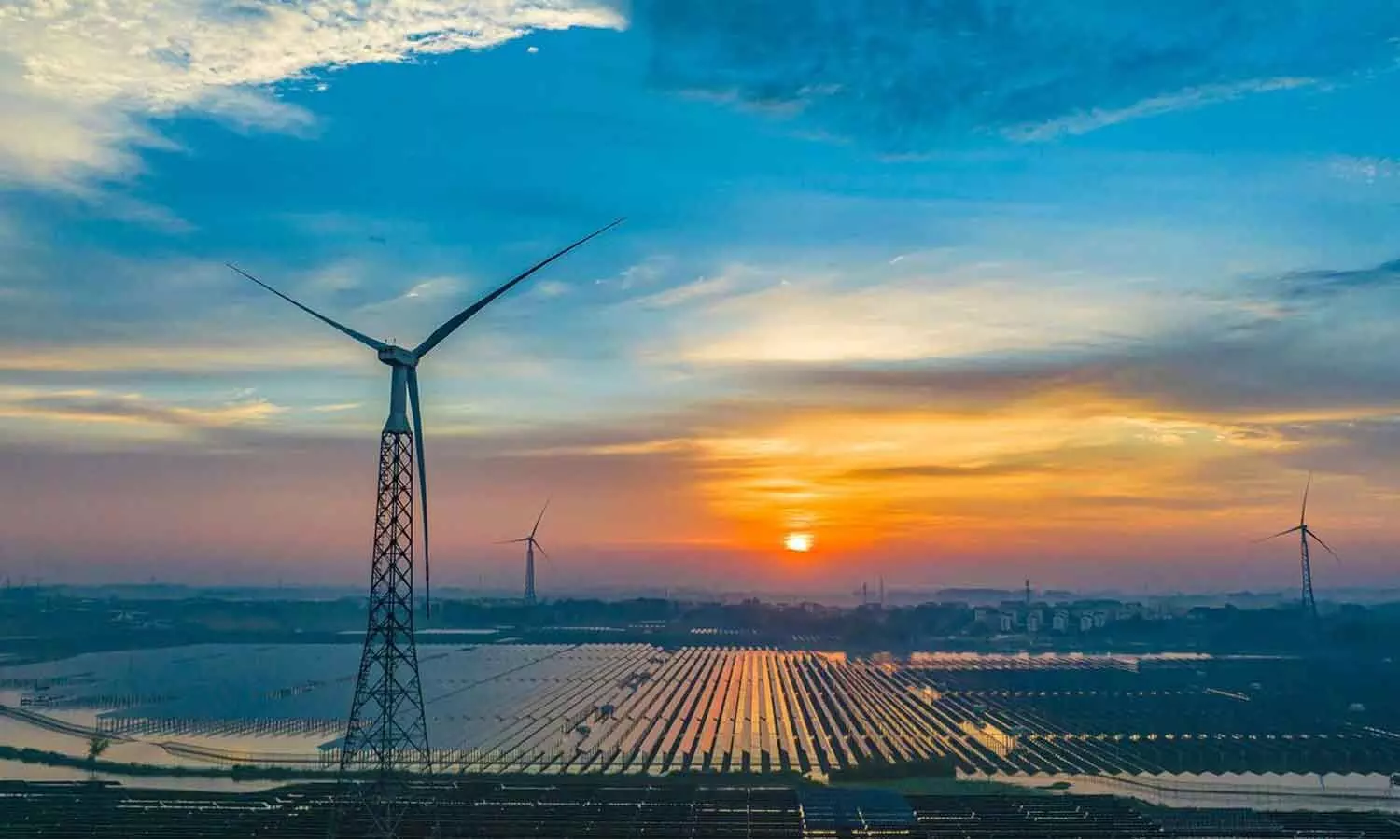
If we continue to remain too dependent on fossil fuels, the global economy will often be disrupted.” Today, more than 50 per cent of our installed power capacity is based on non-fossil sources, he said, adding that India is among the top three countries in the world in solar and renewable energy. India has also been able to attract over Rs 15 lakh crore in the sector over the past decade, including Rs six lakh crore in the last two years.
However, India’s achievements on the clean energy front are not impressive enough to divert our attention from a big pain point: almost 90 per cent dependence on imported oil. While the country has made progress in terms of energy access and supply diversification, it stays vulnerable to the vagaries in the availability of crude oil, LNG, LPG, and coal. The recent war in Iran also exposed the problems that can arise when key shipping routes face attacks. This adversely affects not just fuel and cooking prices but also fertiliser subsidies, industrial competitiveness, general inflation, and trade deficit. While working on a transition plan from fossil fuels to clean energy, we must not lose sight of the importance of conventional energy sources.
The transition will neither be immediate nor seamless, and India cannot afford to compromise its energy security in pursuit of its environmental goals. Even as renewable energy capacity expands, oil and gas will remain indispensable to transportation, petrochemicals, manufacturing, and several other critical sectors for years to come. The challenge is to reduce import dependence, strengthen domestic capabilities, and make the existing supply chain more resilient.
In this context, the Reliance Group’s refining prowess, which has been widely recognised, including by the US President Donald Trump, can stand India in good stead. Its Jamnagar complex, among the world’s largest refining hubs, demonstrates the country’s ability to develop globally competitive energy infrastructure. Such capabilities are particularly important during periods of geopolitical turbulence, when access to crude oil, refining capacity and the ability to process different grades of crude can determine the security of supplies. India must leverage this industrial strength to enhance its capacity to refine crude from diverse sources, export value-added petroleum products and build strategic flexibility.
The government should also encourage greater private-sector participation in oil exploration, refining, storage, and distribution. This requires a predictable regulatory environment, rational taxation and freedom from arbitrary policy interventions. Equally important is the creation of adequate strategic petroleum reserves and infrastructure for storing natural gas and other essential fuels. Diversifying import sources is useful, but it cannot substitute for building domestic capabilities. Ultimately, energy security is about having choices when international markets become unreliable and supply chains are disrupted.
Telangana home to whopping 2-lakh belt shops
TG looks to expedite Tummidihetti plans
Now, basmati cheaper than Sona Masuri as rice prices soar
Don’t ignore fossil fuels while promoting clean energy
Dark money on Dalal Street: The court shuts the door on sunlight
The larger the number of devotees, bigger the need for a strong security cover


