






- Advance plan to supply water for rabi
- TDP sweeps all 16 MPP posts in NTR district
- TDP factional rivalry surfaces at Vice-MPP election
- VMC turns plastic waste into useful products
- Women drone pilots transforming India’s agricultural landscape
- Fire breaks out on Pacifica Hillcrest Apartments; no casualties reported
- AICC appoints Simon Alex Saran as Secy for Telangana
- Bengal govt initiates preparation for 2027-28 state budget, sets Nov 23 deadline for proposals
Tribal farmers find hope in natural farming
In Short
- Fields cultivated without chemical fertilisers and pesticides in Y Ramavaram mandal have shown encouraging resilience during recent cyclonic disturbances
- The fields growing black gram, paddy and maize provided an encouraging picture

Share :
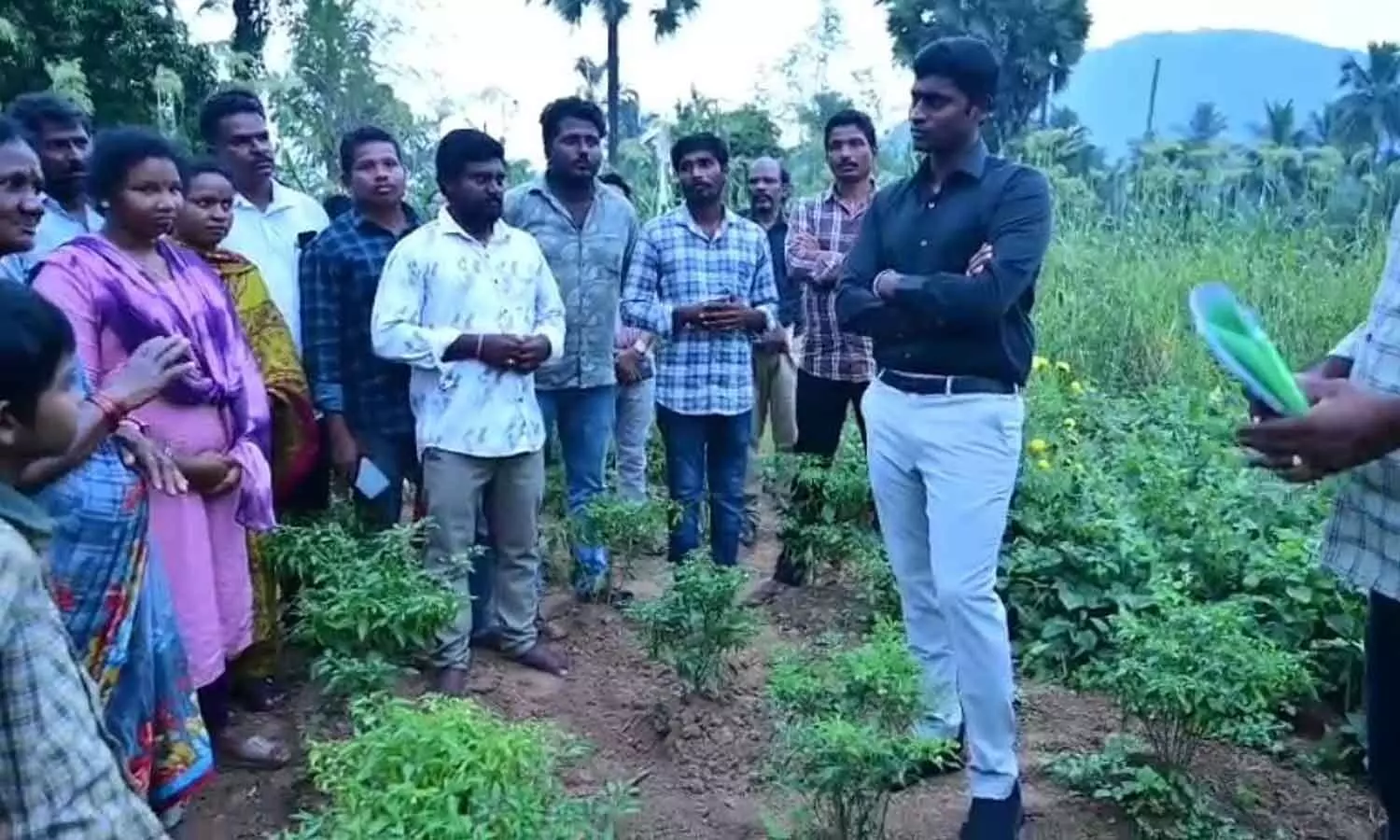
District collector K Dinesh Kumar interacting with tribal farmers during his assessment of the fields in Chavitidibbalu village of Y Ramavaram mandal
Y Ramavaram (Polavaram District): As extreme weather conditions, heavy rains and cyclones increasingly threaten agriculture, natural farming is emerging as a promising alternative for farmers in the tribal areas of Polavaram district. Fields cultivated without chemical fertilisers and pesticides in Y Ramavaram mandal have shown encouraging resilience during recent cyclonic disturbances, raising hopes that traditional farming practices could offer a measure of protection against climate uncertainties.
The experience of farmers in Kanathalabandha and Chavitidibbalu villages is particularly noteworthy. While successive weather disturbances, including Cyclone Arnab and Murusu affected agricultural activities in the region, crops raised through natural farming methods remained relatively healthy, with no significant damage reported.
“Natural farming crops are effectively withstanding even adverse weather conditions,” district collector K Dinesh Kumar observed during his assessment of the fields. He said the improved stability of crops cultivated without chemical fertilisers and pesticides demonstrated the importance of encouraging farmers to adopt natural farming practices.
The fields growing black gram, paddy and maize provided an encouraging picture. Farmers told the collector that instead of depending on chemical inputs, they were preparing and using botanical extracts, natural solutions and other formulations from locally available resources. Despite the impact of two recent cyclones, their crops had remained stable and were in a condition to provide good yields. DPM of Natural Farming Roben Sudarshan, ADA Savitri and others participated in the field visit.
For farmers in remote tribal villages, where cultivation costs and weather-related crop losses often put pressure on household incomes, such experiences carry considerable significance. Reducing dependence on purchased agricultural inputs, while maintaining soil health and crop quality could make farming more sustainable and economically manageable. During his visit, the collector inspected the BRC centre managed by Pujari Sirisha, where different natural farming products are prepared.
These include botanical extracts, liquid formulations, growth promoters and kitchen garden seeds.
Akvan Impact: Rough Seas Force 80 Andhra Fishermen to Take Shelter in Odisha
Modi to India Inc: Chart 10-Year Roadmap to Make India a Viksit Bharat by 2047
Akvan hurtling to Odisha coast
Gadkari asks engineers to come up with proper DPRs
CM Revanth Reddy urges Gadkari to green light TG’s multiple road devpt projects
Rumblings in Congress over Raj Gopal Reddy’s outbursts


