




- Vijay Deverakonda’s Ranabali Teaser Is Out
- Apple iPhone 18 Launch Event today: Where to watch it live
- 'Coming to the bathroom with me?': Vijayan loses control at media queries on ED move
- World Suicide Prevention Day 2026: History, Theme, Significance And Why September 10 Is Observed
- DMK fields Paranthamen, Suganya for Maduranthakam and Dharapuram bypolls in Tamil Nadu
- India Set to Take UPI and Digital Public Infrastructure Global
- Delhi: One dead, several injured in oxygen cylinder blast in Okhla
- Chennai corporation intensifies dengue surveillance after intermittent rain
Gold Appeal, Litmus Test For Modi's Economic Strategy
In Short
Prime Minister Narendra Modi’s appeal to reduce gold purchases, fuel consumption and unnecessary foreign travel has sparked political debate, raising questions about India’s economic strategy, energy security, gold imports and consumer behavior.

Share :
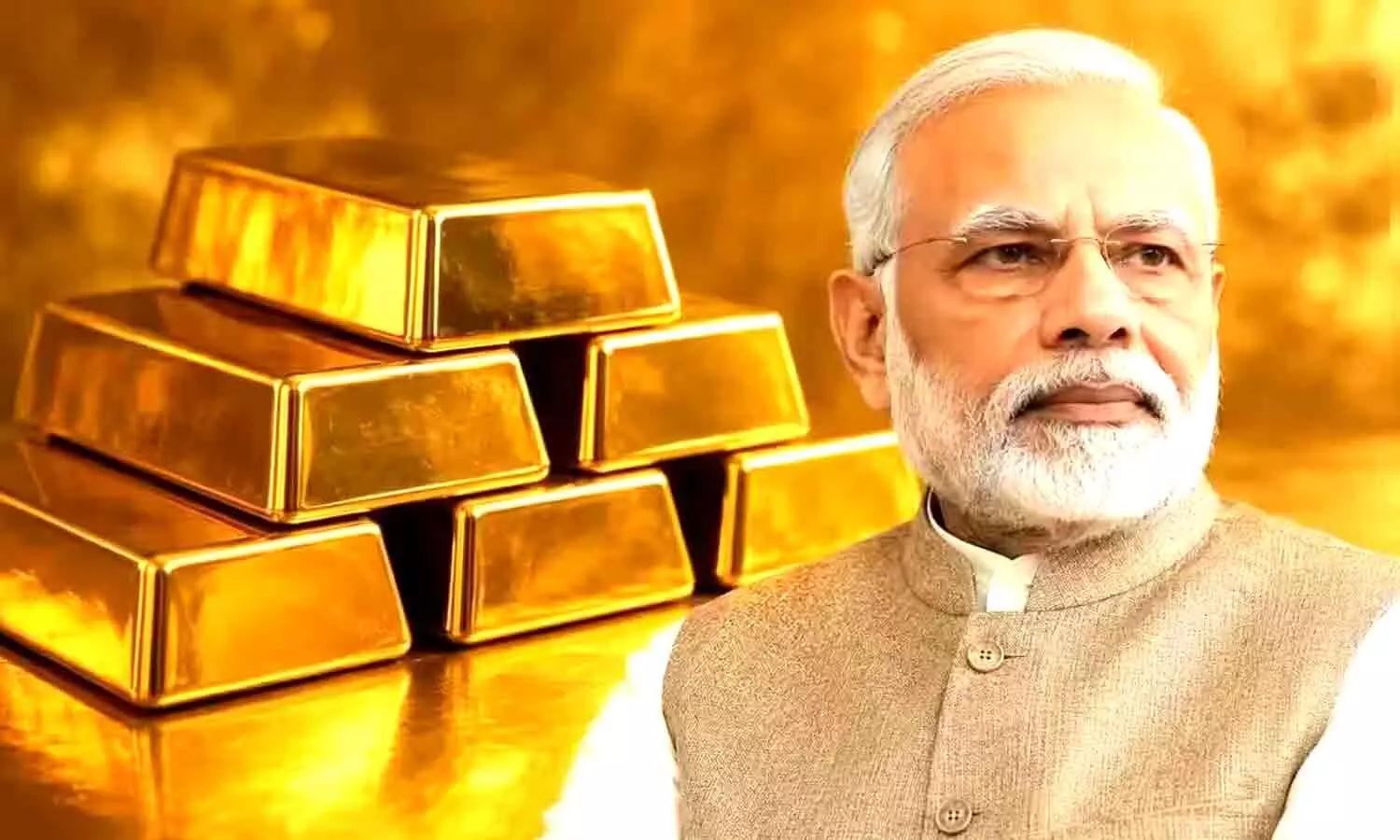
Gold Appeal, Litmus Test For Modi's Economic Strategy
New Delhi: Prime Minister Narendra Modi’s call to citizens to avoid buying gold, use less fuel and refrain from unnecessary foreign travel ahead of the festival season has triggered political debate, particularly among Opposition parties. The Congress and other Opposition parties argue that the NDA Government failed to adequately plan for strong energy-security measures and, instead of addressing these structural shortcomings, is now asking citizens to change their behaviour after the crisis has already emerged.
The Opposition argues that asking people to step away from jewellery purchases ahead of the festival season is insensitive, particularly because gold in India is viewed not merely as a commodity but as a form of savings, security and cultural sentiment. Instead of asking people to refrain from buying gold, they argue, the Government should take measures to address the structural causes of India’s economic vulnerability. In their view, short-term appeals cannot substitute for long-term policy.
The Government, on the other hand, maintains that India cannot control international oil prices or geopolitical conflicts. Asking citizens to conserve imported commodities during an external shock is not inherently unreasonable, nor is it the first time that a government has made such an appeal. Former Finance Minister P. Chidambaram had also made a similar appeal during the UPA regime.
The Opposition, however, sees the Prime Minister’s appeal as a potential political issue ahead of the Assembly elections in Uttar Pradesh, Uttarakhand, Himachal Pradesh and Punjab next year. They argue that any decline in gold sales could affect jewellers and merchant communities that have traditionally been regarded as part of the BJP’s support base. If the jewellery trade suffers a sustained decline in business, the Opposition believes it could create dissatisfaction among sections of these communities and potentially affect electoral sentiment.
However, a decline in jewellery sales does not automatically mean that jewellers or their customers will vote against the BJP. The political impact, if any, would depend on the scale and duration of the economic impact on the trade and how the issue is perceived by voters.
Modi appealed to people to refrain from buying gold because it is a major import item. International gold prices are exceptionally high amid the global economic and geopolitical crisis, requiring India to spend more foreign exchange to meet domestic demand. At the same time, India needs to manage its foreign-exchange requirements for essential imports such as crude oil, LPG and other commodities. The Prime Minister’s appeal, therefore, is aimed at encouraging consumers to postpone discretionary imports and reduce pressure on the country’s external account. At the ground level, however, gold imports have shown some decline.
The economic concern is the rising bullion import bill amid wars and global uncertainty. Higher international gold prices have increased the cost of meeting Indian demand, even as the volume of imports has declined. According to data reported by The Economic Times, India’s gold imports rose by more than 24 per cent to an all-time high of $71.98 billion in 2025–26. This occurred even as the volume imported fell by nearly 4.8 per cent to roughly 721 tonnes.
In other words, India bought less physical gold but paid a substantially higher dollar bill. Gold imports add to the demand for foreign exchange. A surge in festive buying can therefore widen the trade deficit and, depending on other external flows, add to pressure on the rupee.
The Opposition, on the other hand, criticises the Modi Government for failing to reduce India’s dependence on crude oil. It has also questioned the Government’s approach to oil imports from Russia, notwithstanding clarifications from the Centre regarding its energy-import policy.
The BJP and its NDA partners argue that Modi is asking citizens to make a voluntary economic sacrifice in the national interest. The Opposition, however, questions why citizens should be asked to make such sacrifices when the Government should also be addressing the structural vulnerabilities that make such appeals necessary.
It may be mentioned here that Indian households and religious institutions are estimated to hold around 20,000 to 25,000 tonnes of gold. This represents a substantial store of wealth, although much of it remains outside the formal financial system.
The BJP also points to Modi’s record of taking difficult decisions despite resistance from sections of his traditional support base. As Chief Minister of Gujarat, Modi implemented the Jyotigram Yojana, which separated agricultural power feeders from those supplying other rural consumers. The programme faced resistance from certain sections of the farming community but ultimately changed the way rural electricity was supplied.
As Prime Minister, his government introduced the Goods and Services Tax (GST), which brought significant changes to the indirect-tax system and created a more unified national market. The Government has also maintained that GST compliance has been steadily improving.
However, the comparison between such structural reforms and the current appeal to reduce gold purchases needs to be viewed with caution. GST and other reforms changed institutions, rules and incentives, whereas the gold appeal depends largely on voluntary consumer behaviour.
The Government has also attempted to encourage gold-linked financial investments as an alternative to physical gold. However, these efforts have had limited success in converting household gold into financial assets. A financial product linked to gold cannot fully replace jewellery, which serves cultural, emotional and practical purposes for Indian families.
Official sources argue that Modi’s appeal should not be viewed as a disruptive intervention. The Prime Minister is essentially asking consumers to give greater consideration to the national economic interest and help the country manage the pressures arising from the global crisis following the Iran-US conflict.
The larger question, however, is whether such an appeal can bring about a sustained change in consumer behaviour. While reducing discretionary gold purchases may provide some relief to the country’s foreign-exchange position, the long-term solution requires stronger financial alternatives, greater mobilisation of the gold already held within India and policies that address the country’s broader external vulnerabilities.
The Prime Minister’s appeal therefore represents more than a call to postpone gold purchases. It has opened a wider debate over the balance between individual consumption, cultural preferences, economic necessity and political sensitivity. Whether it becomes a meaningful economic intervention or remains a temporary appeal will ultimately depend on how consumers respond.
Gowriswari.
Flipkart Enters Food Delivery Business With ‘Eat In’ Service in Bengaluru
Delhi Plans PG Regulation Bill With Licences, Police Clearance And Public Registry
TTD releases booklet for Navaratri Brahmotsavams to be held from October 12-20
CNR Rao SIR Notice Highlights Need for Sensitivity Towards Senior Citizens
Arunachal Pradesh plays vital role in safeguarding India’s borders: V-P Radhakrishnan
AP SEC releases notification to finalise Polling Stations for MPTC and ZPTC polls


