




- Rains likely in parts of Telangana today and tomorrow
- Two students killed in MVSR Engg College Dandiya event mishap
- DGP Anand flags off rally for drug-free India
- Congress seeks TJS support for Graduate MLC elections
- 10 arrested in Rs 1.30 cr kidnap-for-ransom case
- Suspended inspector had amassed 2.8 cr assets
- Nalgonda pitted against MBNR on water issue
- Saddula Bathukamma: A floral celebration of Telangana’s culture and traditions
How Telangana Tourism is emerging as new growth engine for the state
In Short
Tourism has become an important part of economy, creating jobs and getting investments

Share :
How Telangana Tourism is emerging as new growth engine for the state
Ramakrishna Gollagari
Tourism is no longer just about leisure and travel. It has become an important part of the economy, creating jobs, raising incomes, attracting investment, improving infrastructure, earning foreign exchange and supporting development across different regions. It will serve as a new growth engine for Telangana.
Multiplier effects
It has wider economic multiplier effects: tourist spending creates demand not only for hotels and restaurants but also for transport, agriculture, handicrafts, retail, entertainment, construction, banking, insurance and a range of small businesses. The scale of tourism in India underscores its economic importance. India recorded 4.2855 billion domestic tourist visits in 2025 and 20.22 million international tourist arrivals (with 25.27 million foreign tourist visits) during this year. Tourism directly and indirectly supported approximately 84.6 million jobs during the 2023–24 fiscal cycle, while its overall contribution to India’s GDP stood at 5.22 per cent. These figures demonstrate that tourism continues to be a rapidly expanding component of India’s service economy, driven by an unprecedented surge in the domestic travel market.
The significance of tourism lies particularly in its employment-generating capacity. A tourist creates demand for accommodation, food, transport, guides, shopping, entertainment and local services. This creates both direct and indirect employment. Women, young people, artisans, small entrepreneurs and rural communities can participate in these tourism value chains. A hotel may employ workers directly, but its activities also generate demand for vegetables, milk, food products, transport, laundry, maintenance, handicrafts and other services. Tourism expenditure circulates through the wider economy and produces a bigger multiplier effect. Thus, there is an interrelationship between tourism and economic growth.
Tourism promotes infrastructure development. Roads, airports, railways, public transport, hotels, sanitation, drinking water, electricity, healthcare and digital connectivity are essential for attracting visitors. These facilities benefit local communities and improve the overall quality of life. Tourism produces a wider social return on infrastructure investment. Rural, tribal, eco-, spiritual and heritage tourism can further direct investment towards regions that have fewer economic opportunities, helping reduce regional disparities and excessive migration.
Tourism Development in Telangana
Since the formation of Telangana in 2014, tourism has gradually developed from a mainly Hyderabad-centred activity into a broader sector covering heritage, pilgrimage, eco-tourism, medical, rural and adventure tourism. The Telangana State Tourism Development Corporation (TGTDC) was incorporated in August 2014 to develop tourism infrastructure, hotels and resorts, tourist packages, wayside amenities and boating facilities. The growth in tourist arrivals during the pre-Covid period indicates this expansion. Domestic tourist arrivals increased from 7.2 crore in 2014 to 8.3 crore in 2019, while foreign tourist arrivals rose from about 75,000 to 3.23 lakh over the same period. Important investments have been made in tourist facilities, including Haritha hotels and resorts, wayside amenities, transport and water-based tourism.
However, the Telangana Tourism Policy 2025–30 notes that, despite substantial tourism potential, the state had not had a dedicated tourism policy since 2014. The new policy therefore represents an attempt to provide a more systematic framework for infrastructure, private investment, branding, skills and destination development.
Thus, the period since 2014 can be seen as one of institutional development, infrastructure expansion, diversification of destinations and post-pandemic recovery. The next challenge is to convert rising tourist numbers into greater local employment, private investment and incomes by developing integrated tourism circuits, improving connectivity and involving local communities, artisans, women and small businesses in the tourism value chain.
Telangana has considerable scope to use tourism as an instrument of economic diversification and regional development. Official Ministry of Tourism data show that Telangana recorded 58.45 million domestic tourist visits and 160,912 foreign tourist visits in 2023. Foreign tourist visits were provisionally estimated at 155,313 in 2024, indicating that international tourism remained relatively modest compared with the state’s huge domestic market. The figures suggest that Telangana’s immediate opportunity lies not only in attracting foreign visitors but also in expanding domestic tourism and encouraging visitors to stay longer and spend more across different districts.
Tourist Destinations
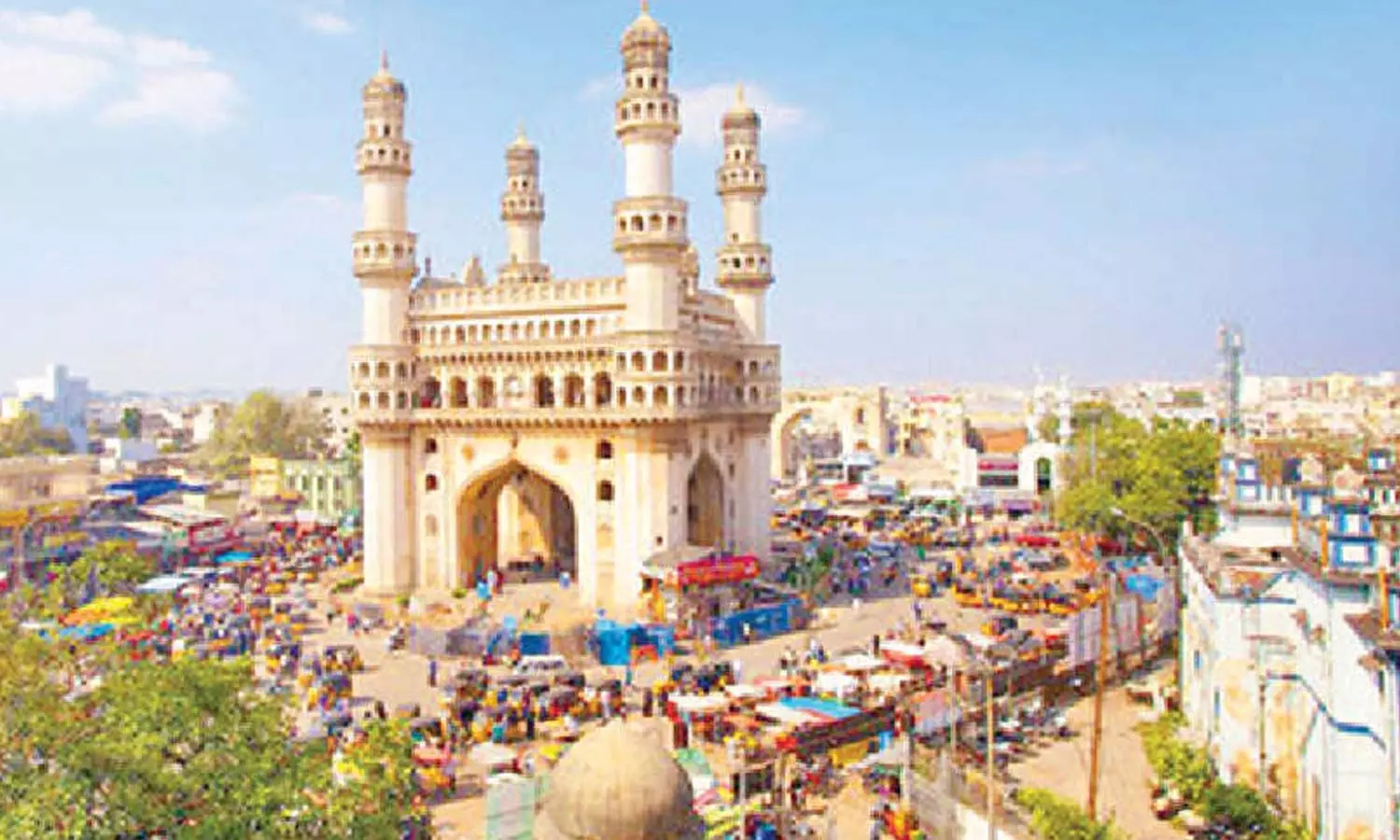
Hyderabad provides a strong foundation for this strategy. The city combines historical, cultural, urban, business and medical tourism. Charminar, Golconda Fort, Salar Jung Museum, Chowmahalla Palace, Hussain Sagar, and other attractions such as Somasila, near Kollapur on the banks of the Krishna River, known for its picturesque landscapes, temples, boating opportunities and peaceful surroundings, provide a diverse tourism portfolio. Medical and business visitors also create demand for hotels, restaurants, transport, retail and other services.
The sucessive Governments contributed to urban beautification, lakefront facilities around Hussain Sagar and the promotion of religious tourism, including the redevelopment of Yadadri temple. The new tourism policy also focuses on heritage conservation, eco-tourism, spiritual tourism and private investment. Initiatives to restore historic buildings along the Musi River and conserve heritage structures also reflect the emphasis on tourism development. The Ministry’s latest tourism dashboard records about 0.441 million international tourist arrivals through Hyderabad airport in 2025, illustrating the city’s importance as an international gateway. However, the larger opportunity for Telangana is to connect Hyderabad with destinations across the state. The Ramappa Temple, a UNESCO World Heritage Site, provides a strong foundation for heritage tourism. Yadadri offers opportunities for spiritual tourism, while Ananthagiri Hills, Laknavaram, Bogatha Waterfall, Kawal Tiger Reserve and Pocharam Wildlife Sanctuary offer scope for eco- and nature-based tourism. Such destinations can create new markets for local food, handicrafts, handlooms, transport, accommodation and cultural activities. The new tourism policy gives this economic-development approach a clear policy framework. The policy aims to attract Rs 15,000 crore of new tourism investment over five years and create three diversified, inclusive and regionally balanced economic growth in Telangana.
Overall, tourism can become an important driver of Telangana’s economic development by generating employment, supporting local businesses, attracting investment and promoting the state’s rich heritage and natural attractions. With better infrastructure, connectivity, visitor facilities, promotion and sustainable management, destinations across Telangana can attract more domestic and international visitors. The future of Telangana tourism therefore lies in converting its diverse cultural, historical and natural assets into sustainable economic opportunities, particularly for local communitiesand less-developed regions.
(Prof Ramakrishna Gollagari is a retired professor, OU, and a Visiting Professor, CESS, Hyderabad)
CM Revanth Reddy extends Bathukamma greetings
TVK plans 3rd state conference to celebrate electoral success
Kolkata stampede: Death toll rises to 19, CM Adhikari announces Rs 2.5 lakh compensation, job for victim’s families
Scheduled power cuts for Telangana industry soon?
Naidu sets higher vote-share target
Negligence During Municipal Polls: SEC warns officials of suspension, transfers


