




- ‘Kalki’ sequel regular shoot to begin in Oct, targets mid-2027 wrap
- ‘Kaaka’ dubbing commences; getting ready for Sankranti release
- Aakash Jagannadh launches ‘Chakkora - Lunar Love Bird’ trailer
- ‘Konda Kona’ of ‘Garividi Lakshmi’ grabs attention
- ‘Premane Oorilo’ locks Oct 2 release
- Beyond the USA pill: How Indian pharma quietly reinventing itself
- Technology, spirituality and the search for human balance
- The Eagle’s Sky
Beyond the USA pill: How Indian pharma quietly reinventing itself
In Short
Looks like Indian pharma’s next decade belongs to chronic care

Share :
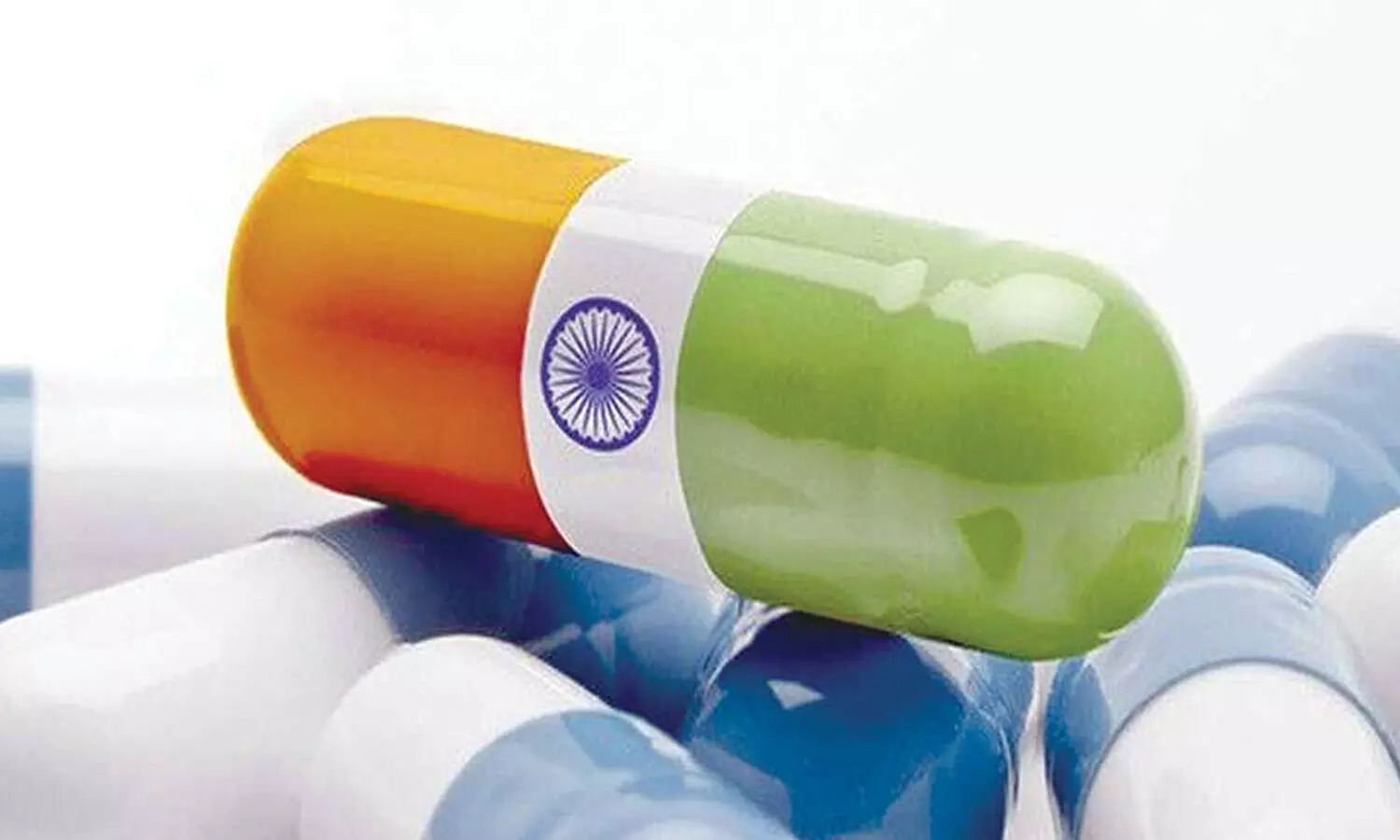
Beyond the USA pill: How Indian pharma quietly reinventing itself
The Indian pharmaceutical sector is heading into a phase defined by chronic care dominance, GLP-1-driven volume expansion, a maturing export base, and a margin-cost tug-of-war. The companies that will lead are not those that chase volume alone. They are those that combine strong chronic franchises, credible complex-product launches, robust field force, and disciplined cost structures
The Indian pharmaceutical industry is rarely the subject of dramatic headlines. It does not grab the back pages like a stock market crash or a currency rout. And that is precisely why it is easy to miss, quietly, steadily, and somewhat remarkably, what is happening inside it.
India’s pharma market grew 10.7 per cent year-on-year in August 2026, its strongest monthly performance in over a year. The Indian Pharmaceutical Market (IPM) is now expected to expand 9-10 per cent in FY27, well above the long-term trendline. Ratings agencies are equally upbeat. Crisil projects 11-13 per cent sector revenue growth in FY27, while ICRA pegs its sample set of listed pharma majors at 9-11 per cent in FY26 and 6-8 per cent in FY27. None of these forecasts are modest, but the more interesting story lies not in the growth rate itself, but in what is driving it.
Chronic care is now the core, not the companion:
For decades, Indian pharma was a story of acute therapies. Antibiotics, anti-infectives, and respiratory drugs, powered by volume and seasonal demand. That era is over.
In August 2026, cardiac sales grew 15 per cent year-on-year, anti-diabetics 15 per cent, and vitamins 16.2 per cent. Anti-infectives managed just 2.7 per cent, and respiratory therapies a meagre 2.2 per cent, with volumes actually contracting by 2.6 per cent and 7.6 per cent respectively. The pattern is unmistakable. India’s disease profile is shifting, obesity, diabetes, hypertension, cardiovascular disease, and Indian pharma is shifting with it.
This matters for three reasons. First, chronic therapies are inherently stickier. A patient on cardiac medication does not stop after one course. Second, the price-realisation on chronic drugs is higher because they are priced, not reimbursed. Third, the demographics are working in pharma’s favour: India has over 100 million diabetic patients and the world’s second-largest cardiac disease burden, and these numbers are growing, not plateauing.
The companies that understood this shift early are now winning. Glenmark grew 14.9 per cent in MAT August 2026. Torrent 14.8 per cent. Intas 14.2 per cent. Sun Pharma and USV 14 per cent each, all materially above the IPM average of 10.4 per cent. The gap between chronic-heavy players and traditional acute-focused firms is widening by the quarter.
The GLP-1 surprise: From niche to mass market
If chronic care is the engine, GLP-1 agonists are the turbocharger. The Glucagon-Like Peptide-1 (GLP-1) market, dominated by diabetes and, increasingly, obesity drugs, has exploded from Rs 7.56 billion in MAT August 2025 to Rs 23.33 billion in MAT (Moving Annual Total) August 2026, a roughly 3x expansion in twelve months.
What makes this remarkable is not just the absolute size. It is the composition. Generic GLP-1 injectables are now growing faster than innovator molecules. The unit-growth curve shows generic dispensing volumes rising steadily, even as innovator unit growth softens. The market is broadening through affordability and access, not just through elite prescriptions.
This is the moment India’s pharmaceutical story intersects with India’s consumer story. GLP-1s were, until recently, premium-priced injectables accessible mainly to India’s urban upper-middle class. The entry of credible Indian generics, at a fraction of the innovator price, has opened the therapy to tier-2 and tier-3 India. The combined effect is a market that is simultaneously deepening and widening.
The next phasewill be defined by supply reliability, prescriber confidence, and portfolio breadth, not just molecule access. Companies that build durable franchises here will reap disproportionate rewards through FY27 and beyond.
Volume is back, and that changes everything:
For two consecutive fiscals, volume growth in Indian pharma hovered around the 2 per cent mark, anaemic, almost apologetic. Crisil now expects volume growth to recover to 4-5 per cent in FY27, alongside annual price revisions of 5-6 per cent.
Why does this matter? Because India’s pharma market has, for nearly a decade, been priced on volume disappointments. Every analyst note carried the same quiet warning. Growth is real, but it is built on price hikes, not real patient additions. That story is now flipping.
The drivers are familiar but worth stating. Stronger prescription demand in tier-2 and tier-3 markets, improved field-force productivity, a richer launch pipeline, and GST 2.0-induced normalisation of distributor behaviour that briefly distorted Q2FY26 numbers. Together, these have created the conditions for a market growing on both axes, volume and value.
Exports: The US drag and the emerging-market lift
The export story is more nuanced. Crisil projects 14-16 per cent export growth in rupee terms in FY27. But ICRA, looking at listed pharma majors, expects a sharper moderation. US revenues projected to grow just 1-3 per cent in FY27, down from 4-6 per cent in FY26. The US generics market is experiencing sustained pricing pressure on key molecules, and inventory normalisation is no longer the cushion it was in earlier quarters.
This is where the strategic rebalancing becomes critical. Indian pharma is not exiting the US. It remains 34 per cent of the industry’s export base. But it is diversifying. Complex generics and biosimilars are deepening European footprints. Branded generics are accelerating growth across Asia, Africa, and Latin America. Emerging markets, which already delivered 16.4 per cent revenue growth in 9M FY26, are expected to grow 10-12 per cent in FY27. The export thesis is therefore no longer ‘US or nothing.’ It is increasingly ‘US base, emerging-market growth, complex-product premium.’
The Margin Test:
Growth is one thing. Earnings are another. Crisil expects operating margins to moderate by 150-200 basis points to 21.0-21.5 per cent in FY27, owing to higher energy, freight, and feedstock costs driven by West Asia geopolitical volatility. ICRA, looking at a more concentrated listed-pharma sample, expects margins to remain stable at 24-25 per cent, a function of better product mix and operational leverage at the larger end.
The honest reading is, growth is healthy but margins are being tested. The sector has the balance-sheet strength to absorb this, but cost discipline is no longer optional. Companies that win FY27 will be those that protect the margin line while chasing the revenue line.
The Structural Pillars
Three structural drivers will define the next phase of Indian pharma.
Patent cliff opportunities in complex generics and biosimilars: A wave of US patent expiries (commonly estimated at over $200 billion in cumulative value through 2028) creates a multi-year opening for Indian players with complex-product capability.
CDMO and CRO expansion: India is increasingly positioning itself as the global outsourcing destination for both APIs and finished formulations, complementing its generics dominance.
Tier-2 and tier-3 penetration: Chronic and lifestyle therapies finally reaching beyond India’s metros, expanding both the patient base and the prescriber base.
The Bottom Line:
The Indian pharmaceutical sector is heading into a phase defined by chronic care dominance, GLP-1-driven volume expansion, a maturing export base, and a margin-cost tug-of-war.
The companies that will lead are not those that chase volume alone. They are those that combine strong chronic franchises, credible complex-product launches, robust field force, and disciplined cost structures. The numbers, 10.7 per cent monthly growth, 9-10 per cent IPM trajectory, 11-13 per cent Crisil sector forecast, are impressive. The real story is that the composition of that growth is healthier than it has been in years.
The patient is changing. The market is changing. And Indian pharma, for the first time in a decade, is changing with them.
(The writer is with Cholleti BlackRobe Chambers, Hyderabad, and writes on the economy, politics and law)
Centre should be apolitical in decision-making: TG CM Revanth Reddy
Naidu backs EC clarification
Flood Fury In State: Fields under water, villages cut off
AP moves to capture flood surge as reservoirs gain 21 TMC
24,057 Vijayawada families to get house ownership rights
It’s a long wait for sea-facing palatial ‘Mahal’ to get repurposed


