




- 2,000 Dappu artists to perform for three days in Tirupati
- Staying invested takes patience, not constant action
- Man held for exceeding volume of loudspeakers during azaan
- ASBM University hosts 6th Law Symposium
- Horticulture hub in the making
- Getting down to the nitty-gritty of horticulture devpt roadmap
- Karnataka mulls 35% hike in property guidance values
- Wow! Drought-prone region to blossom into global fruit bowl!
Earnings hold key to sustaining market rebound
In Short
FII outflows, elevated crude prices and geopolitical tensions cloud outlook

Share :
Earnings hold key to sustaining market rebound
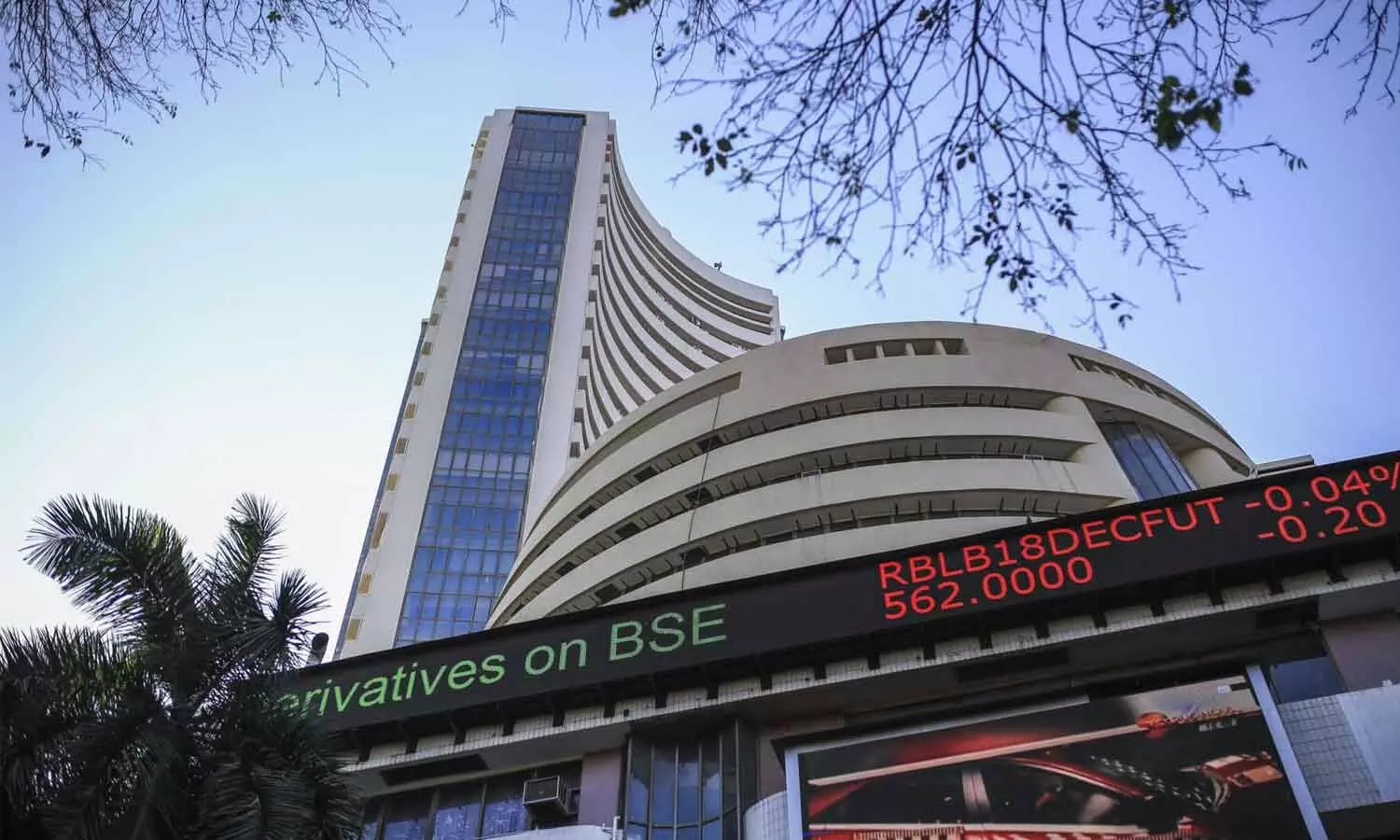
Against a challenging macroeconomic backdrop of persistent foreign fund outflows, elevated international crude oil prices, rising global bond yields, and the Reserve Bank of India’s shift to a calibrated tightening stance after raising the repo rate by 25 basis points to 5.50 per cent; equity markets snapped their eight-week losing streak, the longest in 25 years, to stage a sharp rebound.
For the week, the Sensex added 562.63 points, or 0.78 per cent, to 72472.33, while the Nifty rose 98.5 points, or 0.43 per cent, to 22520.45. The broader markets also witnessed a relief rally. The Nifty Midcap 100 and the Nifty Smallcap 100 indices snapped their four-week fall to end modestly higher during the week.
FIIs remained net sellers for the seventh consecutive week, offloading equities worth Rs30,294.29 crore. Meanwhile, DIIs continued to provide support to the market, purchasing equities worth Rs30,313.48 crore during the week.
The Indian rupee extended its losing streak for the second consecutive week, inching closer to its all-time low of 96.96 against the US dollar. For the week ended the rupee depreciated by 41 paise to close at 96.73. The rupee remains vulnerable to high crude prices, elevated US yields and sustained foreign portfolio outflows. The RBI’s policy decision to raise the repo rate by 25 basis points to 5.50 per cent and shift its stance from neutral to calibrated tightening marked its first-rate increase in nearly four years.
The move reflected heightened concerns over inflation risks from elevated energy and commodity prices amid global uncertainty. Observers are likely to assess the implications for future policy decisions, borrowing costs and liquidity, with higher interest rates potentially weighing on credit-sensitive sectors and corporate financing conditions.
TCS’s results provided the main trigger for the rally, offering some reassurance that the company was beginning to monetise its AI capabilities. It is pertinent to observe that IT stocks have faced sustained selling pressure this year amid concerns over AI-led disruption and subdued growth. The latest results had helped trigger a relief rally across the sector.
The rebound came despite fresh regulatory concerns in the US. The action does not cancel existing H-1B visas but could raise hiring and compliance costs and add to margin pressures. The focus now shifts to Infosys, HCL Technologies, Wipro and Tech Mahindra, whose results and management commentary could determine whether the sector’s rebound gains traction. Going forward, Indian markets are likely to remain volatile and data-dependent.
September CPI inflation and industrial production data, followed by WPI inflation, will provide important signals on price pressures and economic momentum. Investors will also need to monitor crude oil prices, rupee movements, bond yields, global market trends, geopolitical developments and Q2 corporate earnings. Corporate earnings would increasingly influence sector-level performance as the Q2 results season gathers pace.
Look for evidence of earnings resilience, demand recovery and margin stability across sectors. A renewed rise in crude could intensify inflationary pressure, weaken the rupee further and weigh on sectors sensitive to fuel and input costs. Only a sustained decline in prices would offer meaningful relief to Indian equities by easing concerns over inflation and the country’s import bill.
Government measures to support economic growth and the RBI’s response to inflation and currency pressures will remain key determinants of liquidity and investor confidence. Sustained domestic inflows, attractive valuations and improving earnings visibility could support selective buying in quality stocks. However, continued FII selling, elevated international crude oil prices, higher interest rates and escalating geopolitical tensions could trigger further volatility and capital outflows.
FUTURES & OPTIONS / SECTOR WATCH
Rebound during the later part of the week ended the eight-week losing streak, of the Nifty and Sensex. Broader market sentiment remained under pressure amid the RBI’s upward revision of its FY27 inflation forecast and its decision last week to raise the repo rate by 25 basis points. Despite the high intra-week volatility, the Nifty ended the week with a gain of around 0.5 per cent while the Bank Nifty outperformed, closing approximately 1.5 per cent higher. Buying was seen across IT, FMCG, Auto and Financial stocks.
However, there was no significant change in outstanding open interest (OI), suggesting that traders largely only retained their existing positions. In the options segment, significant Call open interest in Nifty was observed at the 23,000 and 22,500 levels while major Put open interest was concentrated at 22,500 and 22,000.
The immediate resistance zone for the Nifty is placed around 22,600, followed by 22,800. A sustained move above 22,800 could strengthen the recovery and open the way towards 23,000. On the downside, 22,400 is the immediate support zone, followed by 22,200 and the psychological 22,000 mark. A break below 22,200 could revive selling pressure and expose the index to lower levels.
In Bank Nifty, substantial Call open interest was seen at 56,000, while significant Put open interest was concentrated at 55,000 highlighting these levels as important resistance and support zones respectively. Implied volatility (IV) for Nifty’s Call options settled at 14.53 per cent while Put options concluded at 15.77 per cent.
The India VIX, a key indicator of market volatility concluded the week at 15.27 per cent. The Put-Call Ratio Open Interest (PCR OI) stood at 0.82 for the week. The overall bias remains bearish to neutral. Following review of the Closing Auction Session, the SEBI is likely to issue guidelines on the settlement-price mechanism for derivatives on expiry days within about a week.
The CAS review is part of Sebi’s broader efforts to deepen India’s cash markets, improve price discovery and enhance market efficiency. Stocks looking good Angel One, ICICI Gen, LTM, HDFC Life, Persistent and Premier Energies. Stocks looking weak are Asian Paints, Avenue Supermarts, Prestige, Mankind, Sona Comstar and Unominda.
(The author is a senior maket analyst and former vice-chairman, Andhra Pradesh State Planning Board)
20 Microns Limited
The company operates across a diversified portfolio of Performance Minerals and Functional Additives, serving a wide spectrum of industries. The segmental mix reflects both scale and balance: Paints (46 per cent), Polymers (26 per cent), Rubber (10 per cent), Ceramics (5 per cent), Paper (4 per cent), and Others (9 per cent). Paints, Coatings & Printing Inks is the highest contributor to revenue chart. The portfolio includes: hydrous and calcined kaolin, calcium carbonate (including sub-micron grades), talc, silica and several other products.
Plastics & Polymers is a strong growth vertical catering to PVC pipes and profiles, masterbatches, engineering plastics, films and cable compounds. The portfolio includes coated and uncoated calcium carbonate, talc, barytes, flame retardants and multifunctional processing aids. Rubber segment supplies engineered fillers, activators, processing aids and reinforcement solutions for tyres, hoses, belts and automotive components.
The segment is aligned with automotive and industrial growth trends. Ceramics segment provides hydrous and calcined kaolin, feldspar, quartz, talc and specialty minerals for tiles, sanitaryware and tableware.
The Paper segment delivers coating pigments and engineered fillers designed to enhance gloss, opacity and printability. Others segment includes functional additives across industries, mineral-based fertilizers and construction chemical solutions. Buy on declines for medium term target of Rs300.
Modi, Shah turning Goa into a ‘drug hub’, alleges Revanth
Power bank triggers fire on Delhi-Chennai flight
Man from Hyderabad killed in attack on Riyadh Airport
Sanna biyyam, doddu dara! Rice prices skyrocketing in TG amid export push
AP to take up 2,569 tribal works costing Rs 2,052 crore
Govt must engage with protesters, not suppress them


