




- ‘Kalki’ sequel regular shoot to begin in Oct, targets mid-2027 wrap
- ‘Kaaka’ dubbing commences; getting ready for Sankranti release
- Aakash Jagannadh launches ‘Chakkora - Lunar Love Bird’ trailer
- ‘Konda Kona’ of ‘Garividi Lakshmi’ grabs attention
- ‘Premane Oorilo’ locks Oct 2 release
- Beyond the USA pill: How Indian pharma quietly reinventing itself
- Technology, spirituality and the search for human balance
- The Eagle’s Sky
MDR charges could test resilience of India’s digital payment ecosystem
In Short
As the October 15 implementation date approaches, the central issue is not merely how much revenue MDR might generate. It is whether the new funding model can strengthen UPI without compromising its accessibility, merchant acceptance, and public trust

Share :
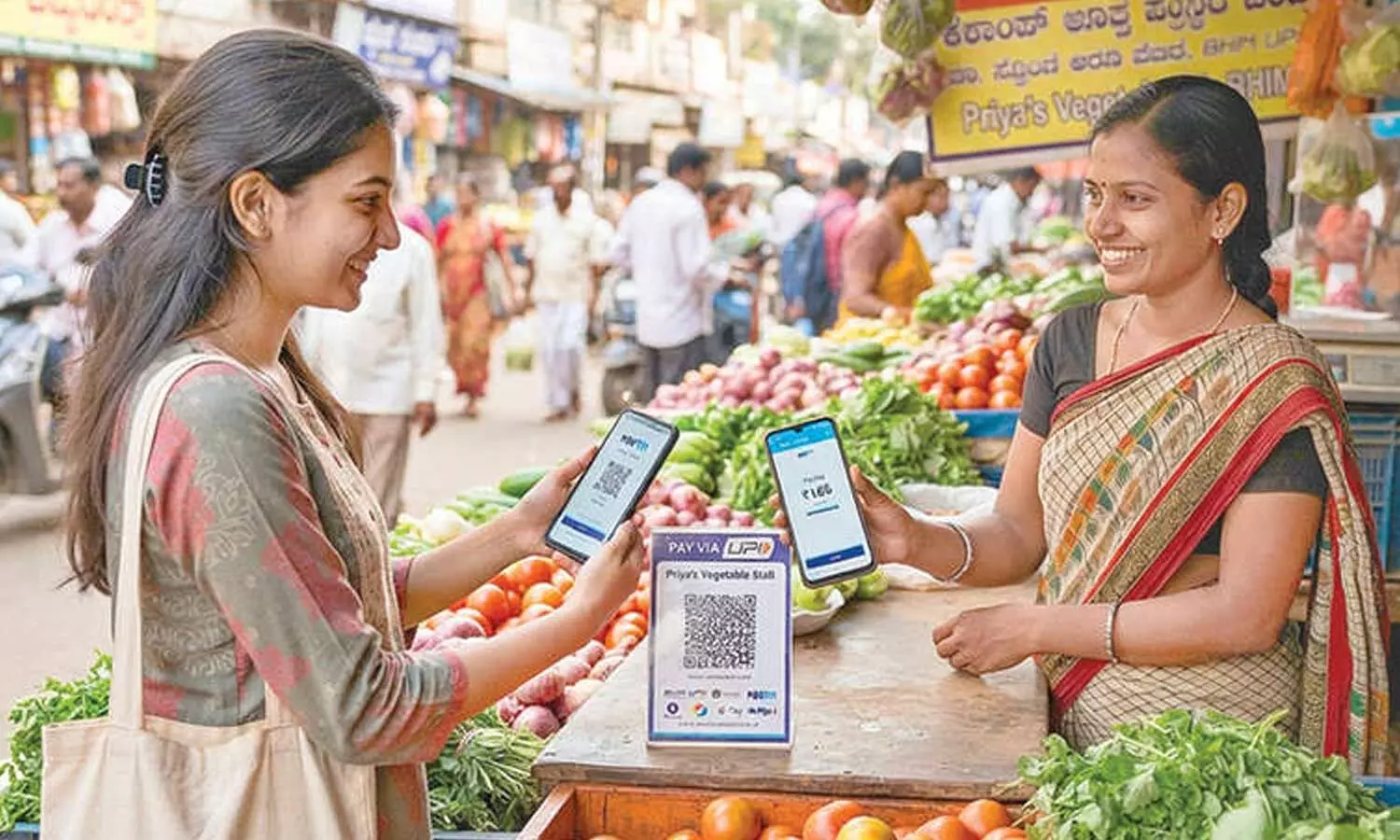
MDR charges could test resilience of India’s digital payment ecosystem
The proposed merchant transaction charges could test the resilience of India’s digital payments revolution, raising questions about consumer behaviour, business costs and the future of a technology India has taken to the world.
India’s Unified Payments Interface (UPI) has transformed the country’s payments landscape. What began as a digital alternative to cash has evolved into a critical part of everyday commerce, helping businesses handle payments efficiently and reducing dependence on physical currency.
For banks, merchants and consumers alike, UPI has become a convenient and widely accepted payment mechanism. Its global recognition has also enhanced India’s reputation as a technology innovator, with other countries exploring or adopting UPI-linked payment solutions.
But a proposed change to the way UPI transactions are funded could test the system’s popularity and raise an uncomfortable question for policymakers: could a measure intended to strengthen UPI end up undermining one of its greatest advantages?
The end of zero MDR UPI?
The National Payments Corporation of India (NPCI) has announced that a Merchant Discount Rate (MDR) of 0.4 per cent will apply to specified person to merchant (P2M) UPI transactions, exceeding Rs 2,000 from October 15, 2026. The announcement marks a departure from the zero-MDR regime that has operated since January 2020. However, the new charge is not a tax imposed on UPI users or a direct revenue collection by the government. It is a payment processing fee within the merchant payments ecosystem, with the proceeds shared among participating banks, payment service providers and other stakeholders.
The government has justified the change on the grounds of financial sustainability. As UPI transaction volumes continue to grow, the system requires sustained investment in cybersecurity, fraud prevention, infrastructure and customer services.
The authorities have also argued that relying indefinitely on government subsidies may not be a viable strategy for supporting the next phase of UPI’s expansion. The policy question, therefore, is not simply whether UPI should generate revenue, but how that revenue should be raised without weakening the trust and convenience that made the platform so successful.
What changes and what doesn’t?
Under the new framework, the following provisions apply:
Person to person payments: Transfers between individuals will remain free, regardless of the amount.
Merchant payments up to Rs 2,000: These will remain exempt from MDR.
Larger merchant payments: Eligible transactions above Rs 2,000 will attract an MDR of 0.4%, subject to applicable exemptions and caps.
High value transactions: For payments of Rs 75,000 or more, the MDR will be capped at Rs 300 per transaction.
The merchant backlash:
The immediate concern is whether businesses will be willing to absorb the additional cost. The All India Petroleum Dealers Association has already sought a complete exemption from MDR for petrol pumps. Fuel retailers argue that their margins are fixed and relatively narrow, leaving little room to absorb even a modest payment processing charge. Some petroleum dealers have warned that they may stop accepting UPI payments above Rs 2,000 and revert to cash transactions if the charge is not withdrawn. The apprehension is not confined to the fuel sector. Retail organisations have also expressed concern that the new charges could encourage businesses to reconsider their payment options, particularly during the festive shopping season.
A return to cash by even a section of merchants could have implications beyond the payment ecosystem. Cash handling involves physical logistics, accounting nd security requirements, while digital payments have helped many businesses simplify their daily operations. Whether the new MDR will lead to a meaningful shift towards cash, however, remains an open question.
Will merchants pass on the cost?
Technically, MDR is a merchant side charge. The government has directed banks to prevent merchants from transferring the cost to customers. But the practical economics of retailing can be more complicated.
Businesses facing higher operating costs may attempt to adjust their prices, reduce discounts or alter their preferred payment methods. Whether such costs are passed on to customers will depend on competition, profit margins, enforcement and consumer behaviour.
It is reported that a LocalCircles survey of more than 32,000 merchants and businesses across 242 districts found that only 17 per cent of respondents were willing to absorb an MDR of 0.4 per cent on UPI payments above Rs 2,000. Forty-one per cent said they would not bear any MDR, while 9% reported that they did not accept UPI payments. The findings indicate substantial resistance among businesses, although they do not establish how many merchants will ultimately abandon digital payments.
This is where the government’s policy faces its most important practical test:can it create a sustainable revenue model without diminishing the incentives that encouraged merchants to adopt UPI in the first place?
The government’s argument is straightforward. UPI’s enormous scale requires continuous investment, and a system of payments that depends entirely on public funding may face financial constraints as it expands.
The counterargument is that UPI is not merely a commercial payment product. It has become an important element of India’s digital public infrastructure, facilitating financial transactions across economic and social groups.
UPI’s success has been built on a combination of accessibility, simplicity and trust. Its zero-MDR model played an important role in encouraging merchants and consumers to embrace digital payments.
The new framework attempts to preserve many of those advantages by protecting person to person transfers, smaller payments and eligible small merchants. However, the response of larger merchants and the effectiveness of safeguards against cost pass through will be critical to its outcome.
The government has maintained that the policy is necessary for the longterm health of the UPI ecosystem. Critics fear that it could weaken the very network effects that made UPI a global success.
As the October 15 implementation date approaches, the central issue is not merely how much revenue MDR might generate. It is whether the new funding model can strengthen UPI without compromising its accessibility, merchant acceptance and public trust. Has the government scored an own goal or is this a necessary recalibration of India’s digital payments strategy? The answer will ultimately depend on what happens at the checkout counter, in the accounts of small businesses and in the payment choices of millions of Indians.
(The writer is a senior journalist)
Centre should be apolitical in decision-making: TG CM Revanth Reddy
Naidu backs EC clarification
Flood Fury In State: Fields under water, villages cut off
AP moves to capture flood surge as reservoirs gain 21 TMC
24,057 Vijayawada families to get house ownership rights
It’s a long wait for sea-facing palatial ‘Mahal’ to get repurposed


