




- BRS activists torn down banners of Malla Reddy 's daughter-in-law Preethi Reddy in Medchal
- Centre to host 2-day state finance ministers' meet to discuss policy priorities
- Nitin Nabin arrives in Indore on first MP visit as BJP chief, will launch welfare outreach campaign
- Mom-to-be Samantha Ruth Prabhu begins shooting for 'Celebrity MasterChef Tamil’, flies to Chennai
- 'Patently false': Govt refutes allegation of external pressure in MDR rollout
- What skills should students develop before studying abroad
- At least 48 dead in Nigeria after consuming drink suspected to contain methanol, police say
- PM Modi turned 'Viksit Bharat' into national mission like Gandhi, Patel did for freedom struggle: Shinde
UPI Charges From October 15: What Changes Above ₹2,000
In Short
UPI is set for a major shift from October 15, from the ₹2,000 rule and merchant charges to the key question: who actually pays the new MDR?

Share :
UPI Charges From October 15: What Changes Above ₹2,000
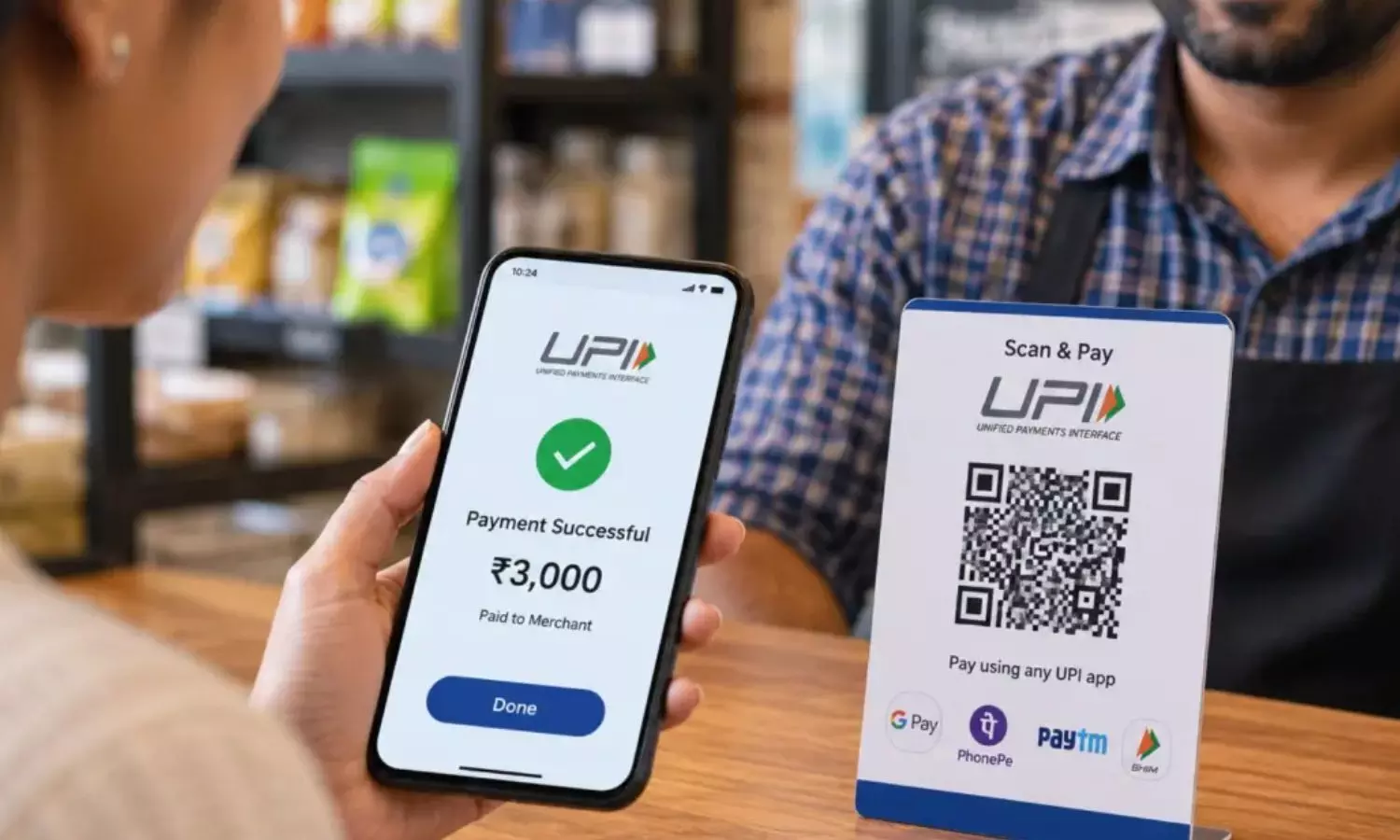
India’s widespread UPI payment system is set for a major change from October 15, 2026 with a (MDR) Merchant Discount Rate being introduced on specified person-to-merchant (P2M) transactions above ₹2,000. This does not mean that the consumer has to pay a fee every time they make a payment above ₹2,000 via UPI
Under the new framework, the person-to-person (P2P) transactions will continue to remain free. The standard MDR will be 0.4 percent on specified merchant transactions above the threshold, special categories, applicable caps and subject to exemptions.
What is MDR?
MDR, or Merchant Discount Rate, is a charge associated with processing a digital payment received by a merchant. Under the new framework, a ₹10,000 merchant transaction falling under the standard MDR category would attract a 0.4 per cent charge, amounting to ₹40.
The customer, however, is not supposed to pay an additional ₹40. The government has clarified that MDR is not a tax collected by the government or NPCI, but a charge distributed among participants in the payment ecosystem, including banks and payment service providers.
Who will actually pay?
The key distinction is between the person making the payment and the merchant receiving it. A ₹10,000 transfer from one individual to another will continue to remain free of MDR. Merchant payments of ₹2,000 or less will also remain outside MDR. Eligible small merchants covered by the zero-MDR provisions will also remain exempt.
For a payment above ₹2,000 made to a merchant covered by the standard MDR category, the 0.4 per cent charge will apply on the merchant side. For example, a ₹10,000 eligible merchant transaction would attract ₹40 as MDR. The customer, however, is not supposed to receive a ₹10,040 bill.
Is ₹2,000 the new UPI limit?
No. The ₹2,000 figure is an MDR threshold, not a new UPI transaction limit. Users will continue to be able to make UPI payments above ₹2,000, subject to the separate transaction limits applicable to their bank, account and transaction category.
The new framework determines whether a specified merchant transaction falls within the MDR structure; it does not cap the amount that can be paid through UPI.
What about small shops?
Eligible small merchants will continue to receive zero-MDR treatment under the specified conditions. The government has cited a threshold of up to ₹1 lakh per month in UPI QR collections for the small-merchant framework.
Therefore, a ₹5,000 payment to a qualifying small shop does not automatically attract the standard 0.4 per cent MDR. The merchant's eligibility is important.
The provision has nevertheless drawn concerns from sections of the retail industry, particularly over whether the threshold adequately covers businesses operating on relatively thin margins.
Different sectors, different rates
The standard 0.4 per cent rate will not apply uniformly to all categories.
Specified transactions involving essential and thin-margin sectors such as fuel, railways, telecommunications and insurance will attract a flat ₹5 MDR for eligible payments above ₹2,000.
Capital-market transactions will have a separate MDR of 0.02 per cent, subject to the applicable cap.
For the standard 0.4 per cent category, MDR is capped at ₹300 per transaction. Thus, for transactions of ₹75,000 and above, the maximum MDR will be ₹300.
Where will the MDR money go?
The government has clarified that MDR is not a tax collected by the Centre or NPCI. Instead, the revenue is distributed among participants in the payment ecosystem, including banks and payment application providers.
The stated objective is to support the operation and expansion of the UPI network, including infrastructure and cybersecurity. The framework also provides for 5 per cent of MDR collections to be directed towards a dedicated fund supporting UPI adoption among small merchants.
Why are retailers concerned?
While consumers are not supposed to be directly charged MDR, retailers will face an additional cost on eligible transactions.
Retailer groups and industry participants have warned that the cost could put pressure on already-thin margins. Some have also raised concerns that merchants could discourage large-value UPI payments, shift towards cash or attempt to recover the cost through pricing.
These remain potential consequences rather than established outcomes. Since the framework is scheduled to take effect only from October 15, its actual impact on merchant behaviour will become clearer after implementation.
What changes for UPI users?
For most users, the immediate impact is limited.
Person-to-person UPI transfers remain free. Merchant payments up to ₹2,000 remain outside MDR, while eligible small merchants continue to receive zero-MDR treatment under the applicable conditions. The new charge primarily affects specified merchant transactions above ₹2,000.
Importantly, MDR is a merchant-side charge and customers are not supposed to be separately billed for it.
The new framework is scheduled to come into effect from October 15, 2026. The larger question is whether the new model can create a sustainable revenue stream for India's rapidly expanding digital payments infrastructure without altering the low-cost payment experience that helped make UPI a mass-market phenomenon.
‘Hanuman Ansh’ hits Rs 300 crore mark at worldwide box office
HBD PM Modi: Chiranjeevi, Nagarjuna And Pawan Kalyan Drop Heartfelt Birthday Wishes For PM Modi
78 years on, September 17 still a political battleground
KTR challenges CM Revanth Reddy for probe on KCR and CM's assets
AP CM Chandrababu Naidu Visits Varanasi, offers prayers at Kashi
Mukesh Ambani’s Jio Rs 399 Recharge Offers Benefits Worth Rs 4,000


