




- The faculty of vision can cause strange perceptions
- Voter lists a nightmare for BLOs and electors?
- Samajwadi Party ignored teachers, offered prayers at graves of mafias: Yogi Adityanath
- Bihar: Leaders visit bereaved families after boat capsizing incident claim lives of 13 children
- Asaduddin Owaisi files anti-SIR petition in Supreme Court
- PM Modi, visiting Canadian Foreign Minister hold 'productive discussion' on further strengthening bilateral ties
- Apple’s OLED MacBook Pro: What to Expect
- Tejashwi Yadav seeks high-level probe into Ganga boat tragedy, slams CM for not visiting victims
Govt should strive to de-escalate the situation
In Short
Gandhi’s remarks are significant because there is an impression that he is wary of association with the CJP leadership; he didn’t do that earlier in July during the movement against the then education minister Dharmendra Pradhan

Share :
Govt should strive to de-escalate the situation
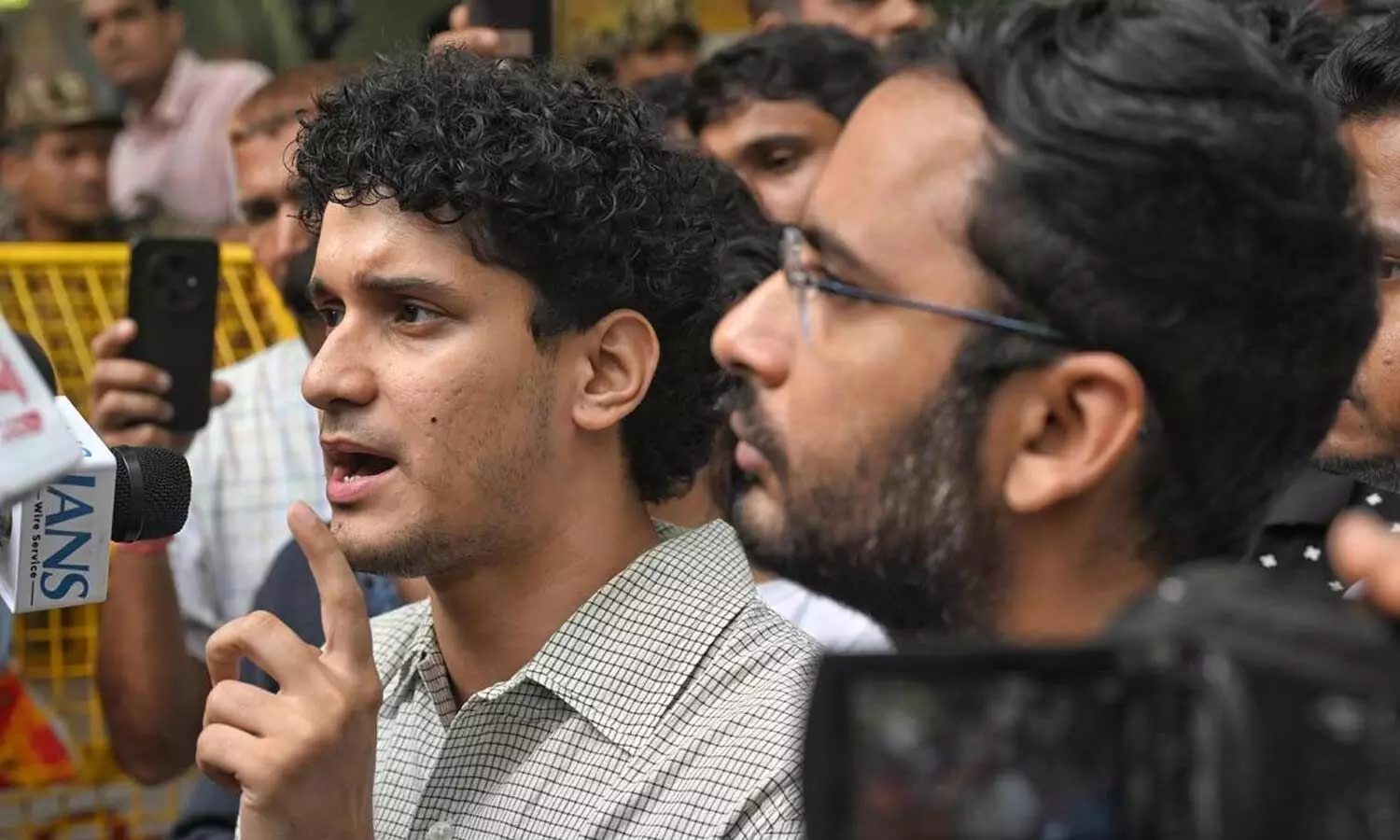
The Narendra Modi government is not only prolonging its misery unnecessarily but also doing what anti-government forces have failed to do so far—forging unity among themselves. The arrest of Cockroach Janta Party (CJP) leaders Saurav Das and Ashutosh Ranka for allegedly violating their peace bonds and trespassing into Jantar Mantar has done that. The place was recently de-notified as a designated protest site, a move that was widely slammed. Another CJP leader, Ajinkya Shinde, was spared but had to sign a peace bond. Importantly, Leader of the Opposition Rahul Gandhi criticised the arrest of CJP leaders, which the youngsters acknowledged with gratitude promptly. “Waving the Tricolour at Jantar Mantar in a peaceful protest is not a crime. Jailing youth for it is an act of cowardice (sic),” Gandhi posted on X on Wednesday morning. Several groups are campaigning against Chief Election Commissioner Gyanesh Kumar. Asserting that the groups were many, but the protest was one, he wrote, “Students. Youth. Journalists. The INDIA bloc. Different banners, one cause. All protests are one: citizens demanding their constitutional rights.” He reiterated his party’s resistance to de-notify Jantar Mantar as a protest site: “Jantar Mantar belongs to the people of India. We will reclaim it (sic).”
Gandhi’s remarks are significant because there is an impression that he is wary of association with the CJP leadership; he didn’t do that earlier in July during the movement against the then education minister Dharmendra Pradhan. His Wednesday’s remarks, however, indicated a change in tactics, perhaps also in strategy; the grand old party may be toying with the idea of a rainbow coalition of not all parties opposed to the Bharatiya Janata Party (BJP) but also all civil society groups which dislike the Sangh Parivar and Hindutva. The number of such political parties and groups is huge. The CJP has also succeeded in receiving support from Aam Aadmi Party chief Arvind Kejriwal, Trinamool Congress MP Abhishek Banerjee, DMK chief M K Stalin, and UBT Sena leader Aaditya Thackeray. There are indications of CJP drawing support of other parties, as well.
The government and the BJP can still stop the crisis from turning into a calamity. But for that, they must abandon their reflexive resort to coercion and recognise that suppressing dissent often achieves precisely the opposite of what is intended. The first step towards de-escalation would be to release those arrested, refrain from further punitive action against peaceful protesters, and reconsider the decision to de-notify Jantar Mantar as a designated protest site. The government must also explain the rationale behind the decision and demonstrate that it is not an attempt to insulate the establishment from public scrutiny. In a democracy, inconvenience to the government cannot be a sufficient reason to curtail citizens’ right to protest. Nor should the authorities conflate peaceful dissent with a threat to public order. Politically, the BJP must understand that the emerging coalition could transcend the conventional boundaries of party politics. Rahul Gandhi and other opposition leaders would then have an opportunity to transform scattered protests into a sustained national campaign. The government still has time to prevent that outcome. It must, however, choose dialogue over confrontation and constitutional restraint over political vindictiveness. Otherwise, a crisis that the Opposition struggled to manufacture may become a formidable challenge of the government’s own making.
President Murmu offers prayers at Vijayawada's Kanaka Durga Temple
High-level demographic committee launches website seeking relevant inputs
IDBI Bank restructuring to strengthen banking ecosystem: FM Sitharaman
CJS vs Police: Delhi Braces for Another Showdown on Friday
Ex-SC Judge Kurian Joseph Says Supreme Court Must Act If Warnings Fail, Calls For Stronger EC Safeguards
CM Revanth Reddy to youth: Build startups, grow economy


