




- Assam Rifles showcases operational preparedness, capabilities in Agartala
- Court rejects BRS leader’s remand after dramatic arrest over social media post
- Beyond civic poll numbers: Rajasthan Congress leadership in focus again
- 'Not needed anymore': Maulana Shahabuddin Razvi Bareilvi on reservation debate
- Rahul Gandhi has ‘anarchic’ mindset: Maha CM
- India-Norway relationship growing, getting stronger: Outgoing Norwegian envoy
- Nagaon bypoll: Assam Minister targets Congress MP Rakibul Hussain
- With just a day left for contract to end, Kerala CM Satheesan caught in bind over chopper politics
Ties with US: India must stay focused on national interest
In Short
New Delhi warns Washington that unilateral US sanctions over Russian oil imports could impact bilateral ties.

Share :
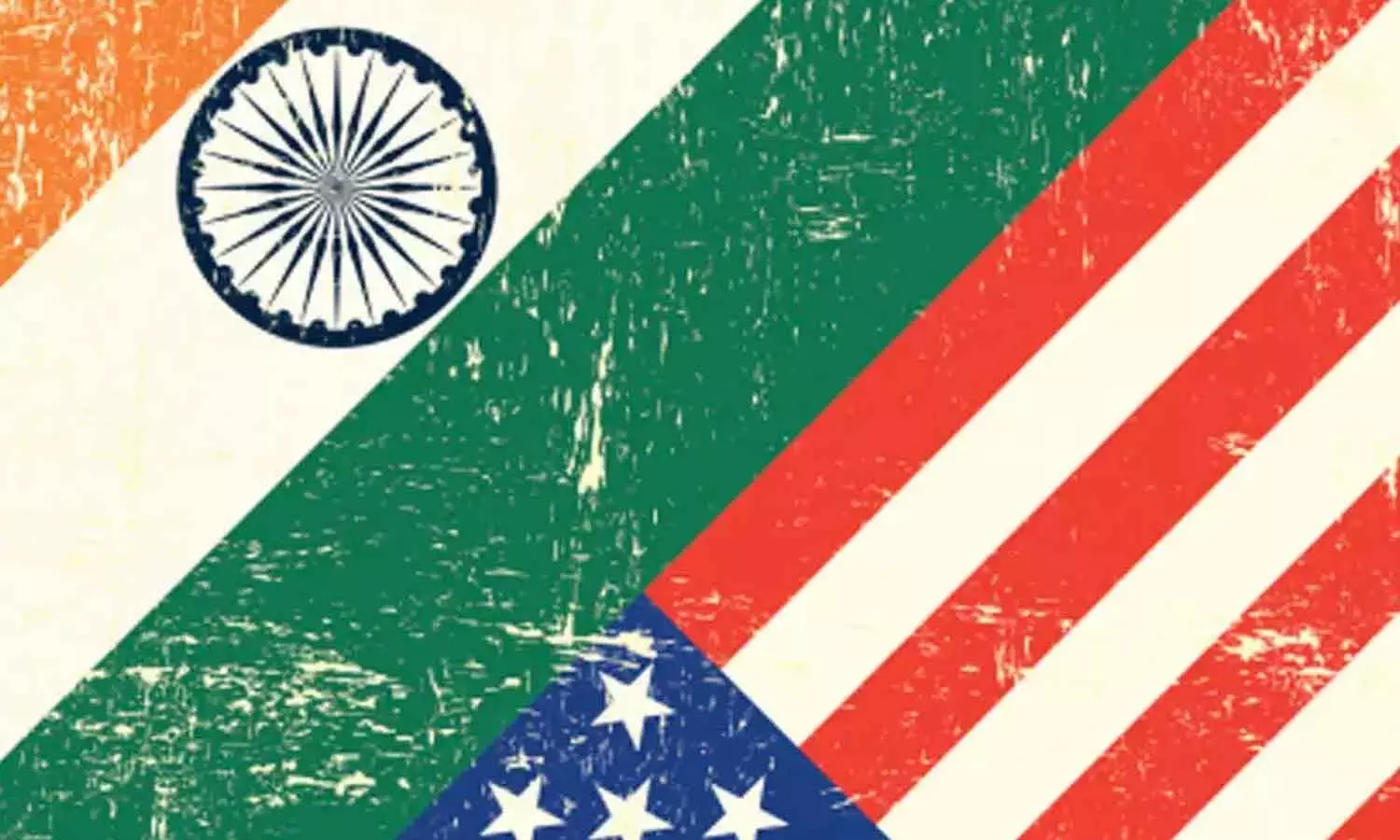
Ties with US: India must stay focused on national interest
India has done well to remind the United States that its unilateral punitive action over oil imports from Russia could have “potential implications” for “the bilateral [Indo-US] relationship.” New Delhi’s response came just after the US House of Representatives passed a Bill allowing Washington to impose sanctions on Russia and tariffs of up to 100 per cent on Moscow’s energy trading partners. The Ministry of External Affairs (MEA) has made it clear that “this issue has been discussed at high levels in recent months with various US interlocutors.”
Ramifications of the Lindsey O. Graham Sanctioning Russia and Iran Act, 2026, if invoked against India, have reportedly been conveyed to US Secretary of State Marco Rubio and US Ambassador to India Sergio Gor. In a nutshell, India has made its position clear: while we cherish Indo-US ties, we will not cross limits at the expense of national esteem—and we never will. US President Donald Trump made gratuitous remarks about ending the Indo-Pak skirmish last year, even though it was quite evident that our armed forces had thrashed the Pakistanis badly during Operation Sindoor.
He unnecessarily raised tariffs on Indian goods, though they were later brought down. On its part, New Delhi has been very patient, declining to react sharply despite provocative statements from Washington. Three points need to be made here. First, our policy makers must acknowledge the fact that in the US there is considerable anger towards Russia because of its aggression against Ukraine. And the anger is on both sides of the aisle; this is the reason that the Lindsey O. Graham Sanctioning Russia and Iran Act, passed by the US Senate last month, was cleared by the House of Representatives with an overwhelming 262-159 vote, which included 58 Democrats and an Independent.
This is as bipartisan as it can get in Trump’s America. The second point stems from the first one: any decision in Washington hurting India’s interests may not be anti-India per se or hint at anti-India bias; India would be collateral damage as the decision would be aimed at Russia. This brings us to the third point: India should be guarded and not react hastily if such a situation arises.
Against this backdrop, the recently held BRICS Summit in Delhi appears as a case of ostentatious excess. There was also discussion over de-dollarisation—something that Washington hates. This was unnecessary, as de-dollarisation, if it ever happens, will be replaced with yuanisation. This will be much worse than the global dollar regime, as Beijing regularly manipulates the yuan. More importantly, India must recognise that the dollar is not merely an American instrument; it is the principal currency underpinning global trade, investment, finance, and reserves.
Any abrupt move away from it could therefore create considerable uncertainty for businesses and financial markets. India has a legitimate interest in diversifying its payment mechanisms and reducing excessive dependence on any single currency, but this should be pursued pragmatically rather than ideologically. In general, we should adopt a balanced and nuanced approach towards ties with the US.
At a time when geopolitical tensions are already testing India’s relationship with Washington, New Delhi should avoid unnecessary symbolism that could further complicate an otherwise important economic and strategic partnership. We must stay focused on national interest.
Ties with US: India must stay focused on national interest
Jayant Chaudhary meets PM Modi with family ahead of Muzaffarnagar rally
Bhupender Yadav, CM Yogi review UP’s air pollution action plan for Delhi-NCR
Fast-paced developments mark dramatic times in Bengal politics
Lord Ganesha Adorned With Rs 1.93 Crore Currency Bundles in Warangal's Grand Dhanalakshmi Puja
People could relate to the incident, became a 'national issue': Gurugram hit-and-run victim Sia


