




- Pochampally Ikat: Where threads become geometry
- Indrakeeladri decked up for Dasara festivities
- Green Card crackdown major setback for Indian IT giants
- ED seeks day-to-day trial of Jagan in quid pro quo case
- Donald Trump continues to harp on Nobel
- “Haven’t you taken pesticide yet”, tehsildar mocks farmer
- 'Urgent relief': Maha CM Fadnavis directs immediate foodgrain supply to 265 drought-hit talukas
- BJP won bypolls, rejects Opposition's claim that govt is afraid: Assam CM Sarma
Challenging Norms, Embracing Differences
In Short
The volume brings together diverse perspectives from Indian academics, examining representations of disabled bodies across Bollywood cinema, regional literature, and socio-political domains.
Share :
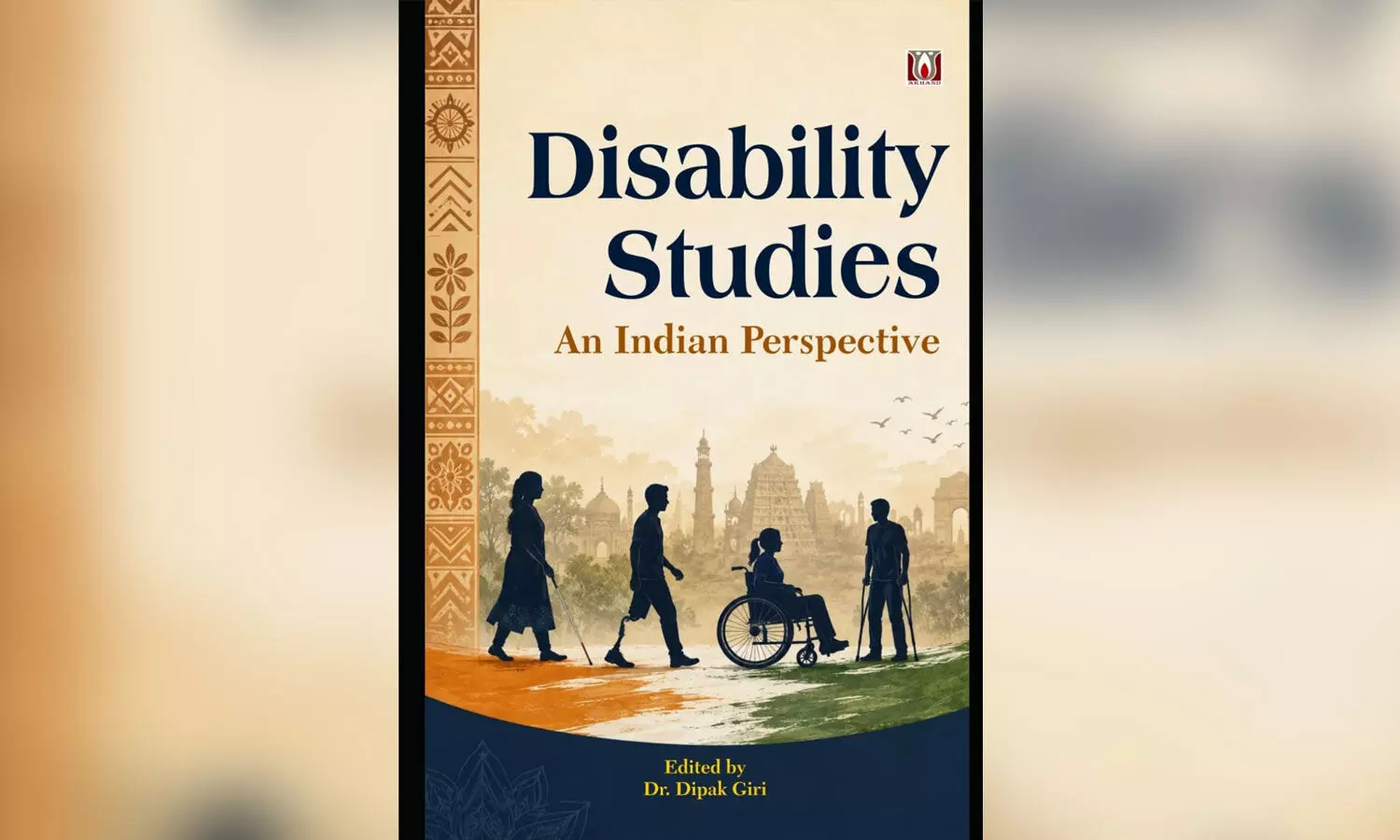
Disability Studies: An Indian Perspective
Dr Dipak Giri’s recently published book ‘Disability Studies: An Indian Perspective’ marks a vital intervention in cultural, social, and legal scholarship in India. The book captures a pivotal moment in contemporary India’s legislative and socio-cultural narrative. For decades, the mainstream Indian understanding of disabled individuals remained trapped within a medicalised or essentialist paradigm—viewing disability merely as a personal physical deficit requiring clinical intervention or charitable pity. This volume systematically breaks down this outdated model, exploring the paradigm shift caused by India’s changing domestic laws and international treaties. Dr Giri emphasises the transition from the older, narrowly physical-impairment-focused ‘Persons with Disabilities (PwD) Act of 1995’ to the more expansive ‘Rights of Persons with Disabilities (RPwD) Act of 2016’. By aligning with the United Nations Convention on the Rights of Persons with Disabilities (UNCRPD), adopted in 2006, the RPwD Act recognises twenty-one distinct types of disabilities, incorporating neurological, psychic, and chronic conditions. Dr Giri’s collection captures how this legislative broadening translates into lived reality. Disability is reframed not as an isolated biological tragedy or personal deficit, but as a socially, culturally, and politically constructed experience.
The volume brings together diverse perspectives from Indian academics, examining representations of disabled bodies across Bollywood cinema, regional literature, and socio-political domains. In chapters like Abhishek Chowdhury’s analysis of the film ‘Hichki’, the collection interrogates how mainstream Indian cinema often swings between pity and token inspiration, highlighting the need for authentic portrayals of disabled individuals. Some contributors explore counter-discursive narratives in literature. For instance, chapters tracking regional Maithili short stories, ‘Madhurmani’ and ‘The Mirror’, and works like Firdaus Kanga’s ‘Trying to Grow’ showcase how disabled individuals move away from the ‘medical gaze’ to formulate their own modes of knowing.
A major standout is the text’s focus on ‘margins within margins’, examining how caste intersections compound the marginalisation of disabled bodies in India. Essays like Dr Ishrat Jahan’s work unpack how disability intersects with caste and epistemic injustice, underscoring how the experience of a disabled Dalit individual is compounded by layered societal prejudices. Dr Giri’s own contribution to the volume uses Émile Durkheim’s sociological concept of ‘anomie’ to examine the plays of Mahesh Dattani. He argues that because disabled characters are rarely viewed as ‘desiring bodies’ and are often cast away by family units, they experience self-alienation and metaphorical ‘anomic suicide’. Multiple entries also focus on classroom realities, analysing how current infrastructure and curriculum models often fail to translate the legal mandates of the RPwD Act into practical, inclusive spaces for neurodivergent and psychologically challenged students.
A particularly strong element of the book is its commitment to intersectional justice. Dr Giri and his contributors illustrate how ableism in the Indian subcontinent does not exist in a vacuum; it deeply intersects with entrenched hierarchies of caste, gender, class, and region. The book highlights ‘societally inflicted disabilities’, showing how marginalised groups encounter systemic and attitudinal barriers that multiply their daily challenges. It successfully demonstrates that disability in India cannot be fully understood without examining local cultural frameworks. The book is highly recommended for researchers, sociologists, and students of Indian literature who want to look beyond physical impairment and understand the lived reality of marginalisation in India.


