






- Vaccinate on time and stay protected for a lifetime: Dr Bharath Reddy
- Dumping yard on Ravvala Konda to be shifted soon
- Collector Himanshu Shukla issues panchayat poll guidelines
- SP encourages students to focus on studies, maintain discipline and aim high
- Dedicated sanitation efforts earn Atmakur hospital state-level recognition
- Libraries are true treasure of knowledge: Waqf Board chief
- Prevent public hardships and protect public property: MLA
- Childrens’ Green Festival celebrated
Stop telling men to talk about their feelings
In Short
Ahead of the International Men’s Day, it’s noteworthy that the long-standing demand for the day to be included in the United Nations calendar still remains unheard.

Share :
Stop telling men to talk about their feelings
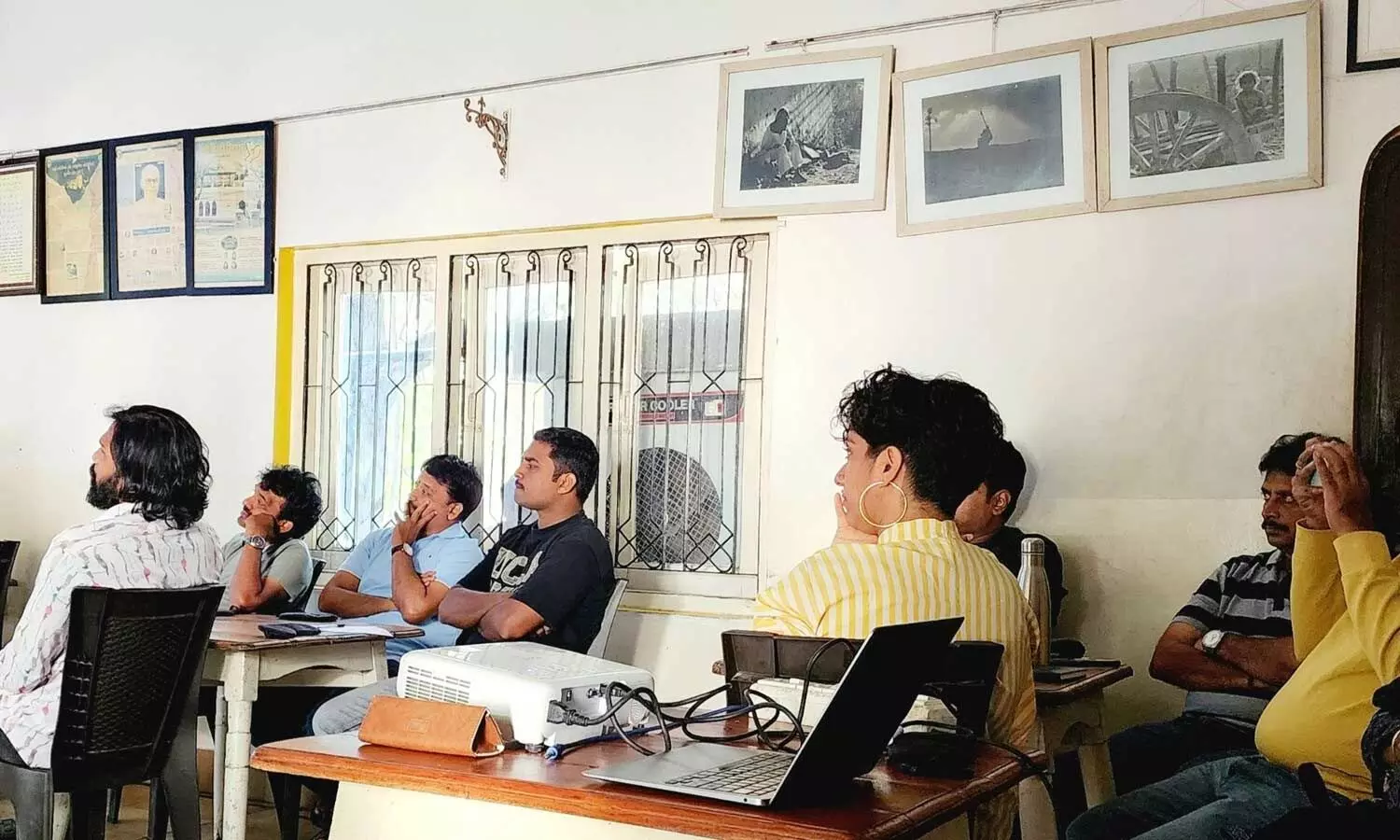
“We don’t want to share. We just want space,” declares Srinath Gattu (45), a skill development professional, at ‘Being Him’, a recent workshop at Lamakaan dedicated to men’s emotional health. The event was touted as a safe space for men to express themselves. While appreciative of the programme, all the male participants nodded in agreement with Srinath’s resolve from the get-go.
Ahead of the International Men’s Day, it’s noteworthy that the long-standing demand for the day to be included in the United Nations calendar still remains unheard. It’s ironically fitting that at a space designed to give men a voice, one attendee was forced into participating by his wife.
What’s the point of encouraging men to speak if we are unwilling to listen when they tell us what they need?
Behaviour counsellor Nasreen Khan believes people should have the freedom to choose what they wish to disclose. “One can take that space within themselves, men or women, teenagers or even a child... Space of what they want to talk,” she says.
Take the case of an attendee, Narasimha (50), who was caught in domestic tensions between his wife and mother. “My own mother would say weird things about me to my wife. So, my wife’s behaviour became very difficult for me due to this,” he recalls. So how did he cope? “I began energy system work and attended many retreats. One day, my wife’s behaviour totally changed. Now, we’re happy.”
Just like that? Did his wife’s behaviour change because “he” attended these retreats? Or did the process help him navigate a difficult situation differently?
Nasreen says, “A lot of times, we do not listen. When we do, we throw a piece of judgement to someone’s plate without them realising they have to consume it.”
Families may need to rethink how support is offered. Nasreen explains that for men raising families, the pressure to adopt a problem-solving mindset is strong. “They are expected to build a social identity not just for themselves but also for those they provide for, making it harder to acknowledge and address their own emotional needs.”
Fear of negative labelling is among other factors affecting men’s mental health, identified in a 2024 study, ‘Restrictive Emotionality in Indian Men: A Hindrance to Help Seeking Behaviour,’ by Stella Carvalho, published in the International Journal of Indian Psychology. At a recent book launch, an elderly woman spoke about her husband (over 65) who’s reportedly depressed. She wondered how to help him when he did not “believe” in therapy.
Dr S Jayanthi, founder of School Psychology India, suggests that in such situations, it may be helpful for the spouse to seek counselling herself to navigate the situation effectively.
Society must respect the coping mechanisms men adopted for themselves. But when does talking about it become a must? Nasreen believes when a man’s hurting himself or others in any physical, emotional, or functional ways, then it becomes important.
This year’s International Men’s Day theme, ‘The Future Is Everyone’, must make room for men to define what support looks like for them. It does not bode well to insist that people adopt a prescribed language of vulnerability, especially one popularised through social media therapy-speak. Not everyone is a walking, talking, clinical mess of masculine/feminine wounds.
As Nasreen puts it, “I speak from the context of Indian society when I say, the burden of juggling between patriarchy and progress is felt manifold by men.”
PM Modi to mark Janjatiya Gaurav Diwas in Maha today; inaugurate projects worth Rs 3,000 crore
May Lord Surya, Chhathi Maiyya bring happiness, peace into your lives: CM Yogi extends greetings
AP sets up special panels to combat human trafficking
AP Municipal Polls: Nominations open for 25 ULBs amid tight security
Cyclone ‘Akvan’ likely to hit AP coast on Nov 18
Special Security Scheme launched for gig workers


