






- US floats Donbas for NATO deal
- ‘Break India vector’: BJP attacks Congress over Bharat Summit
- Gujarat Dy CM reviews law and order, calls for stepped-up action against drugs
- Manipur security operations to be intensified to nab culprits behind violence, CM chairs high-level review meet
- ‘PM doesn’t do it’: Sam Pitroda on Rahul Gandhi’s phone tap claim
- Trinamool MP Abhishek Banerjee appears before Kolkata Police for questioning over CEC post
- Thanjavur farmers carry water in pots to save withering Samba crops
- Elon Musk Joins 43,000 Signatures Seeking Jensen Huang’s Return to Nvidia
AP sets up special panels to combat human trafficking
In Short
Following Supreme Court directives, the Andhra Pradesh government forms dedicated state and district-level panels to trace missing children, curb human trafficking, and strengthen child protection.

Share :
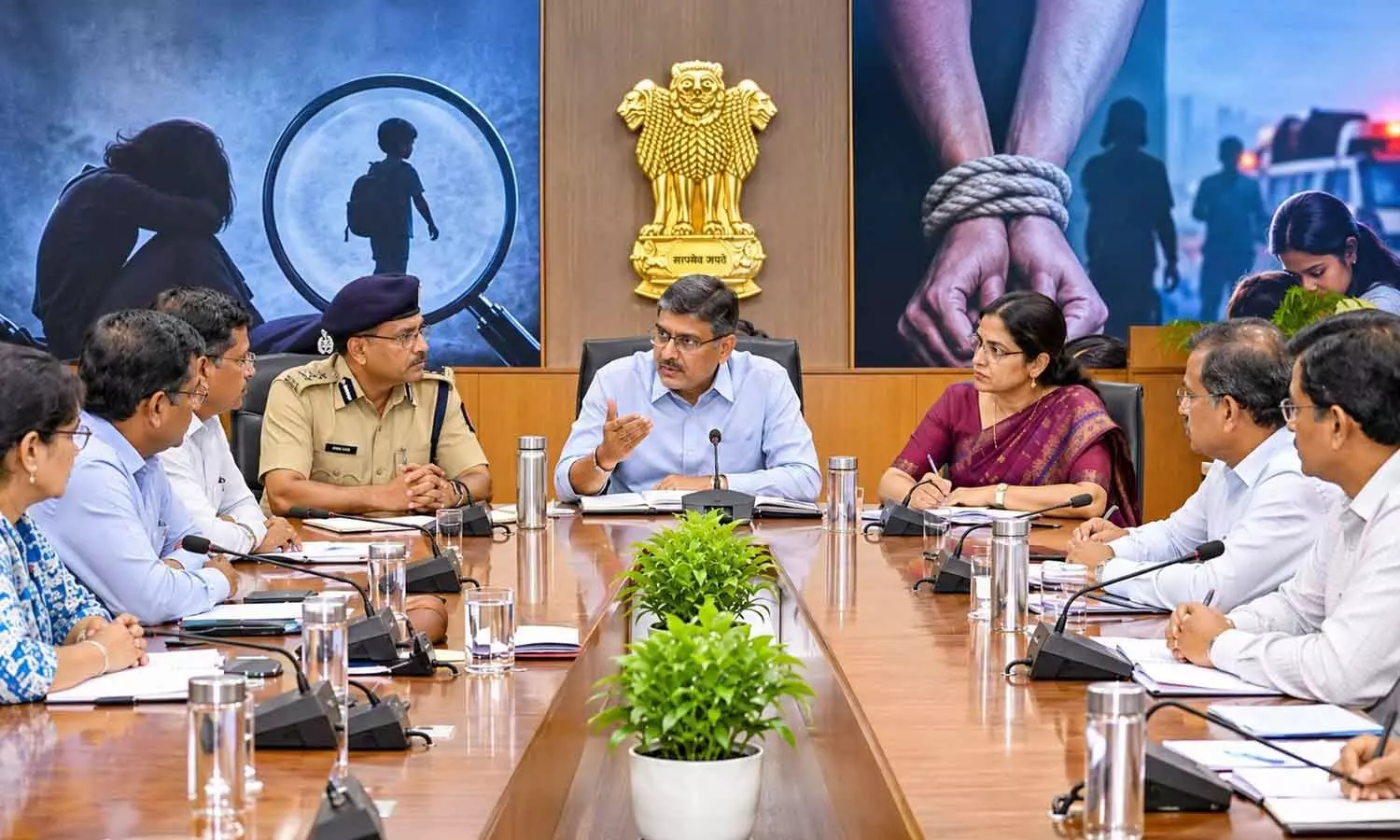
AP sets up special panels to combat human trafficking
Amaravati: The state government has constituted dedicated state and district-level committees to monitor cases of missing children, strengthen anti-human trafficking measures and improve coordination among departments involved in child protection.
The Department for Women, Children, Differently Abled and Senior Citizens issued orders in compliance with the Supreme Court’s directions dated May 22, 2026, in G Ganesh vs State of Tamil Nadu and Others (SLP(Crl.) No.11263/2025).
The 16-member state level committee will be chaired by the principal secretary or secretary of the department concerned, with the director general of police or additional director general of police (CID/Missing Children) as co-chairperson. The commissioner or director of the women development and child welfare department will serve as member-convener. The panel will include senior representatives from the police, Anti-Human Trafficking Unit (AHTU), Labour, School Education, Health and Family Welfare, State Legal Services Authority, Railway Police, Cyber Crime and CCTNS wings, and Social, Tribal, BC and Minority Welfare departments. Two representatives from reputed child rights or anti-trafficking NGOs will also be members.
The committee will review FIR registration and investigations, monitor digital tracking systems and CCTNS integration, and oversee Aadhaar-based biometric verification of recovered children. It will identify trafficking-prone districts, recommend preventive measures and monitor the restoration and rehabilitation of rescued children.
A key responsibility will be to ensure that children are not restored to families without proper verification, particularly in cases where family members may be involved in trafficking or exploitation. The panel will also coordinate interstate tracing and rescue operations, review pending court cases and recommend improvements to procedures and training for personnel involved in child protection.
At the district level, chief secretary G Sai Prasad has directed all collectors and district magistrates to constitute 12-member committees. The collector will chair each panel, the superintendent of police or a police representative will be co-chairperson, and the district child protection officer will act as member-convener.
These committees will monitor trafficking-prone villages and transit routes, ensure that recovered children are promptly produced before Child Welfare Committees, conduct public awareness campaigns and submit monthly progress reports to the State committee.
The government has also assigned the state nodal officer for missing children responsibility for maintaining state-level data, monitoring district mechanisms, ensuring compliance with Supreme Court directions and coordinating with the Centre and authorities in other states.
The move is aligned with the Juvenile Justice (Care and Protection of Children) Act, 2015, Mission Vatsalya Guidelines and the Standard Operating Procedures issued by the Ministry of Home Affairs.


