




- Govt will provide legal ownership of rural properties: MP CM Yadav
- Congress assured of defeat in future elections, says Karnataka BJP's Chalavadi Narayanaswamy
- UP: Rs 8 lakh compensation for lives lost in disaster, 30 pc higher compensation for crop losses
- 1984 anti-Sikh massacre trials conducted like institutional fraud, says former judge
- BJP leader Ravi Kumar demands apology from Priyank Kharge over ‘village idiot’ remark
- Karnataka CM Shivakumar to attend LoP Gandhi's meeting in Delhi, call on Union Ministers
- Anil Ravipudi And Venkatesh’s January 12 Vidudala Team Heads To Kazakhstan
- Mahesh Babu Too Heaps Praises On Nitish Tiwari’s Ramayana
Punjab and UP elections: A litmus test for Congress: Beyond SIR, where is the development agenda?
In Short
Punjab offers a chance to regain power, while UP presents a battle for political survival only if Rahul can give a credible development agenda
Share :
A litmus test for Congress: Beyond SIR, where is the development agenda?
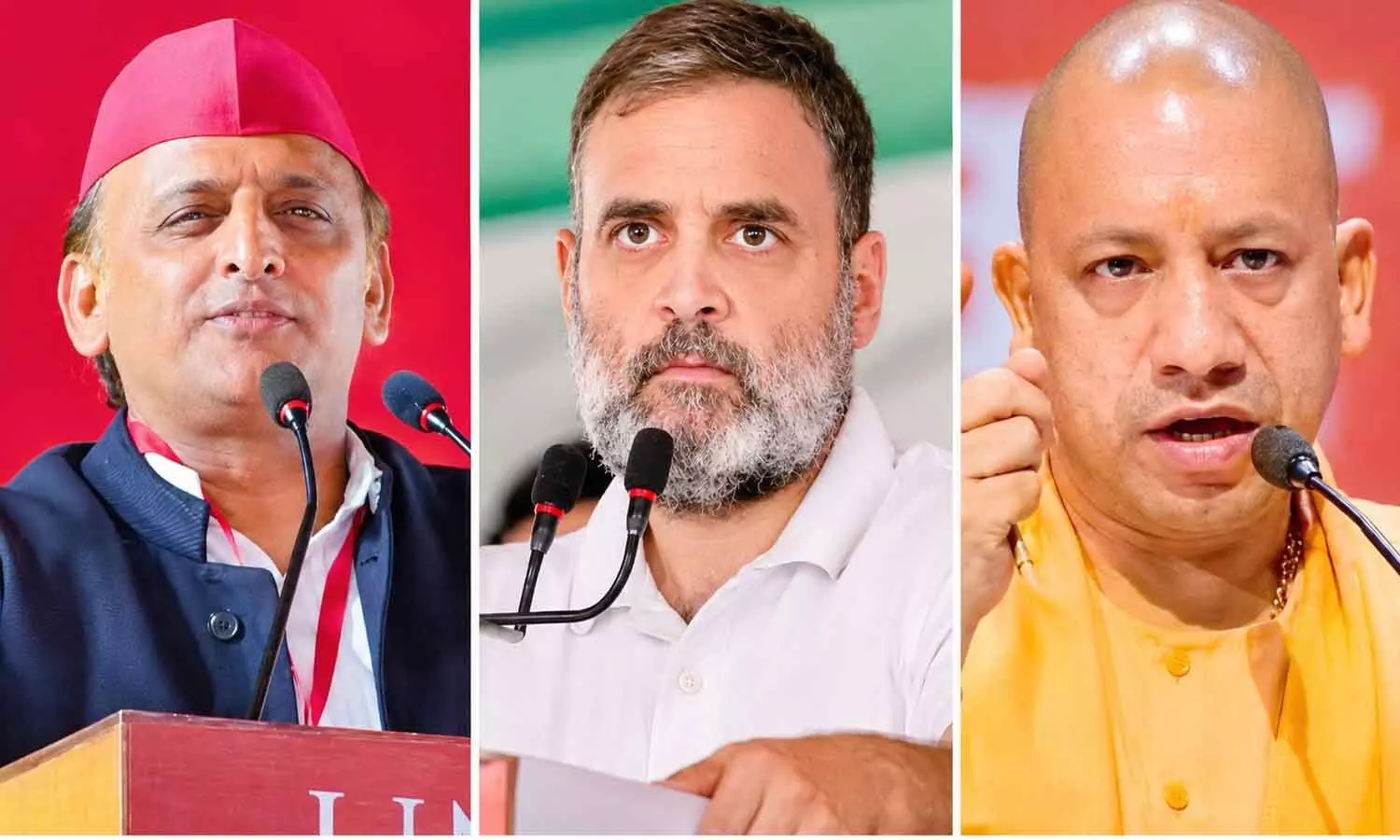
The 2027 Assembly elections in Punjab and Uttar Pradesh will prove to be a litmus test for Rahul Gandhi and his leadership. The Congress faces two distinctly different challenges in these states. While Punjab offers an opportunity to regain power, Uttar Pradesh presents the much bigger task of restoring the party’s lost political relevance.
In Punjab, the Congress, which won 77 of the 117 Assembly seats in 2017, lost power to the Aam Aadmi Party (AAP) five years later, with its tally crashing to just 18 seats. The party continues to grapple with factionalism and has yet to present an alternative model of development for a state burdened by debt and struggling to contain the drug menace.
The real test for Rahul Gandhi is not how many political campaigns he can launch against his opponents, but whether he can convert the Congress’s national political visibility into a strong organisation, credible state leadership and a convincing development agenda.
Punjab needs an economic revival plan, a comprehensive strategy against drug trafficking, an employment roadmap and a credible agricultural policy. Uttar Pradesh, meanwhile, needs a programme addressing jobs, education, industrial investment, agricultural productivity, infrastructure and regional disparities.
The Gen P (politicians) must understand that voters today look for credible leadership and practical solutions rather than theatrics and political rhetoric. Electoral success also requires meticulous booth-level management, a strong grassroots network and, above all, an alternative programme of governance.
Congress remains a significant political force in Punjab. Its electoral record, however, tells a story of missed opportunities and internal mismanagement.
The Congress high command replaced Sunil Jakhar with Navjot Singh Sidhu as Punjab Pradesh Congress Committee president in July 2021. Two months later, Captain Amarinder Singh was forced to resign as Chief Minister, and Charanjit Singh Channi was brought in as his replacement.
Differences between Sidhu and Channi continued, leaving the party with competing centres of authority. Both eventually lost their respective constituencies. Rahul Gandhi led the Congress campaign, but the high command had apparently failed to understand the political dynamics of Punjab and the consequences of its leadership decisions.
Five years later, the party is still attempting to overcome factionalism. The appointment of Pargat Singh as the new PPCC president is part of the latest effort to bring different factions together. Candidate selection is likely to pose another challenge.
The high command has also sought the services of political strategist Sunil Kanugolu, who was initially associated with Prashant Kishor’s team, to prepare its election strategy. The party is planning state-wide cycle yatras across the Malwa, Majha and Doaba regions to mobilise public opinion and highlight people’s concerns.
However, party leaders recognise that unless these campaigns focus on local problems and offer practical solutions, national issues such as Vote Chori may not cut much ice with voters.
The drug menace, in particular, has devastated families across different sections of Punjab’s society. The Congress cannot merely criticise the AAP government. It must explain how it would tackle a problem that existed even during its previous tenure.
It also needs a credible roadmap for generating employment, preventing youth migration, reviving industry and attracting investments. If it cannot offer concrete solutions to these challenges, its electoral journey will be far from easy. Voters cannot be expected to believe that replacing AAP with Congress will automatically resolve Punjab’s problems.
Meanwhile, the BJP, despite its limited political presence in the state, continues to remind voters of the injustice suffered by the Sikh community during and after the 1984 anti-Sikh riots following the assassination of Indira Gandhi. This remains a politically sensitive issue that the Congress cannot afford to ignore. If Punjab is a battle to regain power, Uttar Pradesh is a battle to regain political relevance.
The Congress’s decline in UP has been particularly striking. It won 28 seats in the 2012 Assembly elections, seven in 2017 and just two in 2022, when it contested almost the entire state on its own. Its vote share in 2022 was a mere 2.33 per cent.
Even in 2027, the party is likely to play second fiddle to the Samajwadi Party (SP). In the 2024 Lok Sabha elections, Congress won six of the 17 seats it contested in the state.
The party is attempting a three-pronged strategy involving outreach to Gen Z, organisational revival and an early seat-sharing arrangement with the SP. However, its efforts to attract young voters are yet to gain much traction. It is now looking increasingly towards Dalit voters, but SP chief Akhilesh Yadav is well ahead in his campaign and has also focused on reaching out to the youth.
The Congress organisation remains weak in UP, particularly at the block and booth levels. Its traditional support bases among upper castes, Dalits and Muslims have progressively shifted towards other political parties including the BJP, SP, BSP and AIMIM, depending on the region and electoral context. The party has also lost several influential state-level leaders, making its revival an uphill task.
A campaign built around Rahul Gandhi’s speeches and Priyanka Gandhi’s public appearances cannot substitute for a strong state organisation.
For Congress, the immediate challenge is to identify constituencies where it has a genuine organisational presence, select credible candidates and establish recognisable local leadership. It must also avoid last-minute seat-sharing disputes that could undermine campaign coordination.
This brings us to a larger question concerning Rahul Gandhi’s political priorities. Over the past few weeks, the Congress leadership has devoted considerable political attention to the Special Intensive Revision (SIR) of electoral rolls.
There is a feeling within the UP Congress that Rahul Gandhi is spending more time targeting the Election Commission and Chief Election Commissioner Gyanesh Kumar over SIR than developing an alternative programme for the state. If he believes that national political controversies alone can help the party win elections in both Punjab and UP, he could be heading for further disappointment.
The Congress must understand that voters will judge it on its ability to address their everyday concerns and not the Vote Chori or Chanda Chori narrative.
It is not enough to tell people that the BJP or AAP has failed. The party must explain what it would do differently and why its proposed solutions are more credible and effective.
In Uttar Pradesh, the BJP has an established organisational network and a government led by Yogi Adityanath. Congress will have to compete not merely through national political rhetoric but through constituency-level leadership and grassroots mobilisation. immediate priority should also be to negotiate a workable seat-sharing arrangement with the SP.
Punjab and Uttar Pradesh represent two different tests of Rahul Gandhi’s leadership.
In Punjab, he must demonstrate that the Congress high command has learnt from the mistakes of 2021 and can manage competing state leaders without weakening the organisation. It must also convince voters that it has credible answers to the state’s economic, social and governance challenges.
In Uttar Pradesh, the challenge is far greater: rebuilding an organisation that has steadily lost ground over three decades and restoring the party’s independent political identity without becoming permanently dependent on the Samajwadi Party.
Ultimately, voters in both states will judge the Congress not by the number of political campaigns it launches against its opponents, but by the leadership it offersand the development agenda it puts before them. That is the real test Rahul Gandhi must prepare for in 2027.
(The author is former Chief Editor of The Hans India)
Social harmony can’t be achieved through political slogans
Punjab and UP elections: A litmus test for Congress: Beyond SIR, where is the development agenda?
Devices aren’t lasting as long as they should, here’s why
BHEL targets Rs 3,000 crore profit; HMT factory to be revived soon: Kumaraswamy
K’taka govt dealing with Centre in name only over drought: Kumaraswamy
Chhattisgarh govt announces 1,703 govt jobs ahead of Diwali


