






- Healthcare Pricing Summit 2026 organised
- Three-day FDP begins on ‘Generative AI and Agentic AI’
- A new mobile app to flag concerns, get them ironed out
- VIT-AP hosts NASA space apps challenge 2026
- Sikh BJP leaders 'proud' of PM Modi's visit to Gurdwara in Manila
- India's horticulture output estimated to rise 4.36 pc to record 3,869 lakh tonnes in 2025-26
- Suriya’s Scene Crosses ₹260 Crores Worldwide In Just 10 Days
- INS Sahyadri and Japan's JS Ise participate in maritime exercise
Can Naidu’s Investment Protection Act end India’s political risk?
In Short
Unveiled at the 31st CII Partnership Summit, Chandrababu Naidu’s Investment Protection Act aims to safeguard investors from political reversals using escrow accounts and statutory immunity—but faces a major constitutional hurdle.

Share :
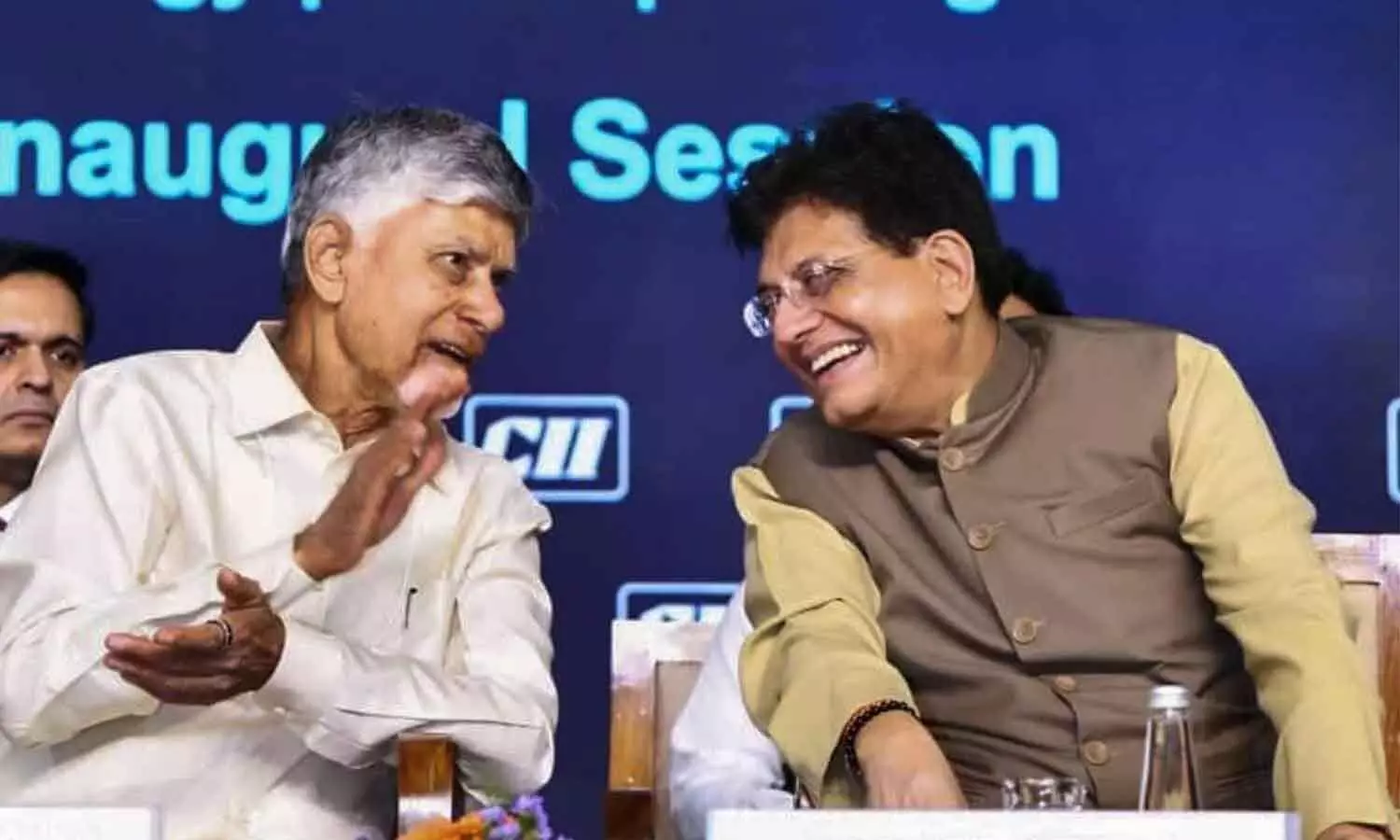
Can Naidu’s Investment Protection Act end India’s political risk?
Do not just build factories, move your headquarters here. Invest here and innovate here. Our doors are always open for you. — N. Chandrababu Naidu, Chief Minister of Andhra Pradesh, at the 31st CII Partnership Summit
For decades, global corporations eye-balling India’s vibrant market have harbored one silent, persistent fear: the five-year election cycle. In a country where a change in state leadership can abruptly stall infrastructure, revoke land allotments, or freeze promised subsidies, policy continuity has remained the Achilles’ heel of industrial growth. At the 31st CII Partnership Summit in Visakhapatnam, Andhra Pradesh Chief Minister N Chandrababu Naidu unveiled a bold legislative blueprint aimed at neutralizing this exact risk.
Addressing industry captains alongside Union Commerce Minister Piyush Goyal, Naidu announced plans to introduce India’s first Investment Protection Act—a law specifically designed to shield businesses from regime changes and political vendettas. With Andhra Pradesh securing fresh investment commitments worth nearly ₹9.89 lakh crore through 303 Memoranda of Understanding (MoUs) at the summit, the announcement could not have been timelier. Yet, as economists and legal experts dissect the proposal, a critical question emerges: will this legislation truly be a gamechanger, or will it collide with the realities of constitutional politics?
The ghosts of policy reversals
Naidu’s push for an Investment Protection Act is born out of recent, bruising history. Between 2014 and 2019, Andhra Pradesh aggressively courted global capital. However, following the 2019 state elections and a change in government, several flagship projects were canceled, stalled, or subjected to sweeping reviews.
High-profile ventures—ranging from the Bhogapuram airport and Ramayapatnam port to the Kadapa steel plant and the Amaravati capital city project—faced severe disruptions. The revocation of land allotted to the Lulu Group for a ₹2,300-crore project and the controversial renegotiation of signed renewable energy power purchase agreements (PPAs) sent shockwaves through international boardrooms, particularly among Japanese and European investors.
The fallout tarnished the state’s reputation for reliability. Having returned to power in June 2024 and amassed cumulative investment intentions worth ₹32.49 lakh crore, Naidu recognizes that rolling out the red carpet is no longer enough—investors need a legal firewall.
Inside the legislative blueprint
Rather than relying on verbal assurances, the proposed Act seeks to institutionalize investor confidence through three core pillars:
1. Statutory Immunity from Political Vendetta: The legislation aims to ring-fence legally vetted contracts, land allotments, and clearances from arbitrary cancellation by incoming administrations.
2. Dedicated escrow accounts for incentives: One of the biggest frustrations for manufacturers in India is waiting years for promised tax rebates and subsidies. Naidu revealed plans to establish an escrow mechanism funded directly from a portion of state tax collections, ensuring that industrial incentives are disbursed automatically without bureaucratic or political interference.
3. Speed of Doing Business Act: Alongside investment protection, the state is drafting a companion law to eliminate administrative bottlenecks and enforce strict timelines for project approvals.
Crucially, Naidu has also urged the central government to enact a parallel Central Investment Protection Act, arguing that nationwide legal uniformity would elevate India’s standing as a premier global manufacturing hub.
The Constitutional hurdle-A gamechanger?
If successfully implemented, the Act could spark a healthy legislative race among Indian states, shifting competition from mere subsidy wars to genuine governance guarantees. An escrow-backed incentive system alone would solve a massive working-capital headache for industries.
However, legal analysts point to a fundamental constitutional catch: parliamentary and legislative sovereignty. Under Indian jurisprudence, one state assembly generally cannot permanently bind a future assembly from amending or repealing an existing state law—unless the legislation receives Presidential assent or is backed by a central framework under the Concurrent List. Without national statutory backing, a future government with a simple legislative majority could theoretically vote to dilute or scrap the Act itself.
Furthermore, critics caution that the law must carefully balance investor protection with public accountability, ensuring that genuinely corrupt or fraudulent deals struck by a previous regime cannot hide behind the shield of “investment immunity.”
The verdict
Ultimately, while legal guardrails raise the political and judicial cost of tearing up valid contracts, the true success of the Investment Protection Act will depend on bipartisan maturity and central government support. By putting political risk front and center on the national policy agenda, Chandrababu Naidu has started a vital conversation that India’s $5-trillion economy can no longer afford to ignore.
(The writer is a former OSD to Union Civil Aviation Minister)
Cyclone Akvan poses fresh threat to Andhra Pradesh
CM Naidu puts admin on high alert
Meet the man who turned down Rs 72L job to set up startup in Tirupati
CM Chandrababu Naidu seeks Centre bailout as 2 cyclones cost AP Rs 7k cr
AP takes aim at global race for chips, robots & AI
CM Chandrababu Naidu orders cyclone preparedness


