




- Cyber risks on the rise owing to rapid AI adoption, scamsters
- Free data engineering course for unemployed graduates
- Software engineers in the AI age: Skills beyond coding
- ‘321’ ready to hit theatres today
- ‘KilleR’ trailer launched; Harish Shankar praises sci-fi thriller
- ‘Summer Holidays’ locks Nov 6 release
- Zeenath Khan takes Hyderabad’s history to Mumbai LitFest shortlist
- Breast cancer doesn’t always start with a lump
Equal before law? Ask the convict and the undertrial
In Short
On January 5, 2026, the Supreme Court refused them bail, The Delhi High Court has rejected Khalid’s plea repeatedly.

Share :
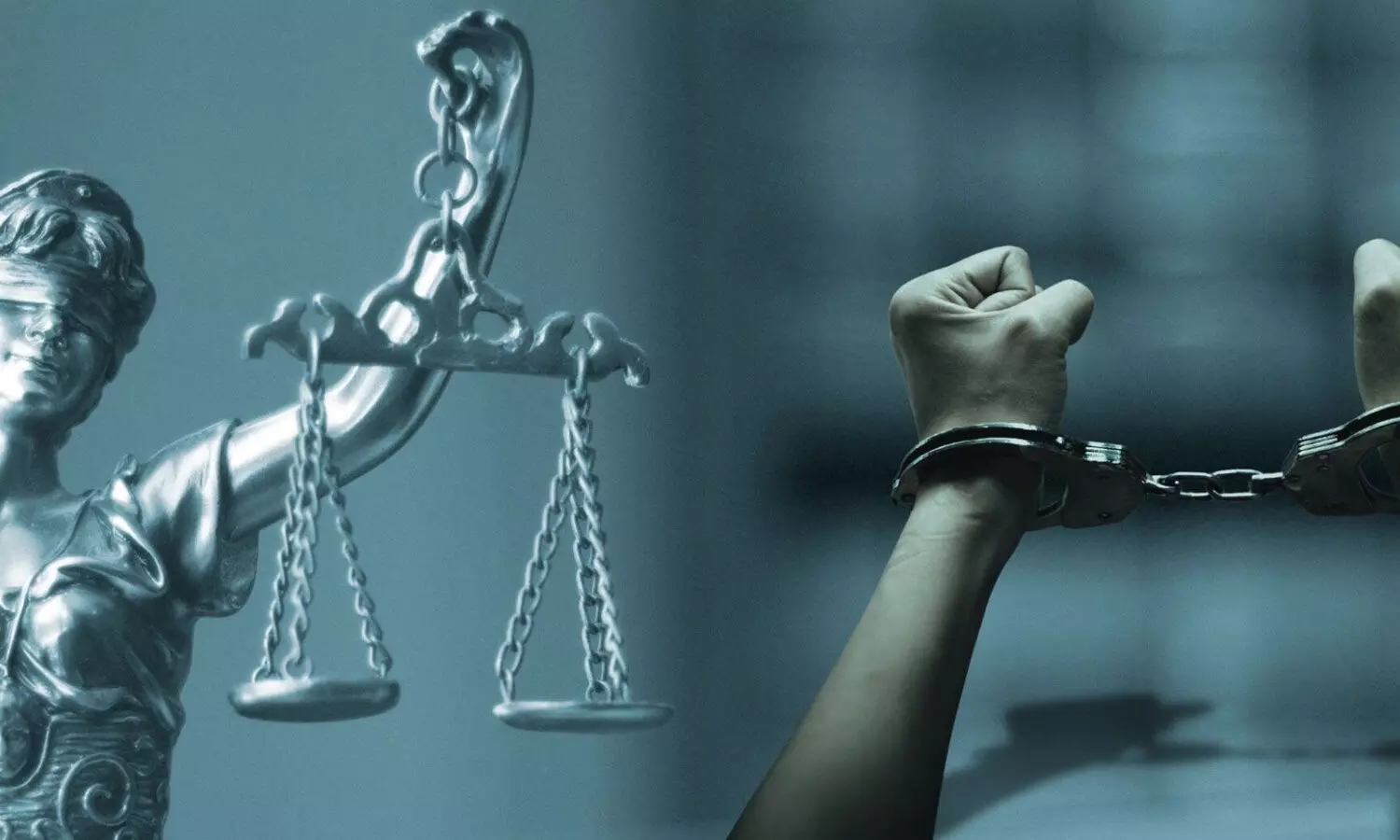
Equal before law? Ask the convict and the undertrial
In the same week that an Indian prison system holds thousands of undertrials who have never been convicted of anything, the Allahabad High Court opened its doors wide for a man convicted of murder, so that he may contest an election, possibly on a ruling-party ticket.
The order is almost impossible to read without a double-take. Nandlal Rai, also known as Babloo Rai, was sentenced to life imprisonment by a Varanasi trial court in April 2025 for the murder of Pramod Kumar Nigam, an activist of the Ram Janmabhoomi movement. A division bench of the High Court, comprising justices Siddharth and Vinai Kumar Dwivedi, has now not only granted him bail but stayed his conviction and sentence while his appeal is pending. The stated purpose, in his own lawyer’s words, is his wish to fight the 2027 Uttar Pradesh Assembly election as an independent, or “if possible, on a BJP ticket.”
The court’s reasoning, as reported, was striking: the right to contest elections is “akin to the right to livelihood,” and, in the words attributed to the bench, “the common man’s right to livelihood... is no less important than a politician’s right to contest elections.” In one clean sweep, a murder convict’s political ambition was elevated into a constitutionally protected livelihood interest.
Now hold that up against another, far more numerous reality. Umar Khalid and Sharjeel Imam have spent more than six years in custody in the Delhi riots “larger conspiracy” case — arrested, accused, never convicted. The trial has not begun. A charge sheet running to 17,000 pages and a prosecution witness list reportedly approaching 900 sit before a court that has not yet framed charges.
On January 5, 2026, the Supreme Court refused them bail, The Delhi High Court has rejected Khalid’s plea repeatedly. Across the country, journalists, activists and ordinary citizens are detained under stringent laws, some for years, with no date fixed for charges to be framed, let alone a verdict.
Set the two images side by side and a question forms that no fair observer can avoid: is the higher judiciary now applying one standard to those aligned with power, and another to those who challenge it?
The honest objection — and why it is not enough
Every fair analysis must state the strongest counter-argument, because it is a real one and not a pretext. The two situations are legally different. Rai’s case is a suspension of a conviction pending appeal — a recognised power the High Courts exercise under the criminal procedure code, and one the Supreme Court has itself used for public representatives who stand to lose their office and their constituents’ representation while an appeal drags on.
A stay of conviction preserves the status quo until the appeal is heard. It does not declare anyone innocent. Bail for someone accused of terrorism offences, on the other hand, is governed by a far stricter statutory regime — the Unlawful Activities (Prevention) Act inverts the usual presumption and requires a court to be satisfied that the accusation is prima facie not true. The judges denying bail to Khalid and Imam are, on this reading, simply applying a law Parliament wrote.
This is true, and it must be said plainly to keep this article honest. But it answers only the narrow question of jurisdiction and statutory text. It does not answer the larger question of equity, priority and perception — and it is precisely there that the unease settles.
The law gives every judge discretion. The question is not whether the power to suspend a conviction exists. It is whether, in a republic where thousands rot undertrial and where even the accused in a murder case queue for years for appeals, the most urgent use of that discretion is to rescue the electoral prospect of a convict who, his own counsel concedes, emerged as a suspect only days after the FIR and stands convicted on circumstantial evidence — one whom media reports have also linked to the late gangster-turned-politician Mukhtar Ansari.
Nothing in the reported order suggests the bench doubted his eventual acquittal. It suspended conviction to protect a candidacy. Meanwhile, for the accused who has spent six years awaiting trial — for whom the Supreme Court’s own judgment in Union of India v. K.A. Najeeb recognises that prolonged incarceration can itself justify bail — the discretion repeatedly bends the other way.
Speedy trial, the Court has said for decades, is part of the guarantee of life and personal liberty under Article 21. Six years without charges framed is, on any reading, the failure of that guarantee. Yet the higher courts’ remedy has been to let the detention continue.
What is really being tested
It would be wrong to reduce this to a single political party or a single judge. The cases are decided by different benches, under different statutes, on different facts. The deeper trend is institutional.
The contrast reveals what is increasingly the operative hierarchy in Indian criminal justice: political value trumps individual liberty. A conviction can be stayed the moment it threatens a career in representative politics. But a presumption of innocence, the very foundation of a free society, is treated as dispensable the moment an accused is branded a “dissident,” an “activist,” a “urban Naxal,” or a “rioter.” The label, not the evidence, becomes the operative fact.
That is how you get the strangest arithmetic in the world’s largest democracy: a man proven guilty enough to be sentenced to life for murder is free to seek office, while men never proven guilty of anything sit into a seventh year waiting for a court to even tell them the precise charges they must answer.
The danger to the judiciary is reputational and profound. Courts command obedience not because they hold the sword or the purse, but because the people believe they are even-handed. Every time a stay of conviction drops for a political aspirant while an undertrial’s bail fails for the ninth time, a little of that belief drains away. Law, wrote one jurist, is not an ass; but it can be made to look like one when it is ridden by opposing riders on the same afternoon.
Where this is heading
The honest answer to “where is the higher judiciary heading” is that it is heading in two directions at once, and that is the problem.
In one direction lies a judiciary internalising the priorities of state power: alert to the political convenience of a suspect aligned with the ruling dispensation, hardening itself against the accused who stands outside it. In the other direction — visible in the occasional bail grant, in Najeeb, in the rare acquittal — lies the older, better judiciary: the one that saw courts as the last refuge of the friendless and the unpopular. The outcome has not been decided. It will be decided case by case, and it will be decided by whether the higher judiciary remembers a simple, ancient truth: the test of a court’s courage is not how it treats the powerful man who wants a favour, but how it treats the powerless man who has nothing left but the law. On the present evidence, the balance of that test is hanging, and not comfortably.
(The writer is with the Cholleti BlackRobe Chambers, Hyderabad, and writes on the economy, politics and law)


