






- MMC chief puts Ghatkesar civic works on fast track
- Congress hits back at KTR over Sonia’s role in TG formation
- Sridhar Babu rolls out red carpet for Mumbai investors
- Telangana will oppose AP’s 1.8 TMC Nagarjuna Sagar water plan: Uttam
- BRS vows fight until all eligible get pensions
- GHMC sets target of 3,400 new Self-Help Groups
- GHMC to crack down on roadside dumping
- Kids below 12 can't use lifts alone in Maha
Everyone should swear by simple living and high thinking
In Short
The holy scriptures of several faiths emphasise the value of simplicity and humility as attributes that those who believe in God need to possess
Share :
Everyone should swear by simple living and high thinking
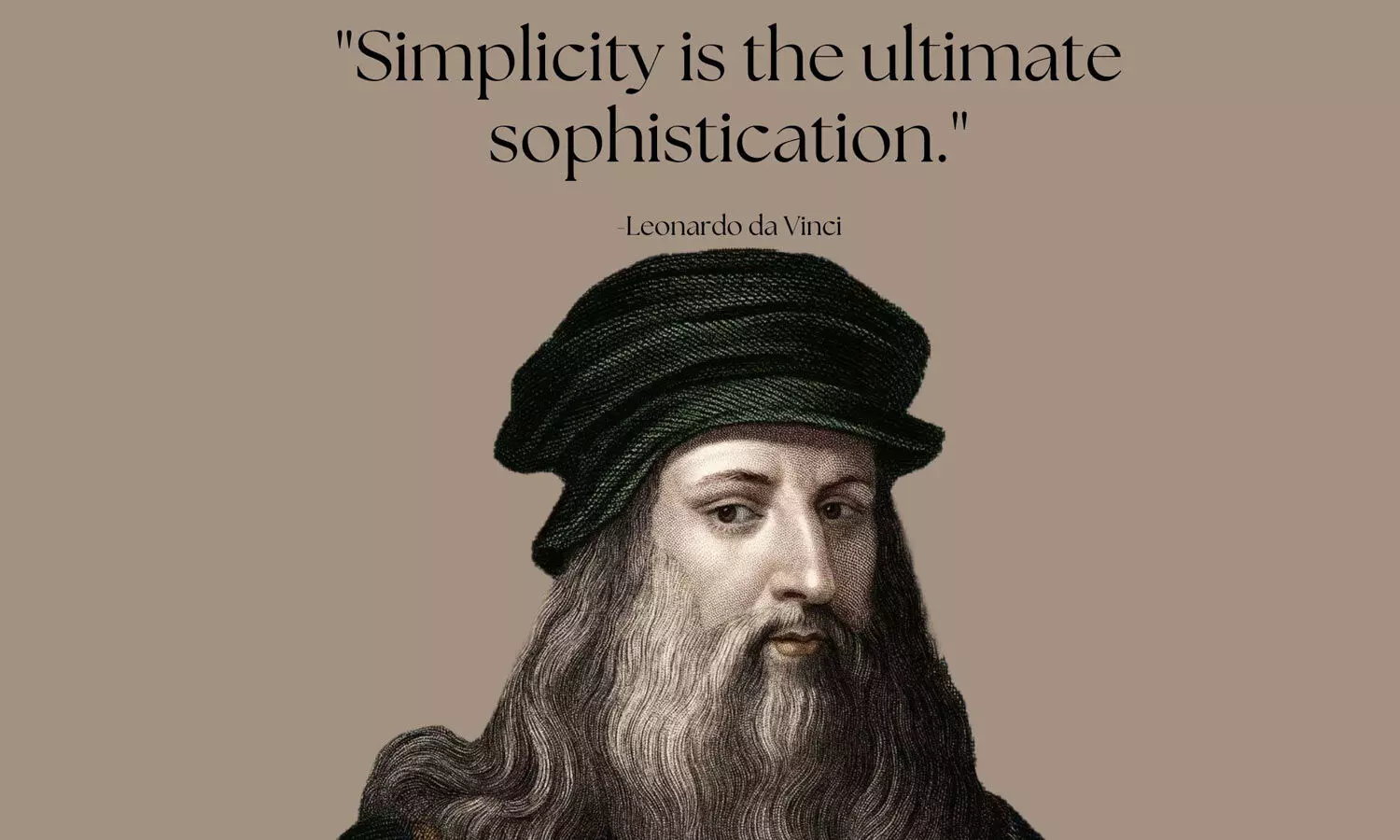
“Simplicity is the ultimate sophistication” is a famous statement that dispels the belief that sophistication lies in unnecessary complexity, outward display or accumulation of wealth and power. It is widely attributed to Leonardo da Vinci, Renaissance artist, scientist and inventor, who demonstrated that the highest form of intelligence is reflected in the ability to discover elegance and simplicity in complex ideas.
Modern world societies are increasingly influenced by consumerism, competition and material aspirations, making philosophy acquire even greater relevance. Simplicity is not a sign of weakness or lack of ambition and rather stands for the ability to distinguish essential matters from unnecessary details and arrive at clear conclusions, or extract information of relevance from noise. It is an attribute which, in its true form, should inform one’s thought, word and deed and result in leading a life based on moderation, self-discipline and contentment rather than excessive material desires. It is an internal quality that influences individual behaviour, institutions and society.
It was from my father that I first learnt the value of being unassuming and simple. Whether in the choice of clothes I wore, or in sporting other things such as shoes or a wristwatch or head gear, his advice was to aim at not being noticeably different from the other, when in company.
An excellent way of appreciating the value of simplicity is to learn lessons from the lives and times of great people, which showed that simplicity can coexist with extraordinary achievement and influence. Great leaders are often remembered not merely for their authority or ability to connect with ordinary people.
For example, the philosophy of Gautama Buddha taught a Middle Way between sensual indulgence and severe asceticism, leading to freedom from ignorance, craving, rebirth, and suffering. His core teachings are summarised in the Four Noble Truths and the Noble Eightfold Path, a training of the mind that includes ethical training and kindness toward others, and meditative practices such as sense restraint, mindfulness, He advocated ‘dhyana’ or meditation, avoiding both indulgence and extreme deprivation and emphasised the importance of inner peace.
Simplicity, character-building, self-confidence and service to humanity were, in a similar manner, the central features of the teachings of Swami Vivekananda. He was the chief disciple of the great mystic Ramakrishna Paramahamsa, who was a devotee of Goddess Kali, but adhered to various religious practices from the Hindu traditions of Vaishnavism, Tantric Shaktism, and Advaita Vedanta, as well as Christianity and Sufi Islam. The qualities of radical simplicity, selfless service, and universal humanity similarly embodied the life of the internationally revered Mother Teresa.
Another worthy example of simple living and high thinking was the philosophy which Mahatma Gandhi followed, demonstrating that moral strength does not depend on wealth or luxury. Truth, non-violence, self-reliance and service to humanity were the attributes that informed his approach.
Dr A P J Abdul Kalam is another legendary person who is widely celebrated for living by the principle of simple living and high thinking. Despite receiving India’s highest civilian honour, the Bharat Ratna, he remained deeply grounded, approachable, and detached from material wealth throughout his life. Nelson Mandela was an exemplary political leader of the same genre. He is remembered for having demonstrated, through the way he lived, that humility, forgiveness and moral standards are essential qualities of good leadership.
Another extraordinary person whose personal simplicity, honesty and commitment made him one of India’s most respected Prime Ministers was Lal Bahadur Shastri, who was known for his simplicity, honesty, and dedication. He gave the country the powerful slogan ‘Jai Jawan Jai Kisan’ and played a key role in shaping modern India and promoting the Green and White Revolutions.
The holy scriptures of several faiths, such as Hinduism, Christianity and Islam also emphasise the importance and value of simplicity and humility as attributes that those who believe in God need to possess.
For example, the Bhagavad Gita, which is a synthesis of various strands of Indian religious thought and holds a unique pan-Hindu influence as the most prominent sacred text, advocates the concept of ‘Nishkama Karma’ which encourages individuals to perform their duties without excessive attachment to the fruits of their actions.
Another example is that of the Bible, an anthology of religious texts that are central to Judaism and Christianity, and important in other Abrahamic religions such as Islam, which presents simplicity and humility as twin virtues that centre a person’s life on God rather than wealth, status, or pride. Together, they call believers to release worldly distractions, practice contentment, and serve others selflessly
Quran, the central religious text of Islam, in a similar way, is believed by Muslims to be a revelation directly from God, likewise, also emphasizes humility and simplicity as core traits of true believers, defining them through inner character, gentle speech, and rejection of arrogance.
Parents, in the formative years of children’s lives, serve as the primary architects in instilling simplicity and humility by serving as models through their daily lives and structuring a grounded home environment. Children learn moral values mostly through observation and consistent family habits rather than verbal lectures alone. Teachers, who figure in the later stages of their lives, play a vital role in shaping students’ character by acting as living role models and fostering an environment of mutual respect. While textbooks teach academic subjects, teachers instill values such as simplicity and humility through their daily behaviour, classroom culture, and interactions with others.
An important thing in this context is to appreciate the fact that one must guard against the danger of becoming an inverted snob; a person who pretends to despise wealth, high culture, upper social status, and actively mocks them. A person who hypocritically idealises things associated with the working class or plain, ordinary people. One who, in other words, adopts a stance of looking askance at classical music, opera, literature, and glorifies ordinary, cheap or rough – and – ready habits or goods, to exhibit an artificial veneer of down- to -earth authenticity.
No wonder the saying goes that “snobbery is the art of turning your nose up at things you secretly envy!”
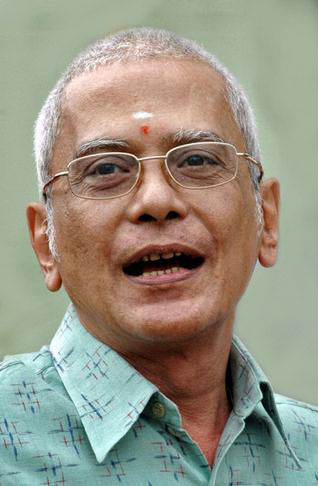
(The writer was formerly Chief Secretary, Government of Andhra Pradesh)
SP Unlikely to Give Congress More Than 25 Seats in UP
CM Revanth Reddy heads to BRS bastion for political showdown
Telangana committed to SCs, STs uplift: Ganesh
Telangana a role model in SC and ST welfare: Revanth Reddy
KTR warns of mass movement over alleged Krishna water diversion
Mosquito menace stings Hyderabad


