




- Foundation stone laid for new facilities at Nimmakuru APRS
- Handri-Neeva water released to 77 tanks in Dhone and Pathikonda
- 139 ‘Outstanding’ teachers honoured in on Teachers’ Day
- Foreign involvement in the CJP-led student protests is seriously worrisome
- Kshaya Masa and its profound relevance
- Shifting spaces of inequalities in the education lifecycle
- Why Indian parents are moving from “cute” to “conscious” when buying babywear
- Swetha Prasanna: Carrying the Kuchipudi legacy forward
Foreign involvement in the CJP-led student protests is seriously worrisome
In Short
Officials reportedly identified US-linked meetings, training and Rs 1.3 crore NGO funding

Share :
Foreign involvement in the CJP-led student protests is seriously worrisome
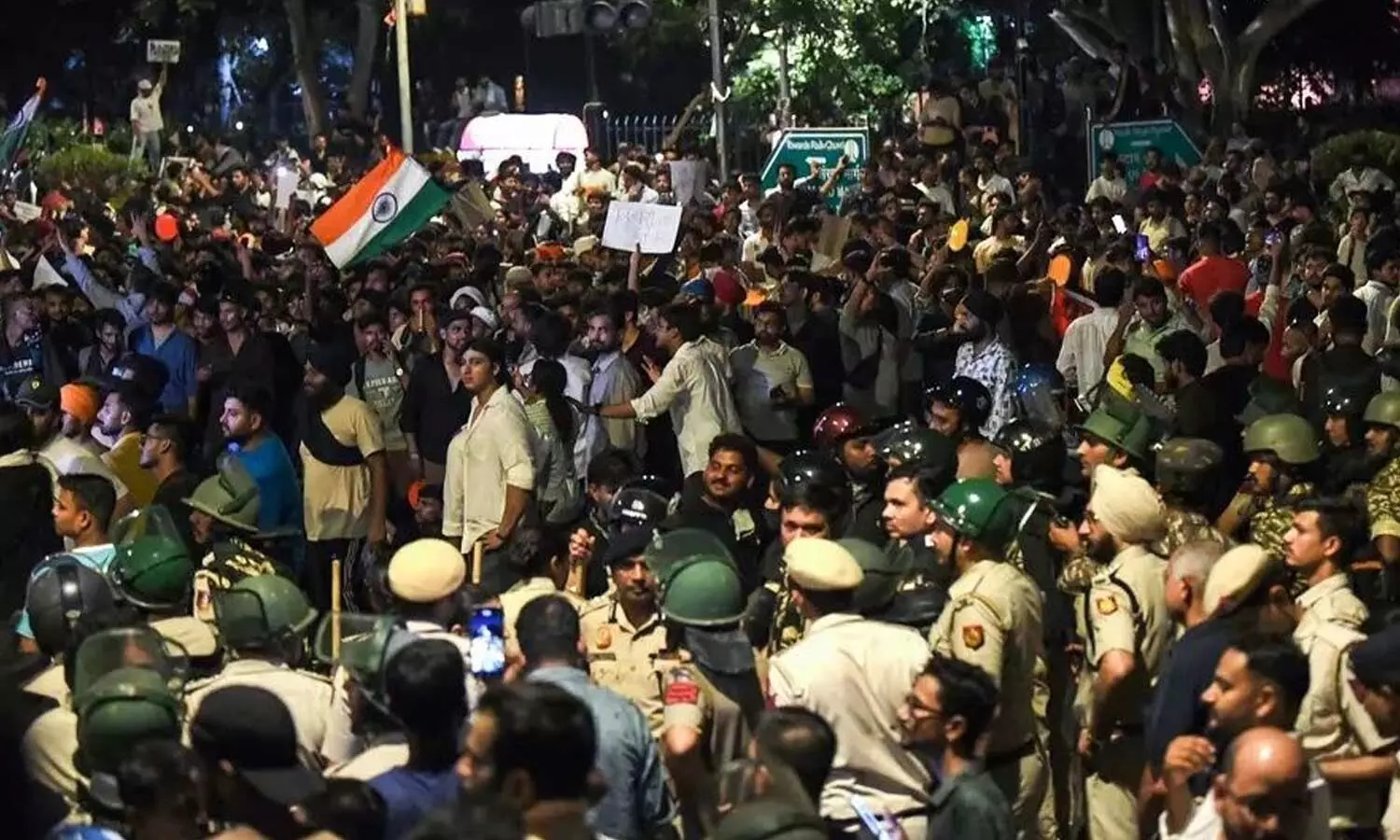
Since the beginning of the year, India has been rocked by a sweeping wave of large-scale and youth-led protests, most notably represented by the series of demonstrations orchestrated by the burgeoning Cockroach Janta Party (CJP).
Sparked by official contempt and fuelled by deep-seated economic and educational grievances, the Gen-Z movement has transformed a derogatory insult into a powerful symbol of resistance, posing one of the most formidable challenges to Prime Minister Narendra Modi’s administration.
While these demonstrations originated from genuine grievances regarding economic hardship and academic corruption, growing security concerns suggest that foreign actors may have covertly intervened to amplify social unrest and manipulate the trajectory of the protests.
The Union Government has investigated into the alleged foreign interference in the nationwide student protests. Conducted by a joint inter-agency assessment group, under the Ministry of Home Affairs, the probe uncovered what officials describe as a complex web of financial transactions and operational support from US organisations to domestic student groups, raising concerns over external influence in the country’s internal affairs. According to a classified July 20 report of the Ministry of External Affairs (MEA), the probe noticed regular contacts between student organisers and personnel associated with the US Embassy in New Delhi. They suspected that US organisations had attempted to attach themselves to an already existing domestic movement and convert legal assistance, media training and civic engagement into sustained political influence.
The report highlights that between January and April, the US embassy-linked personnel held at least 17 meetings with student organisers and representatives of CSOs, during which the agenda included protest planning, mobilisation, media training, legal assistance, and logistical support.
It may be recalled that on February 15, during a workshop in Gurugram for 22 student organisers, an American consultant instructed participants on methods to preserve evidence for use during legal proceedings.
The probe also exposed that Rs 1.3 crore was transferred to Indian NGOs from a US-based foundation. A local NGO received a grant on January 27, with the funds earmarked for “rapid youth participation, communications resilience and legal-awareness support”. Of course, Washington’s involvement in India’s domestic affairs is not a recent phenomenon, but rather a recurring theme in bilateral relations. A prominent flashpoint occurred during the general elections in 2024, when the US Commission on International Religious Freedom (USCIRF) released a damning report accusing India of severe religious freedom violations. The MEA pronto rejected the report as a ‘malicious attempt to interfere in the ongoing democratic voting process’ and accused the move as being part of a highly biased political agenda. The row intensified significantly in February 2025 following shocking revelations from Washington. The US Department of Government Efficiency (DOGE) disclosed that the US Agency for International Development (USAID) had allocated a $21 million grant intended to influence “voter turnout” in India. In response, the MEA officially stated that these funding operations raised serious concerns about foreign meddling in the country’s domestic political processes.
The latest revelation has created significant concern within India’s security and political circles, with many viewing the alleged foreign interference as a potential threat to the nation’s sovereignty.
While the student protests were rooted in legitimate grievances, the involvement of foreign-funded organisations raises questions about the integrity of domestic movements and the potential for external actors to step in and exploit such sentiments.
PM Modi interacts with National Teachers' Award winners; discusses innovative teaching, student confidence
Attend Assembly or quit
CM Revanth Reddy attacks Centre on mass deletion of votes
Bonanza for AP govt staff: CM Naidu clears 12th PRC, 2 pending DAs for employees
Naidu for overhauling edn to make students future-ready
AP to reconstitute 28 Zilla Praja Parishads


