




- Ankurarpanam on Dec 5 to mark start of Tiruchanoor Brahmotsavams
- Call 1064 to report bribe demands by govt officials: Judge Geetha
- 1,932 APSPDCL personnel to handle cyclone Arnab power outages
- 89 candidates in fray for 24 ZPTC seats in Chittoor
- Election observer oversees micro-observer deployment in Nellore
- Cyclone Arnab: 160 APSRTC services cancelled
- Visakhapatnam: Door-to-door poll campaign comes to a screeching halt
- PNB organises MSME outreach programme
India’s rising food prices: Lessons from the Nobel Prize in Economics
In Short
Releasing buffer stocks promptly under clear rules is preferable to sudden export bans that create uncertainty for farmers and traders. Monitoring inventories and acting against proven hoarding can protect consumers without penalising honest businesses. Support should target poor households rather than rely on open-ended subsidies that strain public finances. Finally, investing in renewable energy, electric transport and diversified energy sources can reduce India’s dependence on imported oil and limit future inflationary pressures.

Share :
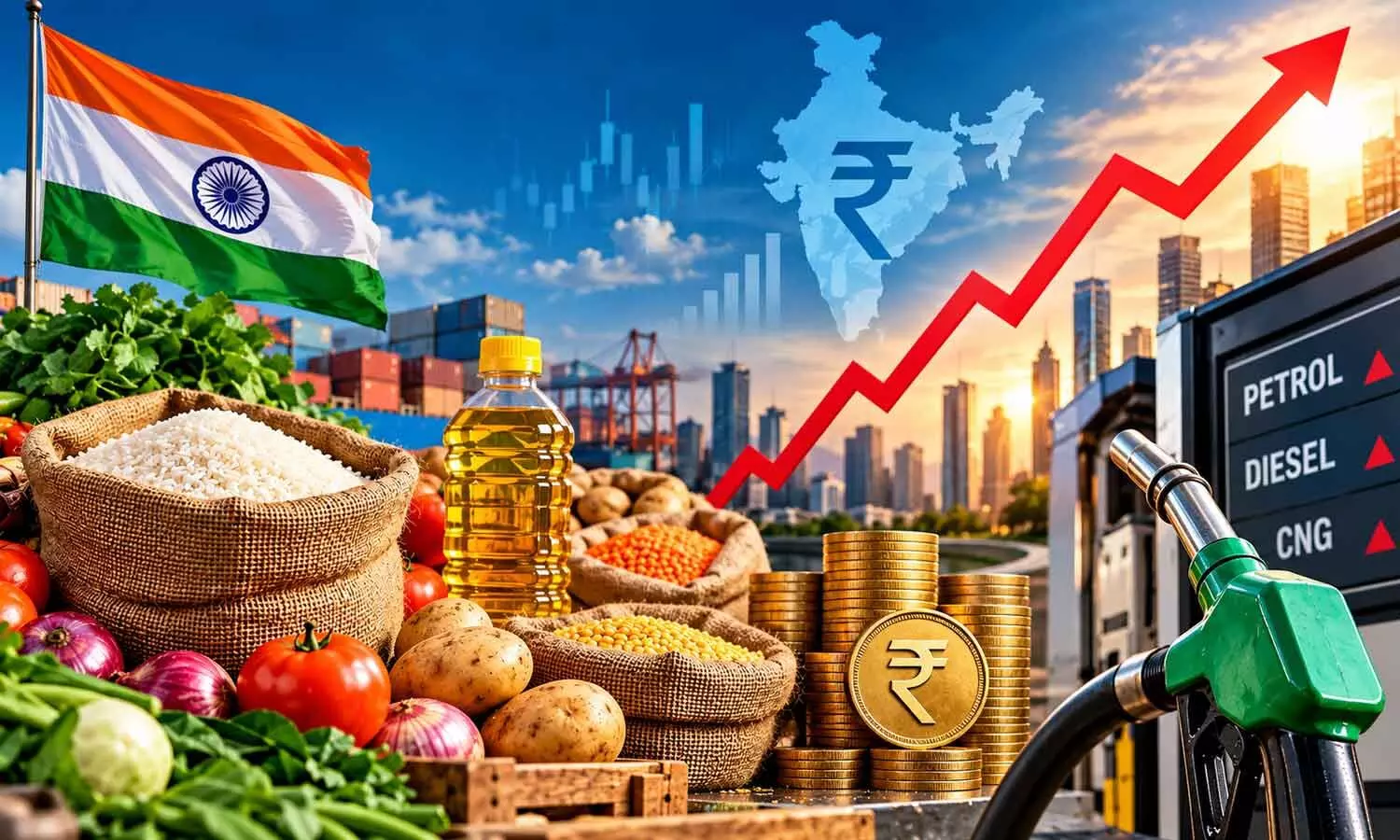
India’s rising food prices: Lessons from the Nobel Prize in Economics
Food prices in India are rising. Food inflation reached 7.74 per cent in September, up from 5.97 per cent in August, while headline retail inflation rose to 5.54 per cent from 4.83 per cent. Prices have climbed every month since April, when inflation was 3.48 per cent. Retail inflation is now at a 23-month high, close to the Reserve Bank of India’s (RBI) upper limit of six per cent. The RBI’s target is four per cent, with a comfort band of two to six per cent. The picture is serious but not yet alarming. This year’s Nobel Prize in economics, announced on October 12, and a few basic ideas from economics help explain why.
What the Nobel Prize tells us:
The 2026 Nobel Prize in Economics went to Robert Hall of Stanford and Michael Woodford of Columbia for their work on the microeconomic foundations of macroeconomic stabilisation. Their research shows that understanding the everyday decisions of households and businesses is essential for managing the economy and responding to shocks such as energy crises and sudden changes in spending. Three lessons help explain India’s rising prices. First, farmers’ planting decisions, traders’ selling choices and households’ buying patterns jointly influence prices.
Second, expectations matter when people anticipate further price rises, they may stockpile goods, demand higher wages and raise prices, making inflation persistent. Woodford’s work highlights the importance of expectations in monetary policy. Third, policies must match the problem: a temporary onion shortage requires a different response from widespread inflation caused by excessive demand. Effective action depends on identifying the cause and responding promptly.
Supply shocks:
When supply falls and the demand remain the same, prices rise. This is the main story behind September’s jump. Onion prices were 108.09 per cent higher than a year earlier, against 48.78 per cent in August. Garlic was up 54.62 per cent, ginger 62.85 per cent and lemon 36.41 per cent. Yet potato prices fell 11.50 per cent, and tomatoes fell 8.62 per cent. If everything were getting dearer, we would blame too much money chasing too few goods. Because only some items are rising, the cause lies in supply.
Inelastic demand:
Economists call food a “necessity”. People cut back little when prices rise, because no household can skip onions or cooking oil. So even a small shortage can send prices up sharply. A 10 per cent fall in supply can push prices up by far more than 10 per cent, because buyers keep purchasing.
Seasons and weather:
India’s farm output depends on the monsoon, with perishables suffering the most. Onions, garlic and ginger are impacted by uneven rain, damp storage and transport delays. Between harvests, supply thins and prices climb. The next worry is El Niño; a weather pattern linked to weaker rainfall in India. A poor winter harvest would keep vegetable prices high into the new year.
Supply-side problems:
India produces plenty of food but loses much of it before it reaches consumers. Following the Nobel lesson, we must examine the decisions of every player in the supply chain. Poor storage facilities and inadequate cold chains force farmers to sell their produce immediately after harvest, often resulting in shortages and higher prices later. Slow transportation makes it difficult to move produce quickly from surplus states to deficit regions. Numerous intermediaries add costs at every stage between the farm and the retail shop, pushing up consumer prices.
Farmers also face a recurring boom-and-bust cycle: when they earn high prices one year, they expand cultivation the next, creating a glut that causes prices to collapse. In response, they reduce production, leading to renewed shortages and price increases. Economists call this recurring pattern the cobweb cycle. Improving storage, transportation, market access and price information can help reduce these inefficiencies, stabilize farmers’ incomes and keep food prices more affordable for consumers.
Artificial scarcity:
Not every shortage is natural. When prices begin to rise, some traders hoard stock and release it slowly to earn more. Speculation also feeds on rumours: if buyers fear a shortage, they stock up, and that panic creates the shortage. Local cartels in wholesale markets can add to the problem. This is where expectations do their work.
Each hoarder acts sensibly for themselves, but together they make the shortage worse. Evidence is hard to gather, and hoarding does not explain the whole price rise. But it is why governments watch stock limits and mandi (wholesale market) practices when prices jump. Better data on who holds how much stock, and when, would help separate real shortages from manufactured ones.
The world outside:
India cannot escape global market pressures. The Food and Agriculture Organisation’s (FAO) Food Price Index rose by 5.8 per cent year on year in September 2026, with increases in cereals, vegetable oils and sugar. India is particularly vulnerable because imports meet a large share of its edible-oil demand, making domestic cooking-oil prices sensitive to international price movements. Crude oil is another major source of inflation. Higher fuel prices increase the costs of transporting vegetables, operating cold-storage facilities and manufacturing fertilisers.
Economists call this cost-push inflation. Unlike temporary vegetable shortages, rising energy and transport costs can affect prices across the economy. A weaker rupee further increases import costs. These global shocks highlight the importance of timely policies that address supply constraints and contain inflation without unnecessarily slowing economic growth.
The worst sufferers:
Ironically, the pain is not shared equally. Rural inflation was 6.08 per cent in September, against 4.88 per cent in cities. Poorer families spend a bigger share of income on food, so a food-led price rise takes more from them. For a daily-wage worker, a doubling of onion prices is a real cut in living standards.
Charting the policy:
The RBI raised its repo rate to 5.5 per cent on October 7, days before the September data came out. Higher rates make loans costlier and cool demand, but they cannot grow more onions. Seen through the Nobel lens, the rate rise is best read as a guard on expectations: it tells families, traders and firms that the central bank will not let a vegetable spike turn into general price rises. Whether more is needed depends on whether prices spread beyond food into wages and transport. Policy responses should match the nature of the price shock.
Improving cold storage, transport and agricultural markets can reduce food waste and supply shortages. Releasing buffer stocks promptly under clear rules is preferable to sudden export bans that create uncertainty for farmers and traders. Monitoring inventories and acting against proven hoarding can protect consumers without penalising honest businesses.
Support should target poor households rather than rely on open-ended subsidies that strain public finances. Finally, investing in renewable energy, electric transport and diversified energy sources can reduce India’s dependence on imported oil and limit future inflationary pressures.
Conclusion:
Although inflation remains within the RBI’s target band and price rises are concentrated in a few vegetables, six consecutive months of increases and uncertainty over oil, weather and global food prices are warning signs.
Whether inflation eases will depend on the winter harvest and timely policies that understand the choices of farmers, traders and households and keep price expectations stable.
(The writer is an economist and visiting Professor at CESS, Hyderabad)
Rights suffer major setbacks in Brazil, Serbia
India’s rising food prices: Lessons from the Nobel Prize in Economics
Salaried households, middle class and rural poor bearing the Super El Niño brunt
Revanth Reddy invites 550 Indian, int'l cos to Global Summit
El Nino Impact: 365 mandals in Telangana declared drought-hit
Cyclone Arnab: Heavy rain forecast in four Telangana districts


