




- Assam Rifles showcases operational preparedness, capabilities in Agartala
- Court rejects BRS leader’s remand after dramatic arrest over social media post
- Beyond civic poll numbers: Rajasthan Congress leadership in focus again
- 'Not needed anymore': Maulana Shahabuddin Razvi Bareilvi on reservation debate
- Rahul Gandhi has ‘anarchic’ mindset: Maha CM
- India-Norway relationship growing, getting stronger: Outgoing Norwegian envoy
- Nagaon bypoll: Assam Minister targets Congress MP Rakibul Hussain
- With just a day left for contract to end, Kerala CM Satheesan caught in bind over chopper politics
Why India’s judiciary must rise above limitation to protect public assets
In Short
In the Ayodhya land dispute, the Supreme Court invoked Article 142 to mould relief beyond the strict confines of ordinary civil remedies, by directing the allotment of alternate land for a mosque while awarding the disputed site for temple construction. The judgement illustrates that, in matters of deep public and constitutional significance, the Court is prepared to look beyond technical constraints and fashion solutions that aim at ‘complete justice’.

Share :
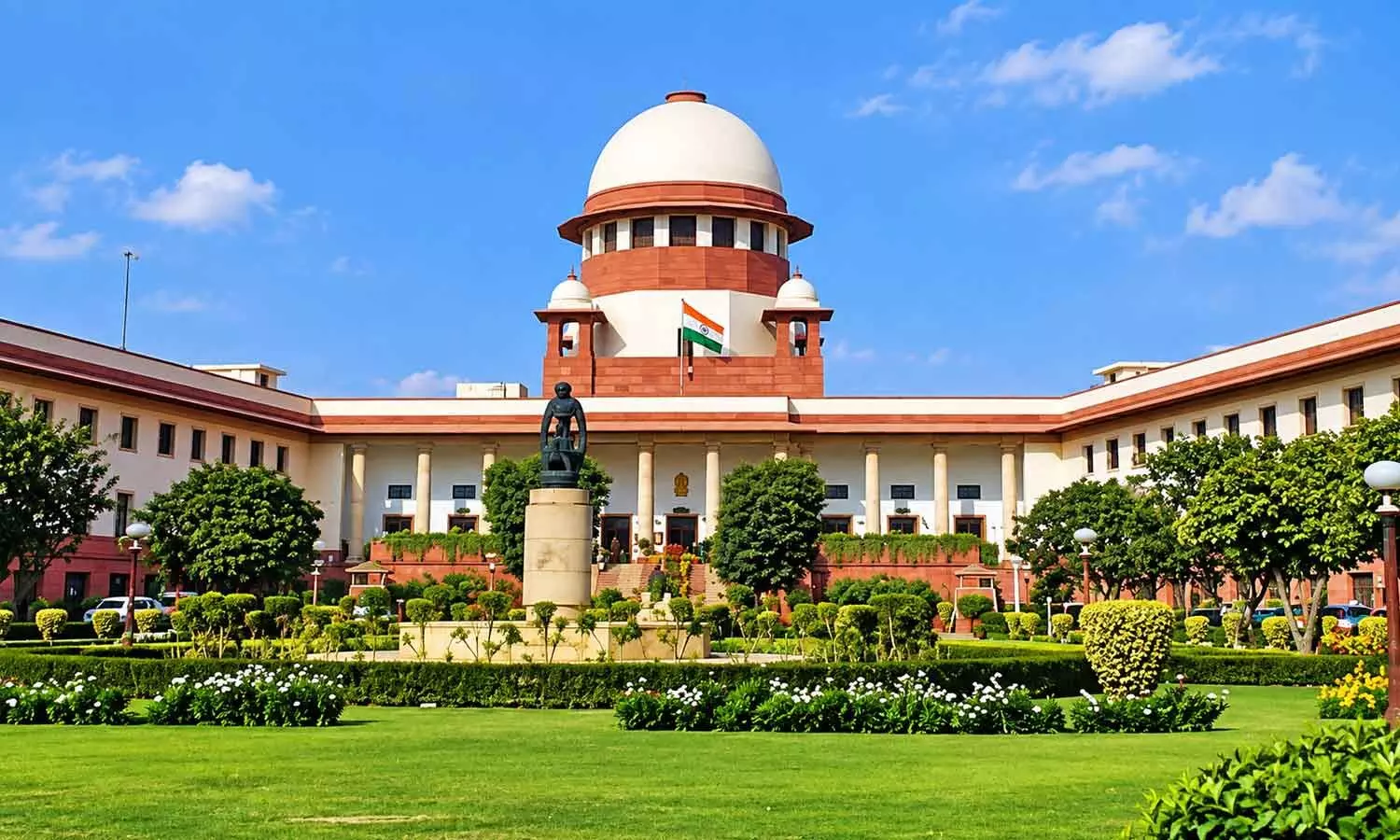
Why India’s judiciary must rise above limitation to protect public assets
The Supreme Court of India on Tuesday dismissed the Special Leave Petition filed by the State of Telangana in the Lothukunta land dispute purely on the ground of limitation. The petition was reportedly filed 219 days after the expiry of the normal appeal period of ninety days, and the High Court division bench had earlier declined to condone that delay.
The dismissal has reignited a long-standing debate: should procedural limitations prevail when the asset in question is a public property worth hundreds, perhaps thousands, of crores of rupees?
This is not a single instance but a recurring pattern. Across India, public lands, lakes, forests, mines and minerals are being lost to private claimants through the back door of limitation, laches and procedural default. Governments, both Union and State, file appeals and special leave petitions years after the cause of action has crystallised, only to find the doors of justice closed by the very statutes designed to ensure timely prosecution of rights. The merit of the State’s claim — whether it has a strong case on title, possession or public interest — never reaches the courtroom. The litigant is defeated, not on substance but on time.
The Constitution treats public assets with singular seriousness. Article 39(b) directs the State to distribute ownership and control of material resources to subserve the common good. Article 48A mandates the State to protect the environment and wildlife. Article 300A makes the right to property a constitutional right, subject to public-interest limitations. When these resources are alienated, the harm is not to a single owner but to generations yet unborn.
The State, in such cases, is not a litigant like any other. It is a trustee of the public’s common heritage. The Supreme Court has, through the SP Gupta PIL lineage, the Narmada Bachao Andolan and the MC Mehta series of cases, consistently held that the State bears a special responsibility as trustee of public assets and natural resources. This higher duty has been invoked to justify extraordinary judicial intervention when ordinary legal processes prove inadequate to protect the public interest.
It is precisely because of this higher duty that the framers of the Constitution armed the Supreme Court with extraordinary remedial powers. Article 142 of the Constitution enables the Court to “pass such decree or make such order as is necessary for doing complete justice in any cause or matter pending before it.”
In the Ayodhya land dispute, the Supreme Court invoked Article 142 to mould relief beyond the strict confines of ordinary civil remedies, by directing the allotment of alternate land for a mosque while awarding the disputed site for temple construction. The judgement illustrates that, in matters of deep public and constitutional significance, the Court is prepared to look beyond technical constraints and fashion solutions that aim at ‘complete justice’.
The question then arises: if Article 142 can be invoked to do ‘complete justice’ in the Ayodhya dispute, can it not equally be invoked to prevent the loss of public land worth thousands of crores, simply because some officer failed to file an appeal on time?
Section 5 of the Limitation Act, 1963, permits a court to admit an appeal after the prescribed period if the applicant satisfies the court that it had sufficient cause for not preferring it within time. The Supreme Court has, in a series of decisions culminating recently in Shivamma (Dead) by LRs v. Karnataka Housing Board (2025), emphasised that the State and its instrumentalities cannot claim any special indulgence in matters of delay. The Court made it clear that bureaucratic lethargy or administrative laxity does not constitute “sufficient cause” for condonation.
It observed — and rightly so — that “public interest is not synonymous with the cause of the Government. It is, instead, synonymous with the enforcement of rule of law, certainty in legal rights, and an administrative machinery that functions with diligence and accountability.” This ruling underscores the duty of every government to file appeals and Special Leave Petitions involving valuable public assets promptly and diligently.
However, when the asset at stake is a public resource worth thousands of crores, the higher judiciary may still consider whether Article 142 or a directed inquiry into the causes of delay can be invoked in exceptional cases to prevent irreversible loss to the public. The deeper issue is not the dismissal itself but the silence that precedes it.
When government files arrive 219 days late in a matter of such value, the delay is rarely accidental. A belated appeal often suggests that something failed within the bureaucratic or legal apparatus — perhaps a misplaced file, perhaps an incorrect legal opinion, perhaps worse. In some cases, as several public-interest litigants have alleged, the delay itself becomes a strategy to defeat a meritorious claim, with vested interests quietly ensuring that the State does not appear in court at all.
The Supreme Court and the High Courts, sitting as guardians of the Constitution, are well within their jurisdiction to direct an inquiry into such lapses. Article 142 can be used not only to do complete justice between parties but also to issue directions aimed at protecting the public assets. It has, in the SP Gupta v. Union of India lineage of cases — including landmark judgements like MC Mehta v. Union of India (environmental protection) and Narmada Bachao Andolan v. Union of India (natural resources and tribal rights) — expanded the scope of public interest litigation precisely because ordinary remedies were inadequate.
None of this is to suggest that limitation laws serve no purpose. Finality, certainty and the public interest in repose are genuine values. Even the Shivamma judgment rightly reminds us that perpetual indulgence in governmental delay erodes the rule of law. The point is not to abolish limitation but to balance it more carefully when the subject matter is a public asset, where the loser is not the government but the citizenry. A few practical reforms emerge from this balance.
First, courts should ordinarily condone delays in government appeals involving public property of substantial value, unless there is evidence of intentional or fraudulent suppression. Second, where the delay is unexplained, the Court may direct an inquiry by a senior officer or independent committee into the cause of the delay. Third, accountability must follow such inquiries: officers found responsible for inexplicable lapses should face departmental action, and standing counsels and the offices of Advocate Generals must be held to professional standards of diligence.
Public assets are not the patrimony of the ruling government of the day. They belong to the people, present and future. When technicalities extinguish a citizen’s claim over a forest, a lake or a piece of urban land, justice is not served — it is defeated. The higher judiciary possesses constitutional tools to ensure that this does not happen. What is needed is the willingness to use them.
(The writer is with the Cholleti BlackRobe Chambers, Hyderabad, and writes on economy, politics and law)


