




- CNC demands Codavaland autonomy
- iPhone 16 Drops to Rs 71,999 on Amazon during Great Indian Festival sale
- Karnataka MLC polls: NDA candidate set for hat-trick win in West Graduates' seat, says Vijayendra
- 'Borewell Suraksha Abhiyan' to make Karnataka free of open borewells, says govt
- Bihar teachers, graduates will vote for change in MLC polls: Prashant Kishor
- J&K govt enhances retirement age of judicial officers from 60 to 62 years
- High on energy, low on egos: Trinamool's Derek O'Brien on INDIA bloc protest
- Tipra Motha Party dominates Tripura tribal bodies' polls, wins 74.61 pc of 4,594 seats
CNC demands Codavaland autonomy
In Short
Addressing community members during the demonstration, CNC President N.U. Nachappa Codava stated that Codava self-rule is an inalienable, indigenous right rooted in both geography and history.

Share :
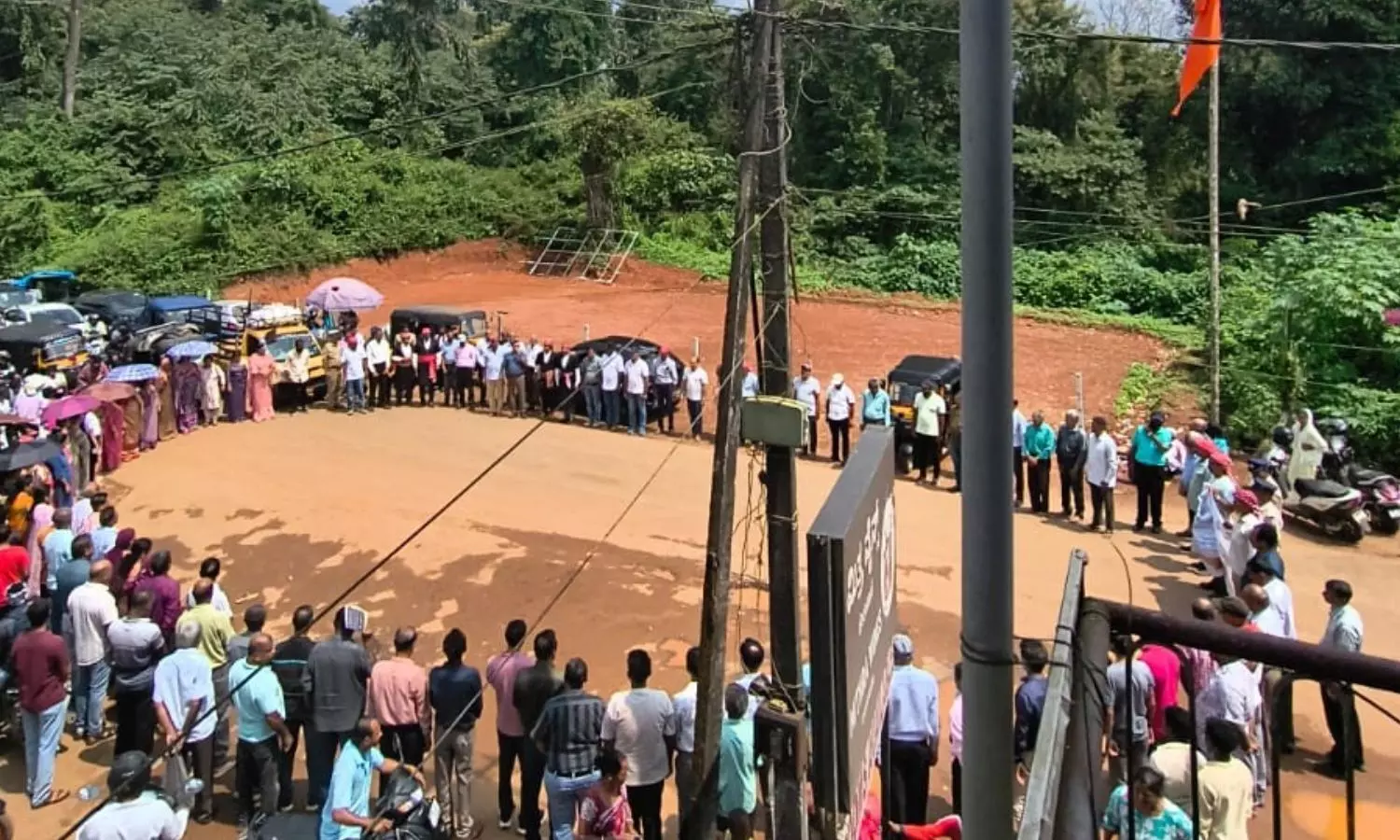
Intensifying its campaign for geopolitical self-determination, the Codava National Council (CNC)
Madikeri: Intensifying its campaign for geopolitical self-determination, the Codava National Council (CNC) organised its fifth peaceful human chain demonstration in Cherambane, Kodagu, reasserting its demand for an autonomous Codavaland under Article 244, Article 371, and the Fifth Schedule of the Indian Constitution.
Addressing community members during the demonstration, CNC President N.U. Nachappa Codava stated that Codava self-rule is an inalienable, indigenous right rooted in both geography and history. A people without geography are a people without history, and people without history are people without geography, Nachappa remarked during his address, adding that Codavas possess both.
He reiterated that Codavaland represents more than a regional map, calling it a living homeland defined by ancestral Ballaymane estates, sacred Mandh groves, heritage sites like Talacauvery, and traditional customs including martial folklore, ancestral worship, and sacramental weapons culture. He argued that separating the indigenous population from their ancestral territory would reduce historical heritage to mere real estate. Framing the movement within national and international legal standards, the CNC chief highlighted several constitutional guarantees, including Articles 29 and 30 that safeguard minority language and heritage, and Article 14 provisions for reasonable classification based on ethno-linguistic identity, as upheld by the Karnataka High Court.
He also cited the spirit of the Fifth and Sixth Schedules, which historically protected traditional land tenure systems like Muttadari, Jamma, and Bane under the Scheduled Districts Act of 1874, while asserting that the traditional possession of the Gun-Thok firearm is a spiritual sacrament protected under Articles 25 and 26, akin to the Sikh Kirpan. Rejecting majoritarian dominance, Nachappa stated that political autonomy for a distinct micro-community does not require a regional majority plebiscite, but rather proof of unique indigenous lineage and historical character before constitutional authorities. Modelling their governance proposal on the Darjeeling Gorkhaland Territorial Administration and the Hill Tract Agencies of Andhra Pradesh, the CNC urged central authorities to grant self-governance to protect the micro-community from demographic assimilation and preserve its cultural identity. (eom)
'SP's agenda is to confuse people': UP ministers on Akhilesh's '403 seats' target
Technology must become a tool for inclusive and sustainable development: PM Modi
Rahul Gandhi, Priyanka Detained After INDIA Bloc Sit-In Over Gyanesh Kumar Row
Vote Chori: INDIA Bloc Protest Was More About Optics and Symbolism
PM Modi marks a milestone in India, records name among few global leaders
Bengal bypolls: Candidate from Mamata Banerjee-led Trinamool faction seeks re-polling in Rejinagar


