




- Govt okays Rs 1,500 cr capital subsidy, 400 acres
- Dedication key for better future of students
- Resignation of CEC demanded
- Congress demands action against CEC
- Will take fight on DSC scam to its logical end: YSRCP
- AP using AI to promote tourism: Minister
- World Bank-ADB team gives Amaravati works a thumbs-up
- Govt invites applications for 807 liquor shops; draw on Oct 5
Flood fury in AP as rivers swell
In Short
Flood warnings issued as Vamsadhara, Nagavali swell

Share :
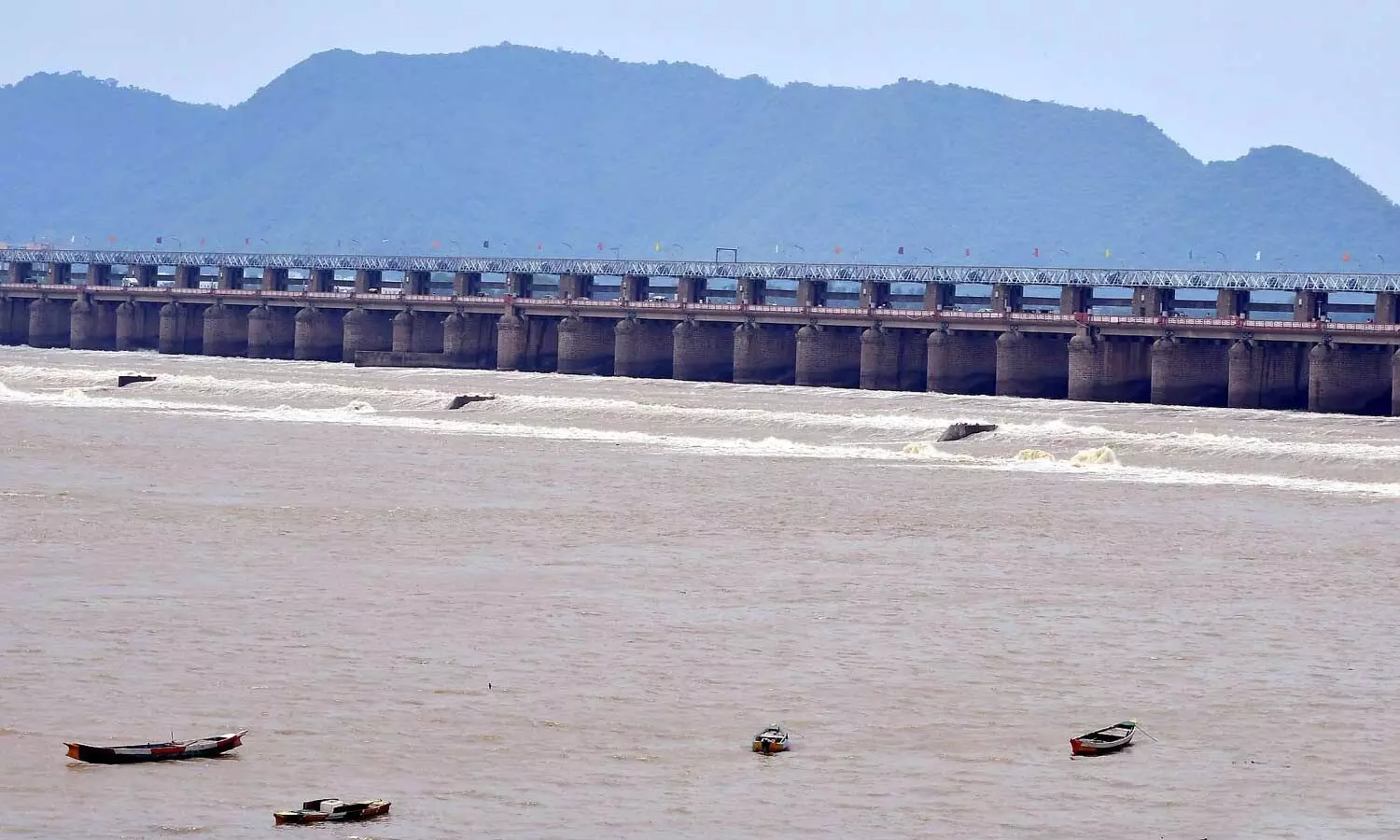
Irrigation officials released surplus water from Prakasam Barrage in Vijayawada on Friday
Photo: Ch Venkata Mastan
Amaravati: Following heavy rains over the past four days triggered by the severe depression that crossed the state coast, Andhra Pradesh remained on high flood alert on Friday as the continual downpour sent large volumes of water into rivers, reservoirs, and barrages. The latest reservoir data showed substantial inflows into several projects, with authorities releasing much of the incoming water downstream to maintain storage levels and regulate flood flows.
The impact was particularly pronounced in Srikakulam, where the Vamsadhara and Nagavali rivers continued to swell following heavy rainfall in the district and upstream areas of Odisha. A first danger warning remained in force at Gotta Barrage, where the latest reservoir data showed an inflow of 44,900 cusecs and outflow of 45,679 cusecs. At Narayanapuram Anicut, inflow and outflow were both around 66,900 cusecs, with officials maintaining a close watch on the rising flood levels. Residents in low-lying and riverbank areas have been advised to remain alert.
The Nagavali was also receiving heavy flows from the upstream catchment, besides water released from Thotapalli and Madduvalasa projects. Thotapalli recorded 23,250 cusecs each of inflow and outflow, while Madduvalasa received 25,100 cusecs and released 26,000 cusecs. Flood waters have begun entering agricultural fields in villages in Burja and Amadalavalasa mandals.
The Prakasam Barrage in Vijayawada was also receiving a major surge, with 40,521 cusecs of inflow and an equal quantity being released downstream. Flood waters from the Munneru, Kattaleru and Budameru streams contributed to the sharp rise, prompting the opening of 20 gates. This was the first major surplus release from the barrage this season.
The Godavari system witnessed an even larger movement of water. Sir Arthur Cotton Barrage recorded an inflow of 3.50 lakh cusecs and an outflow of 3.52 lakh cusecs. Donkarayi Reservoir received 3,485 cusecs, all of which was released downstream, while Sileru Reservoir recorded 2,297 cusecs of inflow and released 1,504 cusecs.
Heavy flows were also recorded at Musurimalli, Bhupathipalem, Tammileru and Yeleru. In the Krishna basin, Nagarjuna Sagar recorded an inflow of 824 cusecs and outflow of 7,114 cusecs, while Pulichintala received 3,360 cusecs and released 400 cusecs.
Significantly, Srisailam had no inflow on Friday but was releasing 9,200 cusecs, underlining the continuing downstream regulation of water.
The state's reservoirs together held 562.865 tmc, or 50.88 per cent of their gross capacity of 1,106.359 tmc. Major reservoirs held 524.296 tmc (51.69 per cent) and medium reservoirs 38.568 tmc (41.93 per cent).
The Godavari basin had the highest storage utilisation at 89.45 per cent, followed by Krishna at 55.78 per cent.
Meanwhile, overflowing streams and rivulets disrupted normal life in parts of the Godavari region. Around 2,000 acres of paddy were inundated near Kovvada in Tallapudi mandal, while the Sitapalli stream overflowed across the Pandirimamidi bridge. The Jaderu and Kanneru streams were also in spate with 36,144 cusecs released downstream from Donkarayi.
Strong winds accompanying the system damaged banana and coconut plantations in Yarada near Visakhapatnam, while authorities deployed special teams for emergency relief and urged people in vulnerable river-basin areas to
exercise caution.
Nara Lokesh pitches AP to Gujarat investors
Vijay Attacks DMK, AIADMK Over Veeramani Case Ahead Of Madurantakam Bypoll
Google says Gemini AI can now make calls and speak to people on your behalf
BrahMos, AK-203 From UP Giving Pakistan ‘Sleepless Nights’, Says Amit Shah
UP Dy CM meets Amit Shah to discuss BJP's mission 2027 in Uttar Pradesh
SP Balasubrahmanyam Death Anniversary: Remembering The Legendary Voice That Lives On


