






- PM Modi and Balendra Shah lay roadmap for future-oriented India-Nepal partnership
- PM Modi, Nepalese counterpart Shah flag off Saryu-Kamala Express train, inaugurate several projects
- Pavel Durov Jokes About Missing Telegram Groups in GTA 6
- Rahul Gandhi to visit Jaipur on Dec 9, Kharge to inaugurate training camp for new national secretaries
- PM Narendra Modi, Nepal PM Balen Shah Hold Bilateral Talks To Strengthen India-Nepal Ties
- PM Modi lauds India for crossing 1 crore HPV vaccine doses, calls it milestone in preventive healthcare
- Navigate the path of rational choices before giving wings to dollar dreams!
- Bullet train project hits electrification milestone
Are Bengaluru and Hyderabad Going Vertical
In Short
In prime growth corridors such as Kokapet and the Financial District in Hyderabad, and Whitefield, Hebbal, and Sarjapur in Bengaluru, escalating land values have made horizontal development increasingly unviable.

Share :
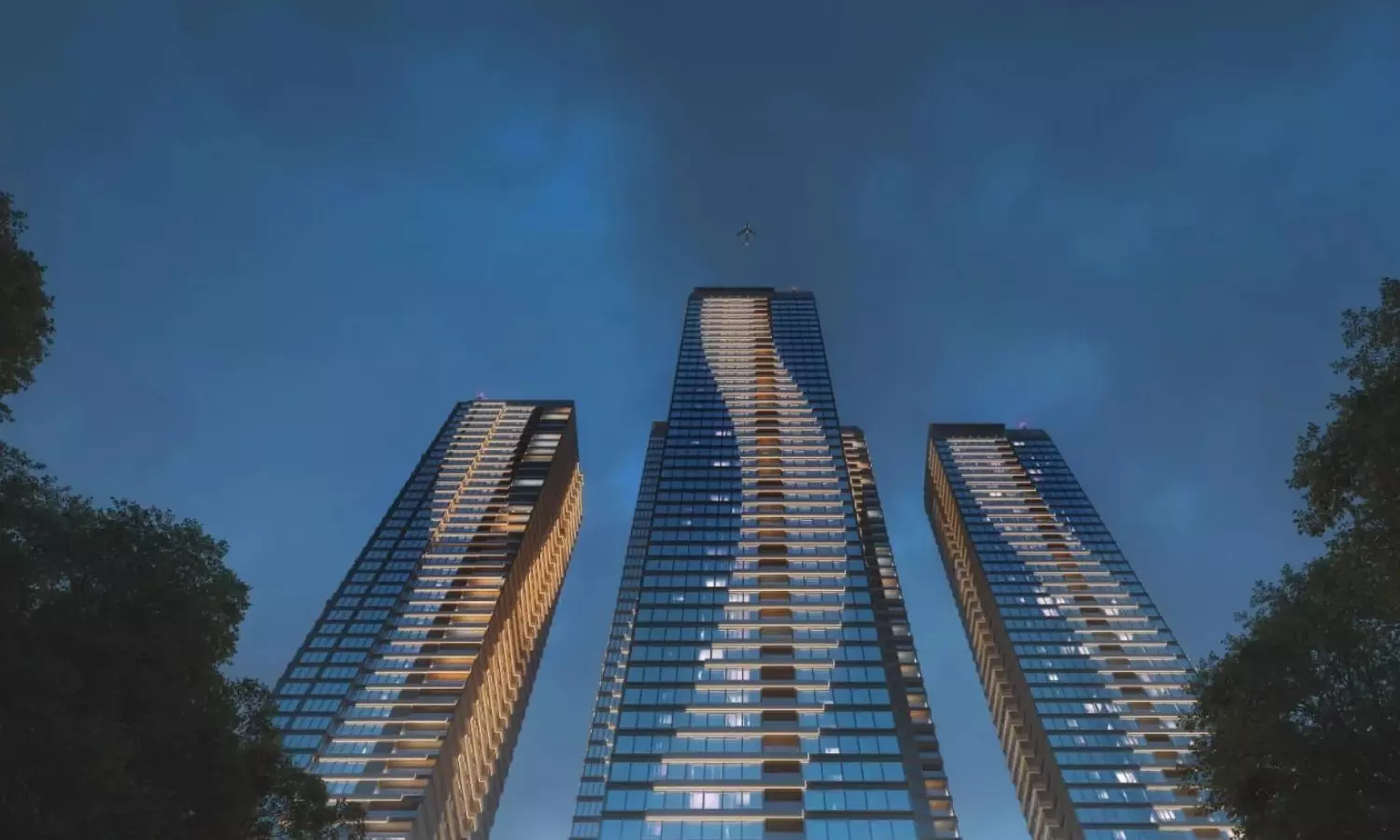
Once defined by sprawling garden estates, low-slung bungalows, and horizontal IT parks
Bengaluru: Once defined by sprawling garden estates, low-slung bungalows, and horizontal IT parks, South India’s twin tech powerhouses—Bengaluru and Hyderabad—are aggressively pivoting skyward. Driven by surging land costs, rapid urban migration, and evolving lifestyle aspirations, high-rise living is rapidly reshaping the skylines of both cities.
In prime growth corridors such as Kokapet and the Financial District in Hyderabad, and Whitefield, Hebbal, and Sarjapur in Bengaluru, escalating land values have made horizontal development increasingly unviable. Coupled with infrastructure bottlenecks and long daily commutes, homebuyers are trading suburban sprawl for vertical convenience near major employment hubs.
"Beyond FSI, vertical growth is driven by economics and demography. Land costs in core Hyderabad and Bengaluru have risen 40–60 per cent in three years, and with 8–10 lakh annual migrants to both cities, horizontal expansion is unviable due to commute times," says Farook Mahmood, Chairman Emeritus, FIABCI & Founder President , National Association of Realtors. "Buyer aspiration has also shifted—a 30th-floor apartment now signals status like a villa earlier did."
Interestingly, this shift is not limited to young professionals; multi-generational families accustomed to independent bungalows are now embracing sky-high residences that offer expansive layouts without sacrificing privacy.
"Even families accustomed to independent bungalows are now exploring high-rise living, particularly when developments provide the exclusivity and spaciousness they value," apprises Srikanth Reddy, Joint Managing Director, Candeur Group. "In Hyderabad's Puppalaguda in Financial District, our 59-storey development, Candeur Skyline, offers one residence per floor across three towers—reflecting how vertical living is evolving to meet these changing expectations."
While high-rises are expected to dominate 70 to 80 per cent of new launches in prime urban and transit-oriented corridors, industry leaders stress that plotted developments and villas will retain relevance on city peripheries. The bigger challenge, experts note, lies in building vertically with environmental and structural responsibility.
"Sustainability will ultimately depend not on how high we build, but on how intelligently we design, construct, operate and maintain these developments," opines Suresh Hari, Former Chairman, CREDAI Bengaluru. "With advancements in construction technology, energy efficiency, water conservation, waste management and intelligent building systems, well-planned vertical developments can make our cities far more efficient and resource-conscious."
Developers are increasingly integrating green open spaces and advanced engineering into tall structures to ensure long-term livability.
"Building taller must go hand in hand with responsible construction practices and adequate breathing space," adds Srikanth Reddy. "At Candeur Skyline featuring sky-villa-style homes—approximately 70 per cent of the development is planned as open space, alongside Mivan construction technology and dedicated refuge floors for structural integrity and safety."
As both cities surge ahead, a key question remains: can Hyderabad and Bengaluru overtake Mumbai as India’s high-rise capital? Industry consensus suggests that while Mumbai’s coastal geography and ultra-luxury pricing will keep it ahead in supertall skyscrapers above 150 metres, South India’s twin tech hubs are poised to surpass Mumbai in the sheer volume of modern high-rises—carving out a distinct, infrastructure-led vertical identity over the next decade.
Karnataka Seeks to Attract Toyota Investments, Strengthen Industrial Growth Beyond Bengaluru: CM Shivakumar
Are Bengaluru and Hyderabad Going Vertical
University of Visvesvaraya College of Engineering (UVCE) Inaugurates Nokia-TSSC Centre of Excellence in 5G, IoT, and AI
Union Minister Kumaraswamy mocks Karnataka govt’s plan to approach SC against Centre for drought relief
Congress-Samajwadi Party Seat-Sharing Talks for UP Polls Begin, First Meeting Lasts Just 15 Minutes
CJI Surya Kant Recuses Himself from Supertech Insolvency Case, Cites Acquaintance with Applicant
Hyderabad Police Tighten Security After Email Threatens 26/11-Style Terror Attack
His firm commitment to upholding democratic values inspires everyone: PM Modi extends birthday wishes to Om Birla
Delhi's AQI at 236, remains in 'poor' category; CAQM sets 15-20 pc pollution reduction target for 2027
PM Modi, Nepal Prime Minister to jointly inaugurate Ayodhya-Janakpur train service today


