






- Sikh BJP leaders 'proud' of PM Modi's visit to Gurdwara in Manila
- India's horticulture output estimated to rise 4.36 pc to record 3,869 lakh tonnes in 2025-26
- Suriya’s Scene Crosses ₹260 Crores Worldwide In Just 10 Days
- INS Sahyadri and Japan's JS Ise participate in maritime exercise
- OpenAI Rolls Out New AI Tools to Detect CSAM on ChatGPT
- Chennai corporation plans upgrade of 753 roads, seeks consultants for quality checks
- 184 women incorrectly declared dead in govt records denied Gruha Lakshmi benefits, claims Karnataka BJP
- JPMorgan Chase Software Bug Disrupts Banking Services Across US
50 pc households face water shortfall in Tamil Nadu: CAG report
In Short
Widespread failure to ensure adequate water quantity and the improper, vulnerable placement of taps fundamentally defeat the JJM’s vision of improving the living standards of rural communities, said CAG

Share :
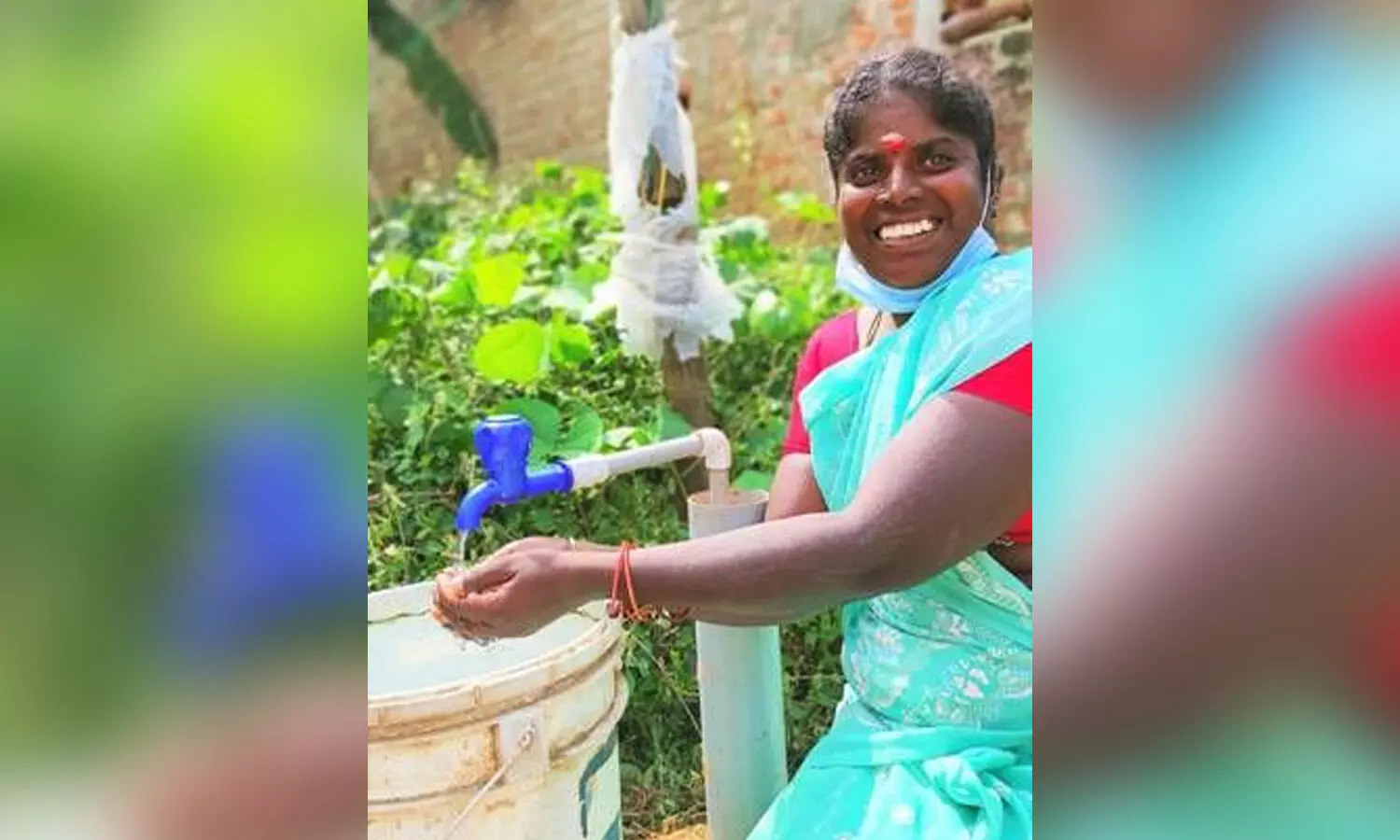
50 pc households face water shortfall in TN: CAG report
Chennai: The Jal Jeevan Mission’s (JJM) ambitious goal of ensuring piped drinking water to every rural household in Tamil Nadu is being severely undermined by massive shortfalls in water supply and glaring installation anomalies, according to a CAG report tabled in the Assembly on Tuesday.
The performance audit on the implementation of JJM revealed a stark disconnect between the state’s claimed success metrics and the actual ground reality. While Tamil Nadu officially reported providing Functional Household Tap Connections (FHTCs) to nearly 84 per cent of its rural households, the report found that 50 per cent of the targeted households in selected districts are not receiving the mandated minimum supply of 55 litres per capita per day (lpcd).
The audit further exposed a shocking deviation from the mission’s core guidelines, discovering that a staggering 96 per cent of the tap connections provided were improperly installed outside the beneficiaries’ homes.
According to the Comptroller and Auditor General (CAG) of India report, out of 2,69,645 FHTCs surveyed across the selected districts, 2,59,613 were placed in open spaces and streets rather than inside the houses. This direct contravention of JJM guidelines not only deprives citizens of the intended convenience but also leaves the infrastructure highly vulnerable to damage, theft, and poor maintenance. The government had cited a lack of space and beneficiary requests as reasons for outside installations, an excuse the CAG rejected as it compromises the safety and longevity of the created assets.
The water supply data painted an equally grim picture of the mission’s primary output. The audit highlighted that even in districts like Coimbatore, which officially reported 100 per cent FHTC coverage, only 8.67 per cent of habitations received the prescribed 55 lpcd of water. In Nagapattinam district, none of the surveyed habitations received the adequate quantity.
Beneficiary surveys and focus group discussions corroborated these findings, with hundreds of respondents complaining of erratic supply, sometimes receiving water only once in four to seven days, and expressing dissatisfaction over poor water quality.
The CAG report warned that the widespread failure to ensure adequate water quantity and the improper, vulnerable placement of taps fundamentally defeat the JJM’s vision of improving the living standards of rural communities.
It recommended immediate government intervention to rectify these execution deficiencies and ensure the sustainable, adequate delivery of potable water to rural households The report also highlighted that a severe lack of synchronisation between the Tamil Nadu Water Supply and Drainage (TWAD) Board and rural development departments has crippled key JJM projects, leaving newly built village water tanks completely dry while main pipelines remain unfinished.
During joint physical verifications in the Thiruvadanai Block in Ramanathapuram district, auditors found that out of 12 sumps and three overhead tanks constructed, seven sumps were not receiving any water, and water was not being pumped to the overhead tanks.
According to the report, 165 in-village component works, aimed at providing FHTCs, were sanctioned under the 2020-21 Annual Action Plan at an estimated cost of Rs 32.93 crore. These local infrastructure assets were completed by February 2023.
However, the crucial retrofitting of the existing combined water supply scheme (CWSS) -- the main source intended to feed these villages -- was only taken up under the 2022-23 plan at a cost of Rs 574.42 crore. As of May 2025, the TWAD Board’s retrofitting work remains under progress, rendering the completed in-village infrastructure largely unused for over two years.
Arunachal: 12,000 devotees pay homage in 2 days to relics of Shakyamuni Buddha at Golden Pagoda
IWL 2026/27: Vipanshi’s brace powers Juba Sangha FC to 2-0 victory over HOPS Football Club
Bangladesh: Pregnant Hindu teacher assaulted, kicked in abdomen by BNP leader
‘It’s always a big blessing to talk to him,’ says Suryansh Shedge on Hardik Pandya joining PBKS
Cyclone Akvan poses fresh threat to Andhra Pradesh
CM Naidu puts admin on high alert
Meet the man who turned down Rs 72L job to set up startup in Tirupati
Piyush Goyal on two-day visit to Italy to boost economic ties
Crucial Union Cabinet Meeting on Wednesday: PM to Review Performance of Ministers on Different Issues.
Telangana’s 4,000 MW Yadadri plant to achieve full capacity soon


