






- Sikh BJP leaders 'proud' of PM Modi's visit to Gurdwara in Manila
- India's horticulture output estimated to rise 4.36 pc to record 3,869 lakh tonnes in 2025-26
- Suriya’s Scene Crosses ₹260 Crores Worldwide In Just 10 Days
- INS Sahyadri and Japan's JS Ise participate in maritime exercise
- OpenAI Rolls Out New AI Tools to Detect CSAM on ChatGPT
- Chennai corporation plans upgrade of 753 roads, seeks consultants for quality checks
- 184 women incorrectly declared dead in govt records denied Gruha Lakshmi benefits, claims Karnataka BJP
- JPMorgan Chase Software Bug Disrupts Banking Services Across US
Crucial Union Cabinet Meeting on Wednesday: PM to Review Performance of Ministers on Different Issues.
In Short
The Prime Minister, Narendra Modi, is likely to review the implementation of various issues by the ministers, such as reforms, governance, youth, women outreach, welfare and development schemes.

Share :
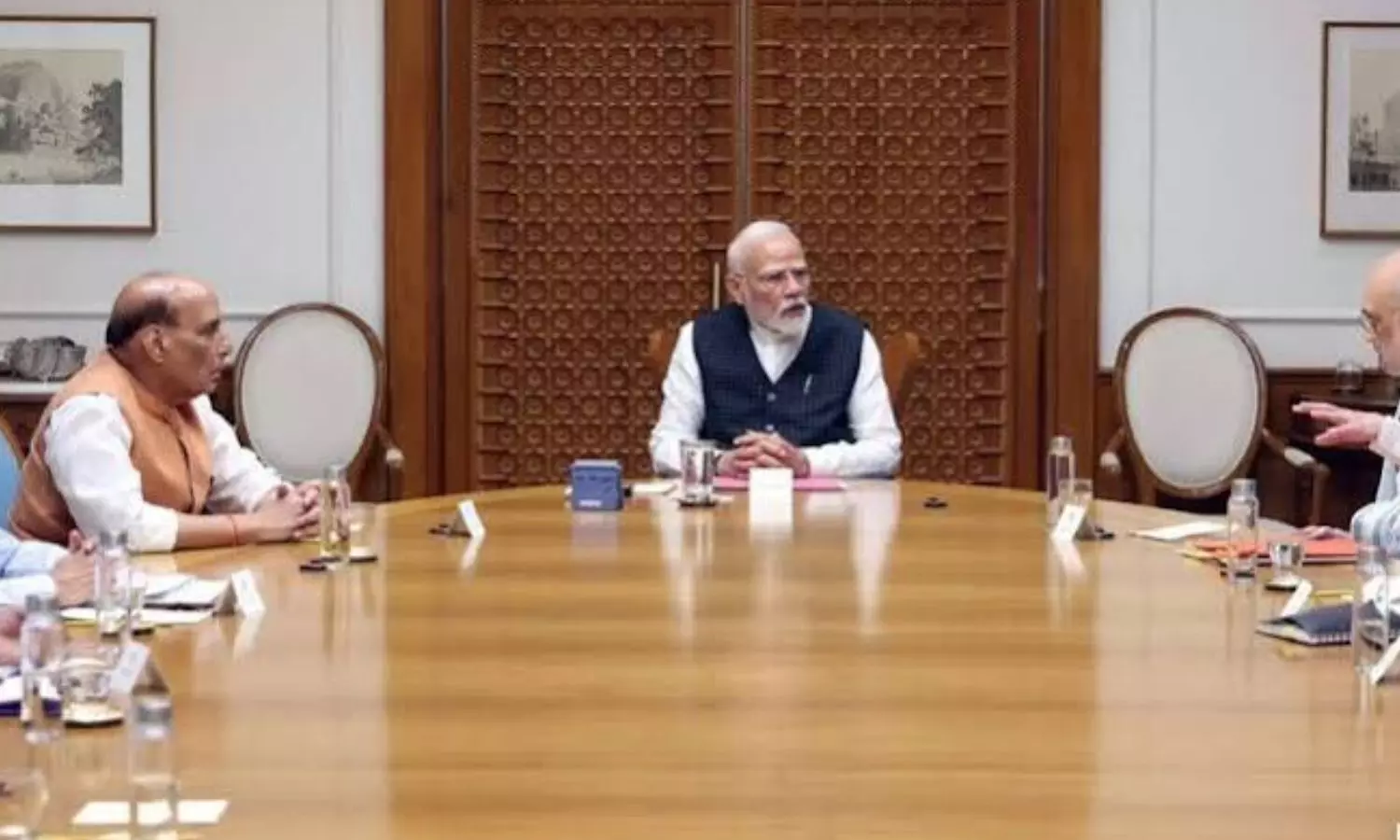
Union Cabinet is scheduled to be held on Wednesday morning after his return from the ASEAN Summit.
A crucial meeting of the Union Cabinet is scheduled to be held on Wednesday morning after his return from the ASEAN Summit.
The Prime Minister, Narendra Modi, is likely to review the implementation of various issues by the ministers, such as reforms, governance, youth, women outreach, welfare and development schemes.
Modi will interact with the members of the Council of Ministers and will assess their performance on these issues and help them understand the issues faced by the government.
The last meeting was held in September. During this meeting, which was named as ‘Chintan Shivir,’ the ministers discussed in detail how to ensure 100 per cent penetration of all government schemes to the actual beneficiaries and connect with citizens effectively.
The Prime Minister is likely to review the delivery mechanism of the ongoing welfare schemes. There are about 40 to 45 welfare schemes. He is expected to explain how to further improve the delivery mechanism and have better coordination between different ministries and departments.
It is learnt that focus would also be on ease of living as the main objective of the government. Modi in the past had directed his council of ministers to have frequent interaction with all staff members for feedback and new ideas and also to create live dashboards of activities. This issue may also figure in the meeting.
On the sidelines of the meeting, the present political situation in the wake of upcoming Assembly elections is also likely to figure.
Crucial Union Cabinet Meeting on Wednesday: PM to Review Performance of Ministers on Different Issues.
PGTI 2026: Saurav Rathi shoots 65 to take opening-round lead at Digboi Masters
Karnataka: Stiff opposition in Chikkamagaluru to shifting 56 wild elephants from Hassan to Bhadra Reserve Forest
'No human can become God': Assam CM criticises Rahul Gandhi over Shiv-Parvati post
Cyclone Akvan poses fresh threat to Andhra Pradesh
CM Naidu puts admin on high alert
Meet the man who turned down Rs 72L job to set up startup in Tirupati
Crucial Union Cabinet Meeting on Wednesday: PM to Review Performance of Ministers on Different Issues.
Telangana’s 4,000 MW Yadadri plant to achieve full capacity soon
Tamil Nadu to revamp public library book procurement amid DMK-era corruption allegations


