
SAAnA reactor offers a breakthrough in organic waste management

Hyderabad: As organic waste generation surges across developing nations, a pioneering technology developed by researchers at BITS Pilani, Hyderabad Campus, is poised to transform the landscape of waste management.
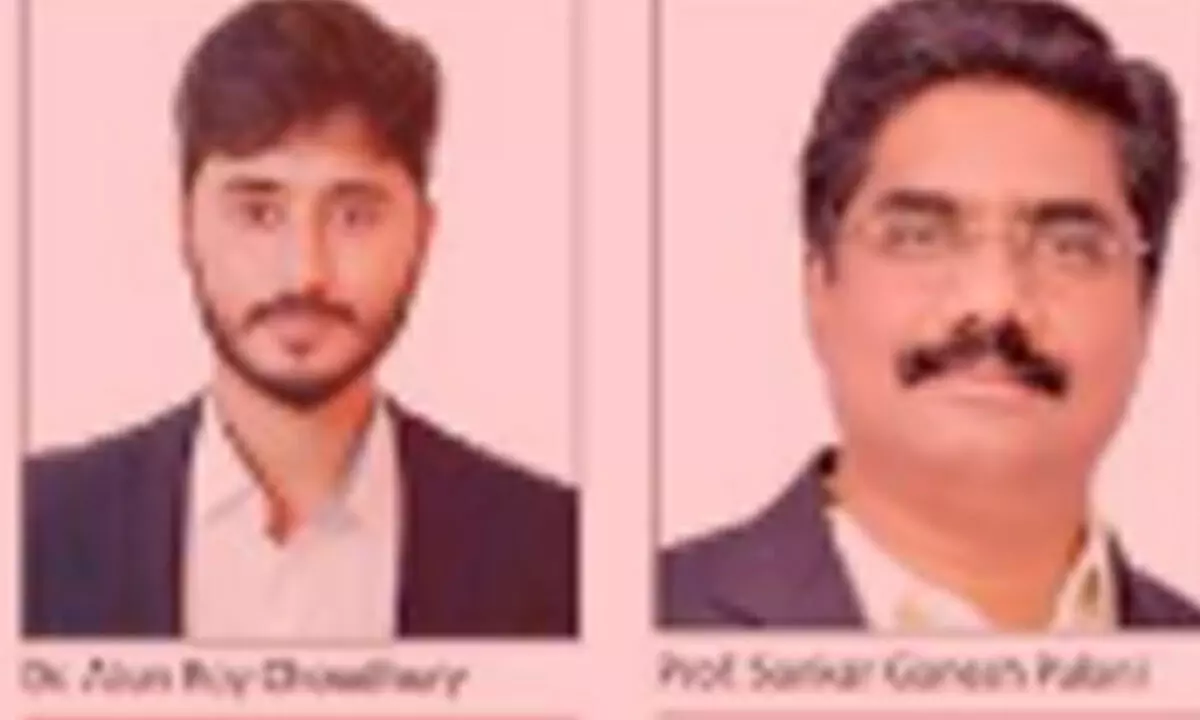
The Sandwich Aerobic-Anaerobic-Aerobic (SAAnA) Reactor, designed by Dr. Atun Roy Choudhury and Prof. Sankar Ganesh Palani of the BITS Environmental Science and Technology (BEST) lab, offers a faster, more efficient, and sustainable solution to the long-standing challenges of organic waste treatment.
Dr. Atun Roy Choudhury said that the traditional anaerobic digestion systems often require up to 60 days to process waste and produce low-grade by-products.
In contrast, the SAAnA reactor completes the cycle in just 23 days, significantly improving both biogas yield and the quality of biofertilizer. The system operates in three distinct phases: a five-day aerobic pre-treatment that accelerates hydrolysis and acidogenesis, a 13-day anaerobic digestion phase where biogas is generated and partially recirculated to boost methane output, and a final five-day aerobic post-treatment that converts the digestate into nutrient-rich biofertilizer.
Prof. Sankar Ganesh Palani said that the reactor’s design allows for the treatment of diverse organic waste streams—including municipal solid waste, slaughterhouse waste, landfill leachate, and faecal sludge—either individually or in combination.
It produces up to 0.8 cubic meters of biogas per kilogram of volatile solids, outperforming conventional systems.
The resulting biofertilizer meets national standards, eliminating the need for further refinement.
Beyond its technical merits, the SAAnA reactor is energy-efficient, relying on gravity-based flow to minimize operational costs. Its scalable architecture makes it suitable for both urban and rural settings, offering a viable alternative to landfill disposal and contributing to a circular economy.
The innovation has earned national recognition, with the researchers filing Indian Patent No. 202411062676 under the Government of India’s Kapila Scheme.
Their work has been published in leading international journals and consolidated in the book Material and Energy Recovery from Solid Waste for a Circular Economy, published by CRC Press, Taylor & Francis, USA.
As cities grapple with mounting waste and environmental degradation, the SAAnA reactor stands out as a beacon of sustainable progress.
Its deployment across waste treatment facilities could mark a turning point in India’s journey toward cleaner cities and greener futures.








