




- Erratic power supply killing our crops: Farmers
- Power disruptions threaten paddy crop in Yadadri Bhongir
- BC Samaj pays tributes to Chakali Ilamma
- Brake failure triggers multi-lorry pile-up
- Celebrate Sept 17 as TG Liberation Day: BJP
- Awareness programme held on strengthening seed supply
- Veerlapalli pays tributes to Chakali ilamma on her death anniversary
- District ‘Farmers’ Advisory Committee’ constituted
2-Day Brics Summit Begins Tomorrow: India pushes Global South priorities amid trade tensions
In Short
Discover key updates on the 18th BRICS Summit in New Delhi. Explore India's agenda on food and energy security, supply chains, and bilateral high-level meetings.

Share :
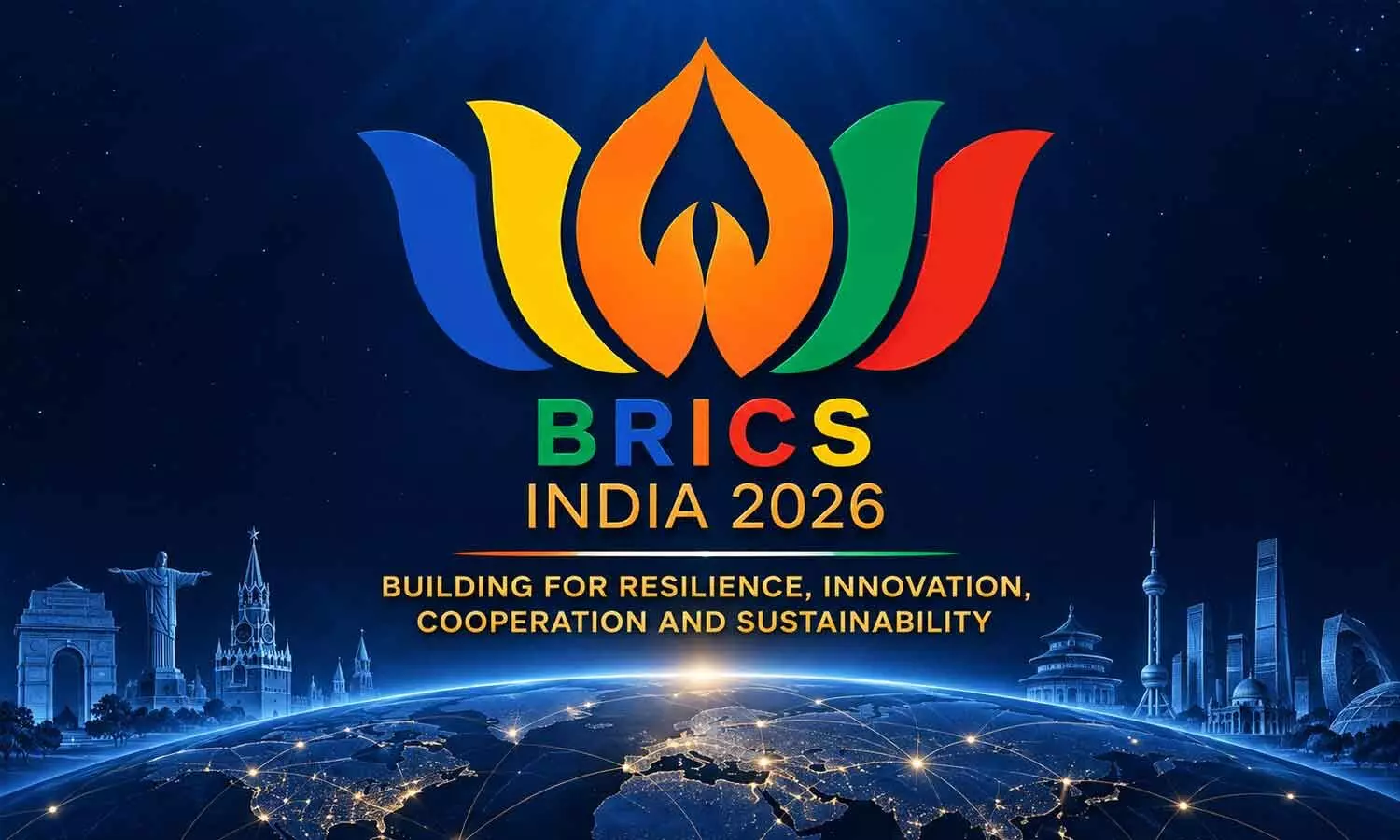
2-Day Brics Summit Begins Tomorrow: India pushes Global South priorities amid trade tensions
New Delhi: In a strategic balancing act triggered by escalating global trade tensions, India is leveraging the two-day BRICS Summit starting Saturday to position the grouping as a complementary engine for economic growth while championing the Global South’s core developmental priorities — most notably safeguarding food, energy and supply chain security.
With New Delhi putting the finishing touches to the summit, China has confirmed President Xi Jinping’s attendance, marking his first trip to India after a seven-year gap.
Iranian President Masoud Pezeshkian, Russian President Vladimir Putin, South African President Cyril Ramaphosa and his Indonesian counterpart Prabowo Subianto are among the top leaders attending the crucial meet in the national capital.
India is steering the BRICS grouping as a vital complementary platform to champion the Global South’s core developmental priorities, top Indian officials said on Thursday.
As global trade disputes and geopolitical realignments create economic headwinds, India is looking at addressing critical vulnerabilities in food security, energy stability and resilient supply chains, they said.
The summit in New Delhi is taking place against the backdrop of a global economy facing the adverse impacts of the Russia-Ukraine war, the West Asia crisis, especially the blockade of the Strait of Hormuz, and the Trump administration’s trade and tariff policies.
With just a day left before the summit, it remains unclear whether the member nations of the grouping have reached a consensus on a joint statement, as differences between Iran and the United Arab Emirates (UAE) over the West Asia crisis persist. The grouping operates under a framework of consensus.
BRICS, originally comprising Brazil, Russia, India, China and South Africa, expanded in 2024 to include Egypt, Ethiopia, Iran, the United Arab Emirates and Saudi Arabia, with Indonesia joining in 2025. Belarus, Bolivia, Kazakhstan, Cuba, Malaysia, Nigeria, Thailand, Uganda, Uzbekistan and Vietnam became BRICS partner countries last year.
BRICS has emerged as an influential grouping as it brings together 11 major emerging economies of the world, representing around 49.5 per cent of the global population, around 40 per cent of the global GDP and around 26 per cent of global trade.
India’s chairship of the grouping is centred on four pillars: resilience, innovation, cooperation and sustainability. In addition to these areas, the leaders will exchange views on strengthening intra-BRICS cooperation on common priorities and share perspectives on global and regional matters of mutual importance, according to the Ministry of External Affairs (MEA).
Perform Or Perish: CM Revanth tells Cong MLAs aspiring for 2nd term
Telangana Panchayat Raj Act amended: Gram Panchayats get quick access to funds
Sec’Bad-Kazipet Multi-Tracking Rail Project: Kishan, Laxman see fillip to TG economic development
Recycled water for industries: Telangana govt to make Musi money-spinner
International air connectivity from Tirupati gets big push
Anti-Indian sentiment in US can derail trade relationship


