




- Heavy rain warning for south Bengal as cyclone Arnab disrupts air travel, several flights cancelled
- Jharkhand: Two former Naxal commanders tie knot at Hazaribagh jail
- Kochi Police Commissioner Transferred After Lapses In Fatal Mercedes Crash Involving Judge’s Minor Son
- KIIFB row rocks Kerala Assembly, CM Satheesan attacks former Left govt
- Instagram Takes Aim at YouTube With 90-Minute Features
- Nayanthara Pens An Emotional Note Ahead Of Mookuthi Amman 2 Release
- Bihar MLC polls: Ram Kripal Yadav says NDA setback in Teachers’ seat matter of concern
- Qatar KMCC heist: Kerala Police collect evidence at airport, accused’s house
Cong Mock Impeachment, Street Protests Attempt to Intimidate Judiciary: BJP
In Short
BJP accuses Congress of attempting to pressure the judiciary through a mock impeachment programme and street protests amid allegations of electoral irregularities and the ongoing SIR controversy.

Share :
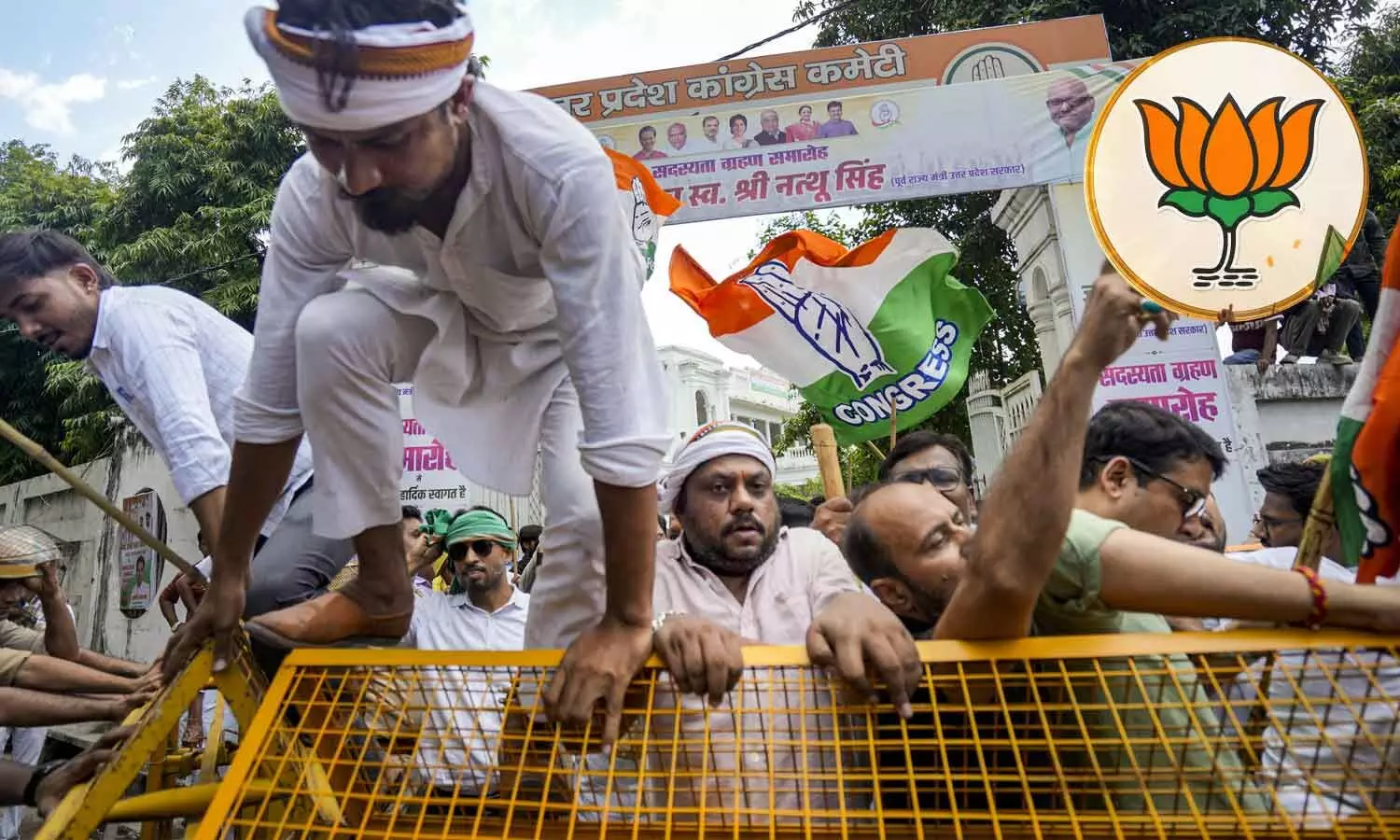
Cong Mock Impeachment, Street Protests Attempt to Intimidate Judiciary: BJP
The Congress party is making all-out arrangements for the October 30 “public impeachment” programme, aimed at escalating protests against alleged “vote chori” and electoral irregularities, a day ahead of the November 1 rally at Ramlila Maidan.
The Congress has sent invitations to all INDIA bloc constituents. Members of civil society and former judges are also expected to participate in the mock impeachment programme. The November 1 rally at Ramlila Maidan is expected to draw a massive crowd, with the Congress claiming that around one million people will participate.
Meanwhile, the BJP has accused the Congress of indulging in activities that amount to insulting Parliament and the judiciary. BJP MP Sudhanshu Trivedi said on Wednesday that the Congress, despite advocating a return to ballot papers, had drawn a blank in the MLC elections. The fault, he argued, lay neither with EVMs nor with ballot papers, but with the Congress party’s mindset.
Congress leaders Akhilesh Prasad Singh and Manoj Kumar have also raised concerns over the party’s performance in the MLC elections, questioning candidate selection and demanding accountability for the defeats. Singh admitted that mistakes had been made in selecting the candidate without blaming the ballot-paper system.
The BJP has also questioned whether the Congress would accept the Supreme Court’s verdict in the ongoing case concerning the Special Intensive Revision (SIR) of electoral rolls and the demand for the removal of Chief Election Commissioner Gyanesh Kumar. Congress spokespersons have been reluctant to give a categorical answer. Instead, they ask, “Is there any other option?”
The Aam Aadmi Party has indicated that it would accept the court’s verdict, whatever it may be, but has simultaneously insisted that Gyanesh Kumar must resign. This raises a pertinent question: can acceptance of a judicial verdict be made conditional on the resignation of the very official whose conduct is under scrutiny?
Meanwhile, remarks by Abhijeet Dipke, founder of the Cockroach Janata Party (CJP), questioning the impartiality and role of the judiciary have gone viral on social media.
Dipke reportedly questioned the Supreme Court’s response to alleged electoral irregularities and asked what action it had taken against the Election Commission. He also argued that public trust in the judiciary and other institutions had eroded, calling for greater accountability, independence and neutrality.
Against this backdrop, JD(U) national spokesperson Rajeev Ranjan Prasad described the Congress initiative as a reflection of the party’s “frustration and panic”. He termed the programme an insult to Parliament and the highest judiciary in the country.
“How can a political party put conditions before the apex court and then decide whether to accept its verdict? It has to either accept the verdict or say that it does not accept it,” he said.
Prasad pointed out that the Opposition had submitted a notice seeking the CEC’s removal to the Lok Sabha Speaker, while its petition concerning the functioning of the CEC and the Election Commission was also pending before the Supreme Court.
He alleged that the street protests were an attempt to exert psychological pressure on the judiciary. The Congress and its allies, he added, were crossing the line between dissent and anarchy.
The central question, therefore, is whether the Congress and its allies will accept the Supreme Court’s eventual verdict or continue their agitation regardless of the outcome. If the judicial process is still underway, why stage a symbolic public impeachment and pronounce a political verdict in advance?
Political parties have every right to protest, question institutions and seek accountability. But such protests cannot substitute for constitutional procedures, nor can a political gathering determine the guilt or otherwise of a constitutional authority.
The distinction between legitimate dissent and an attempt to exert pressure on a constitutional institution is crucial. The Opposition must clarify whether its campaign is intended to seek justice through established institutions or to sustain political mobilisation irrespective of what those institutions decide.
Bolsonaro backs off Brazil poll challenge after Trump says 'I’m not running Brazil'
Cong Mock Impeachment, Street Protests Attempt to Intimidate Judiciary: BJP
Rural consumers tighten spending as Gen Z spends on new product categories
Nitesh Tiwari’s Ramayana Premieres In Los Angeles; Early Reactions Praise Its Grand Visuals
Cong Mock Impeachment, Street Protests Attempt to Intimidate Judiciary: BJP
Power resumes after a prolonged disruption
India Invites Pakistan to SCO Civilisational Dialogue in Delhi, 18 Months After Operation Sindoor
Cyclone Arnab Nears Andhra Pradesh Coast, red alert issued
Cyclone Arnab Batters Yanam, CM Chandrababu places officials on high alert
Centre notifies first set of GST changes to kick in on Nov 1


