




- Scindia urges Mandaviya to act on demands over LNIPE Guwahati student's death
- Congress ‘infighting’: Karnataka BJP targets govt over Minister Jarkiholi’s ED remark
- PM Modi, Chinese President Xi Jinping hold talks in New Delhi
- Singareni raises daily OB removal target to 12.1 lakh cubic metres
- FASTag Portability Made Easy: Switch Your Bank Without Removing Sticker via OneTag
- Ramanathaswamy Temple takes centre stage at BRICS
- No shortage of funds for development works, says Gujarat CM
- Adarsha Kutumbam Teaser Is A Perfect Blend Of Comedy And Thriller
India and China moving from confrontation towards cautious coexistence.
In Short
Prime Minister Narendra Modi and Chinese President Xi Jinping, during the bilateral meeting, took note of the progress in people-to-people ties and underscored the need to further promote cultural exchanges, business linkages, and greater mobility between the two countries.

Share :
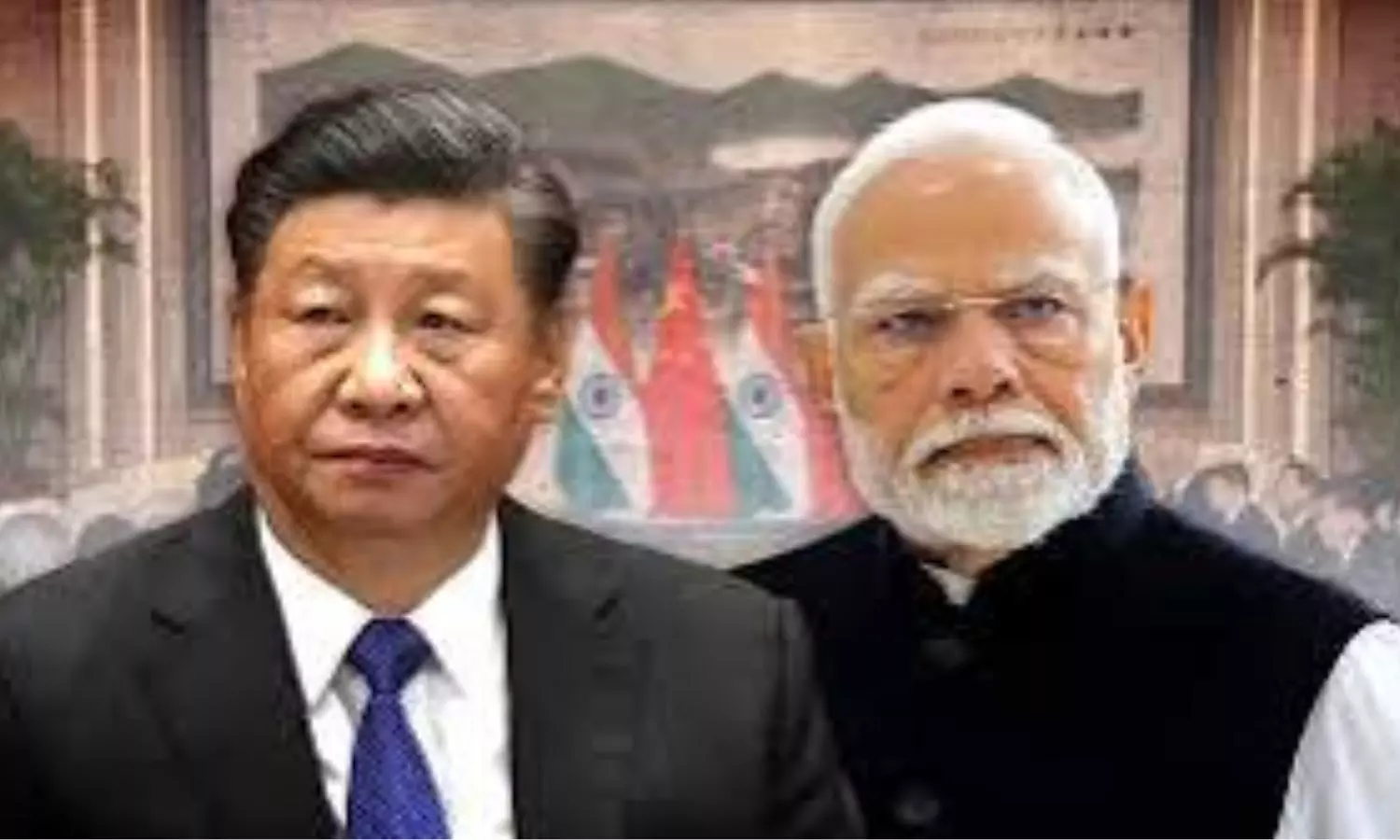
India and China agreed to address the concerns of both countries
New Delhi: India and China agreed to address the concerns of both countries on structural trade imbalance and supply chain issues, and facilitation of meaningful and predictable market access, according to the Ministry of External Affairs.
Prime Minister Narendra Modi and Chinese President Xi Jinping, during the bilateral meeting, took note of the progress in people-to-people ties and underscored the need to further promote cultural exchanges, business linkages, and greater mobility between the two countries. On economic and trade relations, they underlined the need to address each other’s concerns, including structural trade imbalance and supply chain issues, and facilitation of meaningful and predictable market access," the MEA statement said.
The two leaders held bilateral talks on the sidelines of the ongoing BRICS Summit 2026, marking President Xi’s first visit to India in nearly seven years and the third consecutive year in which the two leaders have met, following their meetings in Kazan and Tianjin.
The Chinese leader said that although China and India are different, the two countries have been able to "support and help each other to achieve common development".
Though there was no announcement of a breakthrough on the boundary dispute, a major trade agreement, or a fundamental change in India's strategic position, both sides have stressed the importance of maintaining dialogue and developing a longer-term, stable relationship. Xi said India and China should view each other as partners rather than rivals.
The meeting is best described as “managed rapprochement”—India and China are moving from confrontation towards cautious coexistence and greater economic engagement, while keeping the unresolved border and security differences under careful management
The two leaders reviewed progress since the 2024 disengagement and the continuing efforts to maintain peace and tranquillity along the LAC. There is no indication of a final settlement of the boundary dispute
According to MEA, India’s trade deficit with China has been increasing steadily in recent years and shot up to $112.16 billion in 2025-26, from $99.21 billion in 2024-25, which has raised the issue of correcting the imbalance so that the two-way trade is sustainable.
India's exports to China rose 36.62 per cent to $19.47 billion in 2025-26 from $14.25 billion a year earlier. However, imports also increased 16.03 per cent to $131.63 billion from $113.46 billion, which led to a widening of the trade deficit.
India's merchandise trade with China increased 18.31 per cent in 2025-26 to $151.10 billion. China has also overtaken the US as India's largest trading partner.
China, on its part, will be looking for an easing of investment rules from India to enable its companies to invest in the fast-growing Indian market.
Big blow to Congress in Uttarakhand: Senior leader Harish Rawat quits party posts
Education policy will meet needs of ‘Gen Alpha, Gen Beta’: Revanth
Trump moves to axe 60-day grace period for H-IB visas
TG BJP to launch month-long Seva Sankalp Abhiyan: NRR
University account linked to KCR aide holds over Rs 400 cr: CM Revanth
BRICS Summit should not become anti-West platform


