




- Jagan regrets supporting law on appointment of Election Commissioners
- Namo Bharat ridership crosses 4.5 crore as rapid rail system completes 3 years
- Punjab BJP chief to don black turban till family of slain anti-drug activist gets justice
- 'Echoing RSS statements, should read more': Congress, RJD on BJP chief's remarks against Rahul
- YS Jagan meets AP SEC, complains on clashes
- Rashmika Mandanna picks Allu Arjun over Ranbir Kapoor
- Noida Family Deaths: Father Suspected Of Mixing Poison In Noodles Amid Property Dispute
- HM Amit Shah to visit Punjab on October 20
India's emerging peace initiative on Ukraine conflict reflects shift from diplomatic advocacy to interest-driven engagement: Report
In Short
India's emerging peace initiative on the Russia-Ukraine conflict demonstrates a calibrated shift from diplomatic advocacy to more targeted, interest-driven engagement, according to a report.

Share :
India's emerging peace initiative on the Russia-Ukraine
New Delhi: India's emerging peace initiative on the Russia-Ukraine conflict demonstrates a calibrated shift from diplomatic advocacy to more targeted, interest-driven engagement, according to a report.
"Rather than attempting to broker a comprehensive political settlement to a war that has repeatedly defied diplomatic intervention, New Delhi appears to be pursuing a more attainable objective: limiting the conflict’s disruptive consequences for energy security, food supplies, and maritime commerce. Conveyed during External Affairs Minister S Jaishankar’s visit to Kyiv in September, the proposal has reportedly been described by Ukrainian Foreign Minister Andrii Sybiha as the 'most comprehensive' among four international initiatives, alongside those advanced by Turkey, Egypt, and the US," former diplomat Harsh V. Pant wrote in the report in weekly current affairs and features magazine Open.
The proposal presented by India is based on three interconnected pillars - a mutual halt in attacks on energy facilities and other infrastructure, the uninterrupted movement of energy supplies and grain through the Black Sea ports, and cessation of attacks on commercial shipping in the Black Sea. Taken together, these measures showcase an attempt to find areas of limited convergence between Russia and Ukraine, where none of the two nations is required to make immediate concessions regarding the fundamental political and territorial questions underpinning the conflict.
India is not presenting a diplomatic formula to end the conflict but wants to establish a measure of predictability in sectors where the costs of continued hostilities affect beyond the immediate belligerents. Energy flows, food security and the safety of seafarers form practical points of engagement around which a limited understanding might be created. Reports of Russia and Ukraine's acknowledgements of India's efforts, along with Russian President Vladimir Putin appreciating Prime Minister Narendra Modi's proposals and the Kremlin's praise for New Delhi's readiness to contribute, indicate that India retains diplomatic space with both sides.
Since the start of the conflict, India has called for dialogue and diplomacy to resolve the war. PM Modi's statement, "this is not an era of war", during his meeting with President Putin in Uzbekistan's Samarkand in 2022 showcases India's effort to preserve strategic autonomy while signalling its preference for a negotiated outcome.
"India’s more recent engagement suggests an effort to move beyond advocacy towards selective problem-solving. Jaishankar’s reported conversations with both Moscow and Kyiv on Black Sea shipping, grain and energy exports, and the possibility of reciprocal non-attack arrangements point to a more operational understanding of what Indian diplomacy might realistically achieve," Pant wrote in the report.
India, however, is not taking up the role of a formal mediator. By offering practical assistance instead of mediation, India is trying to preserve diplomatic flexibility and keep its ambitions proportionate to its capabilities, according to the report.
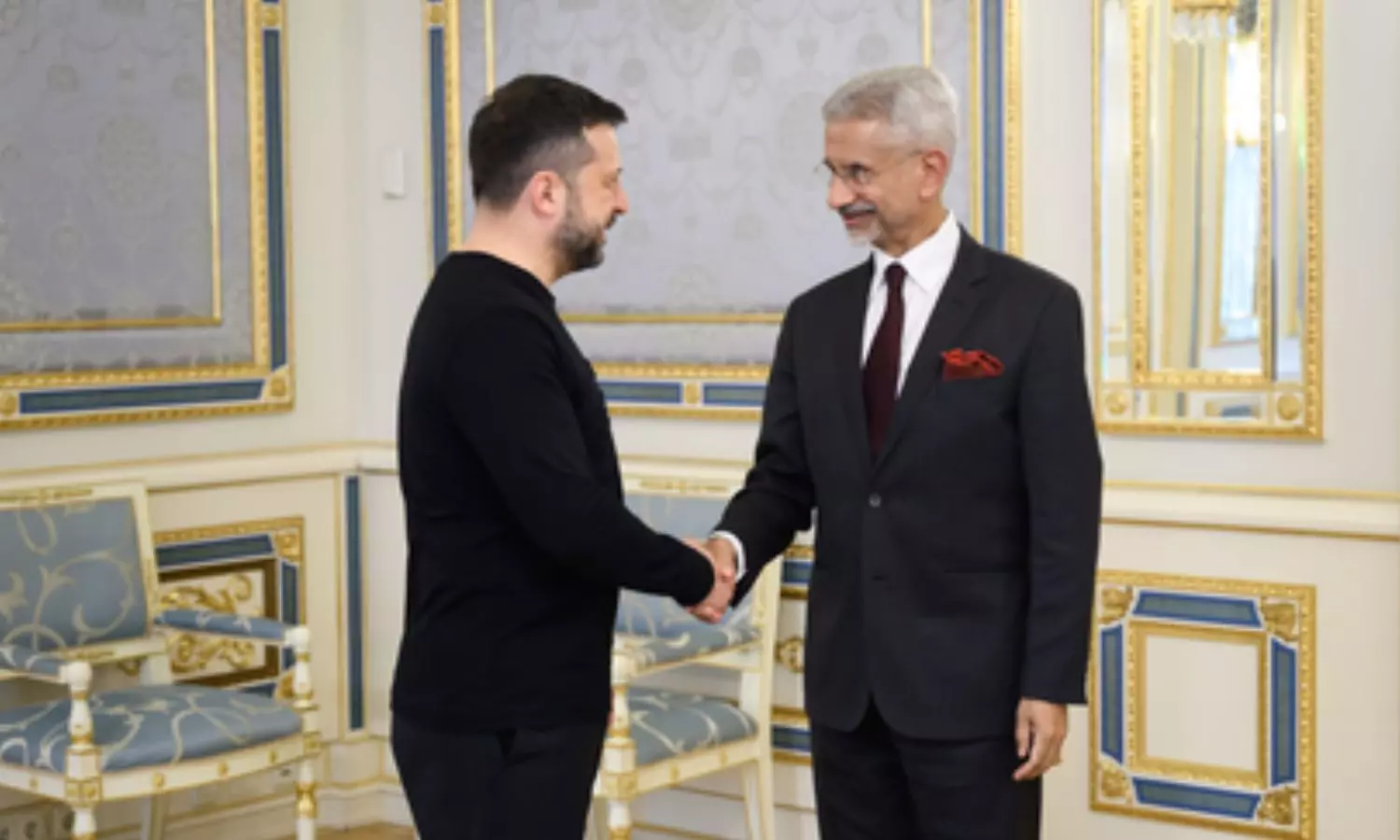
Last month, EAM Jaishankar was on an official visit to Kyiv, where he met Ukrainian President Volodymyr Zelensky and Foreign Minister Sybiha.
During his meeting with his counterpart, EAM Jaishankar reiterated India's stance that the conflict cannot be resolved on the battlefield and that solutions require dialogue and diplomacy. Sybiha briefed EAM Jaishankar on the recent developments in the ongoing conflict and peace negotiations.
EAM Jaishankar also called on President Zelensky, discussing with him not only ways to enhance India-Ukraine bilateral ties but also the approaches to end the ongoing conflict in the region.
'Churches must be consulted on proposed Christian marriage laws in Pakistan's Punjab, Sindh'
India advises its citizens in Saudi Arabia to take due precautions amid prevailing situation
'It has been a massive confidence booster': Gwanzura after strong performance against India
'Understand the RSS through its service work, not through a political lens': Entrepreneur Rashmi Samant
Amit Shah Meets Injured Victims At Hospital In Kolkata, TMC Blames Administrative Crises
Kolkata Durga Puja Stampede: 19 Dead, Seven Arrested Including Pandal Organisers
CM Revanth Reddy responds to arch collapse in MVSR college, assures support to victims
Chorgabagan Durga Puja Stampede: Kolkata’s First Fatal Stampede
A Puja Night Turns Tragic: 19 Killed in Kolkata Durga Puja Stampede
CM Revanth Reddy extends Bathukamma greetings


