




- Army Mountaineering Expedition summits Mt Khangchengyao in North Sikkim
- Piyush Goyal meets Canadian Minister Maninder Sidhu to seal trade pact soon
- Danam Nagender disqualified as MLA, likely to move Supreme Court after disqualification
- ‘Missing Meghana’ movie review: Entertaining crime thriller
- Fake GST credit scam: Iron and steel trader arrested by Delhi CGST officials
- Only Shivakumar can bring all votes now: Siddaramaiah loyalist Rajanna takes swipe at Karnataka CM
- J&K Crime Branch arrests notorious fraudster in Rs 93 lakh land & property fraud case
- TMC Symbol Row: Mamata Camp Gets Football Player, Rebel Faction Envelope Symbol For Bengal Bypoll
Know Your History — BJP’s retort to Rahul’s ‘Govt Chori’ jibe
In Short
At a presser here on Friday, the party spokesperson Sudhanshu Trivedi said it appears that Rahul Gandhi does not the history of his own party.

Share :
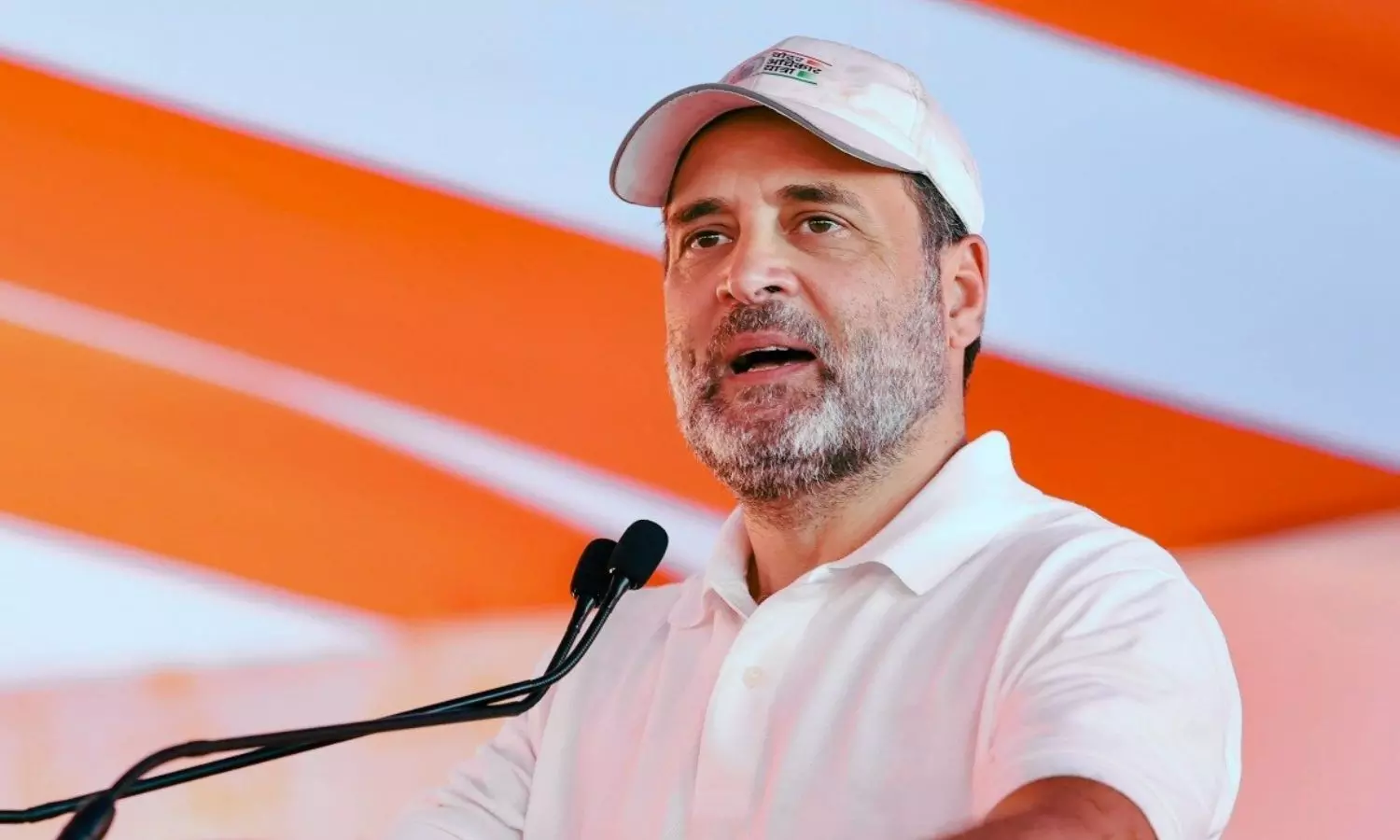
vote chori and party chori” jibe of Leader of Opposition Rahul Gandhi over the TMC row
New Delhi: The BJP reacted sharply to the “government chori, vote chori and party chori” jibe of Leader of Opposition Rahul Gandhi over the TMC row.
At a presser here on Friday, the party spokesperson Sudhanshu Trivedi said it appears that Rahul Gandhi does not the history of his own party. He said he is “yet another bizarre example of his ignorance regarding Indian politics and history of Congress as well as his il-will towards BJP.”
He said Rahul perhaps does not know that NCP and TMC leaders, Sharad Pawar and Mamata Banerjee, were once top leaders in Congress. Not just that, it is the Congress party which has a long history of not allowing any democratically elected government to survive till 1997.
The BJP spokesperson recalled the manner in which Congress had dismissed the EMS Namboodiripad government in Kerala in 1959, engineered split within the National Conference in 1984, and finished the Praja Socialist Party in 1963; toppled the TDP government led by N T Rama Rao when he was abroad undergoing heart surgery in 1982, it split divisions in Karpuri Thakur’s Lok Dal in Bihar.
Not just that, the Congress government at the Centre dismissed the Janata Dal government led by S R Bommai in Karnataka in 1989, despite the party having a clear majority in the state Assembly. Even when the Congress was in opposition, it had toppled governments at Centre led by H D Deve Gowda, Chaudhary Charan Singh, Chandra Shekhar and I K Gujaral by abruptly withdrawing support.
He expressed surprise over Rahul Gandhi’s accusation of “government chori and party chori,” and said if Rahul is not aware of all this, then he has no right to be a top leader in the party, let alone LoP.
In a sharp rhetoric, the BJP leader said, Sharad Pawar formed the NCP in 1999 after breaking away from the Congress over the issue of "foreign origin" leadership in the grand old party. "Yet Rahul Gandhi, the heir of that very foreign lineage, does not even know the roots of his own party," he said.
On the contrary, Sudhanshu said the Bharatiya Janata Party (BJP) is the only party in the country which has never witnessed a "vertical division".
It may be mentioned here that Rahul had made government chori comments and rallied behind their arch rival in West Bengal, Mamata Banerjee, after the Election Commission of India froze the party name and symbol for by-polls.
India’s chips will go global: PM Modi
People's aspirations benchmark for govt decisions, says CM Revanth
Revenue officials begin probing govt lands at KCR’s farmhouse
Defer 3-language policy for Class 6 till 2027: SC
UPI MDR issue has now become political football
India’s multi-alignment: A strategy or a mirage?


