




- Calcutta HC's division bench stays Mamata Banerjee's meeting in Sreerampore (Lead)
- IndiGo flight from Lucknow to Dammam diverted to Ahmedabad after bomb threat
- In UP’s Mahoba, beneficiaries count benefits of Ujjwala Yojana and transition to clean fuel
- Rights body urges Pakistan to halt expulsion of Afghan medical students
- Telangana Govt Extends ₹1.20-Crore Accident Insurance Cover to Employees, Pensioners
- Karnataka: On right track, says Siddaramaiah as Shivakumar government completes 100 days
- ED conducts searches in MP over alleged diversion of NABARD loan by Nimar Agro Park
- Harish Rao lashes govt., demands to solve water and power issues
Russian President Putin to Arrive on Friday for 18th BRICS Summit
In Short
President Putin will address the Plenary Session of the annual BRICS Business Forum on Friday, which traditionally precedes the summit and serves as an important platform for dialogue among business representatives from BRICS countries.

Share :
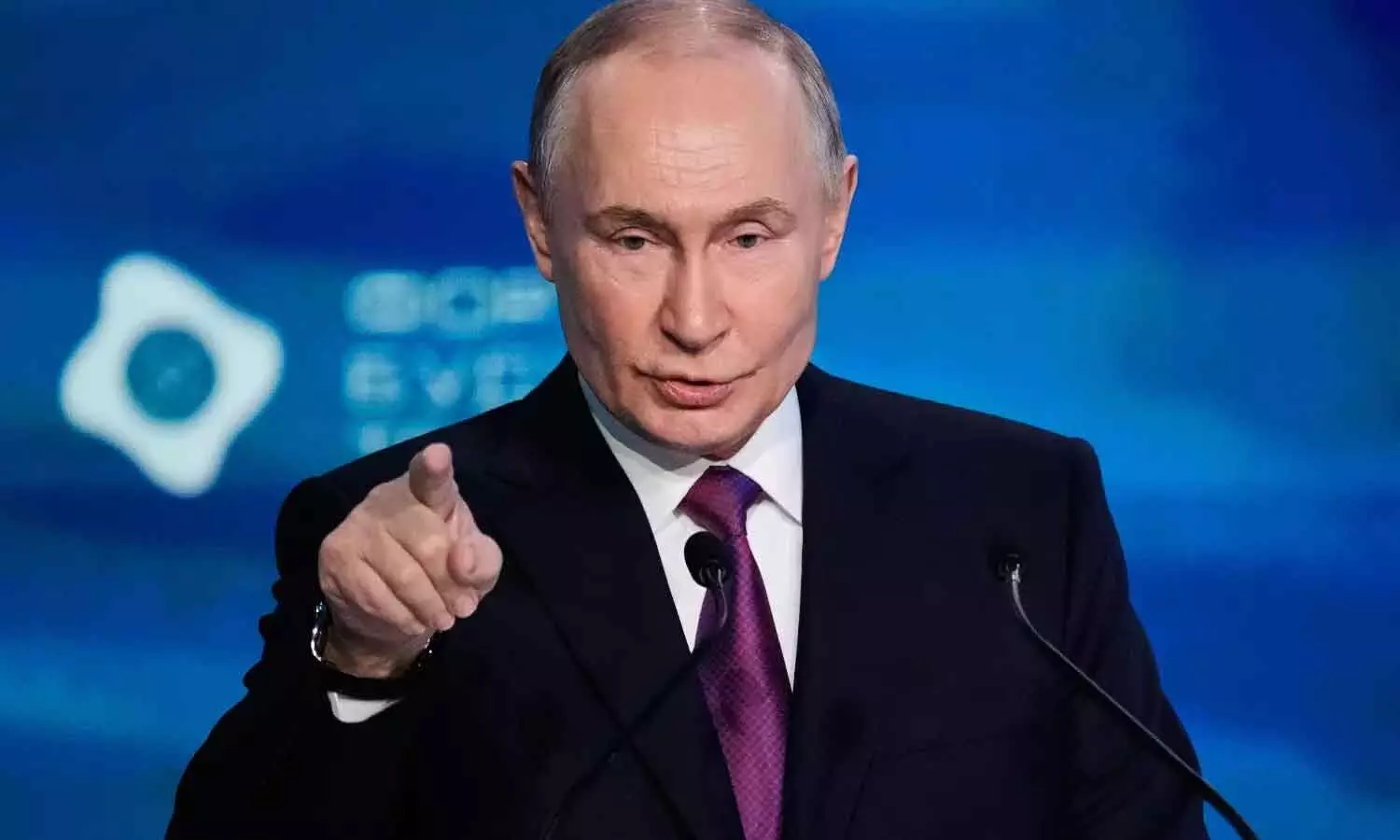
Russian President Vladimir Putin
New Delhi: The stage is set for the two-day 18th BRICS summit hosted by India starting Saturday. The summit will be focussing on the need for collective resilence in food, energy, health, disaster reduction and critical supply chains -- positioning the group as an effective anchor to navigate a fragmented geopolitical environment.
Dignitaries from various countries would start reaching Delhi from Friday. Russian President Vladimir Putin will reach India early Friday and will be here on a three-day visit and will have a bilateral meeting with Prime Minister Narendra Modi.
According to official sources, President Putin will address the Plenary Session of the annual BRICS Business Forum on Friday, which traditionally precedes the summit and serves as an important platform for dialogue among business representatives from BRICS countries. He will also join Modi for a visit to the Innoprom exhibition, organised by the two countries’.
The main Summit programme will begin on September 12 with a meeting of BRICS Leaders to discuss initiatives put forward by the Indian Chairship and prospects for further strengthening the BRICS strategic partnership in politics and security, economics and finance, and cultural and humanitarian ties. The leaders will also exchange views on current international and regional issues.
On Sunday, an expanded BRICS meeting will bring together the Heads of delegations from BRICS member and partner countries, as well as invited countries and Heads of international organisations.
Putin will also hold meetings with several international leaders, including South African President Cyril Ramaphosa, Malaysian Prime Minister Anwar Ibrahim and Egyptian President Abdel Fattah el-Sisi on the sidelines of the summit, officials said.
It is learnt that no separate full-format meeting between President Putin and Chinese President Xi Jinping has been scheduled on the sidelines of the BRICS summit in New Delhi.
Meanwhile, the hotel tariff in Delhi has surged steeply. Delhi Police said that they have put in place a multi-layered security system for the upcoming Summit, with around 15,000 personnel and 200 companies of paramilitary forces to be deployed across the national capital, a senior police officer said on Thursday.
Over 500 CCTV cameras, including high-resolution and specialised surveillance cameras, to keep a round-the-clock watch over key areas and they are prepared to meet any eventuality, the official said.
Manish Kumar Agrawal, Special Commissioner of Police (Protective/Security Division), said the arrangements have been planned to ensure maximum security for visiting dignitaries while causing minimum inconvenience to the public.
Vendors' delegation seeks Lt Guv intervention ahead of BRICS
The "Vibe Coding" Hangover: Why Rushing AI-Generated Code is Creating a Production Tech Debt Trap
Russian President Putin to Arrive on Friday for 18th BRICS Summit
SC asks authorities to report action taken on unauthorised constructions across country
TMC leader Abhishek Banerjee’s aide arrested
Surge in Dengue cases-Ahmedabad on Health Alert
SC Notice on Plea Seeking Pension, Social Security for Private School Teachers
Vendors' delegation seeks Lt Guv intervention ahead of BRICS
Russian President Putin to Arrive on Friday for 18th BRICS Summit
Special Session of WB Assembly passes inter-university transfer of teachers bill.


