




- Amazon Layoffs: Fresh Job Cuts Hit India as Great Indian Festival Sale Begins
- Congress Intensifies Protests Against CEC: Dharnas in Hyderabad, Delhi and Patna
- Australia look to bury sandpaper ghosts as they return to South Africa
- Tamil Nadu makes asset disclosure mandatory for promotion of govt employees
- Beyond the screen: Nana Patekar's journey from acting titan to transforming India's rural lives
- PM Modi thanks world leaders for wishes on completing 25 years as head of govt
- After Kaka, Will Chiranjeevi Join Hands With Karthik Subbaraj?
- Institutional real estate inflows in India touch $5.9 billion in Jan-Sep: Report
Supreme Court asks Centre to form committee to curb unethical pharma marketing practices
In Short
The Supreme Court has directed the Centre to form a committee to examine the need for statutory regulation of pharmaceutical marketing practices, including gifts and incentives offered by drug companies to doctors, to curb unethical promotional activities.

Share :
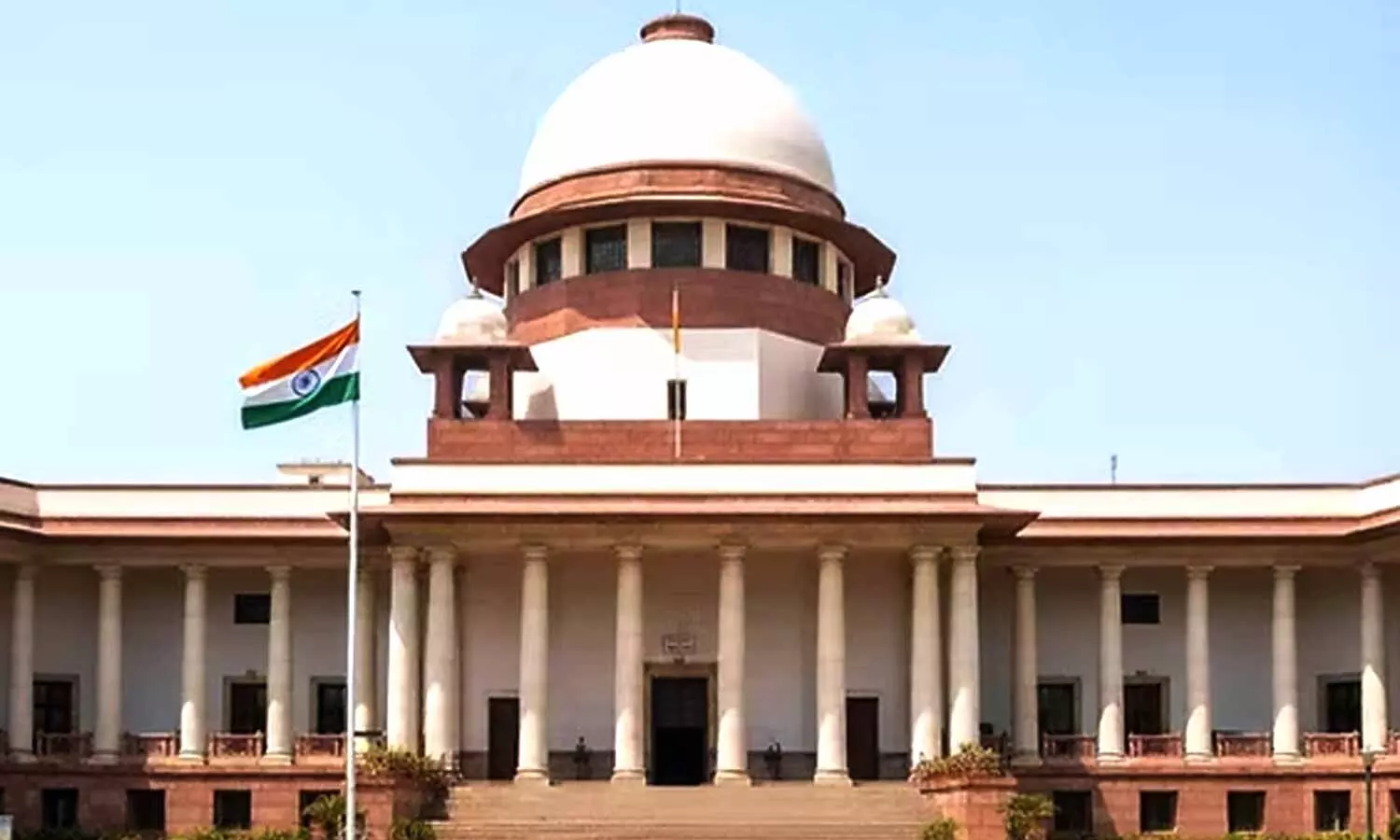
Supreme Court of India
New Delhi: The Supreme Court on Thursday directed the Centre to constitute a committee to examine the need for statutory regulation of pharmaceutical companies' marketing practices, including the offering of gifts, hospitality and other benefits to doctors to promote their products.
A Bench of Justices Vikram Nath and Sandeep Mehta passed the direction while hearing a plea seeking statutory regulation of pharmaceutical marketing practices and measures to curb unethical interactions between drug companies and doctors.
During the proceedings, Solicitor General Tushar Mehta had informed the Justice Nath-led Bench that the Union government would constitute a three-member committee to examine whether a statutory framework was required to regulate pharmaceutical companies and, if so, recommend the form such regulation should take.
The Centre submitted that the existing regulatory framework provides for disciplinary action against doctors who accept such benefits from pharmaceutical companies. However, the issue of statutory regulation of pharmaceutical companies themselves would be examined by the proposed committee.
The committee will consider suggestions and objections received from stakeholders and make recommendations to the Centre on the need for statutory regulation of pharmaceutical marketing practices.
The proceedings arose from concerns over the practice of pharmaceutical companies offering freebies, gifts, hospitality, travel facilities or other benefits to doctors as incentives for prescribing their products.
The petitioner's side submitted that the existing framework created an asymmetry by providing for consequences for doctors who accepted such inducements while lacking a corresponding statutory mechanism to regulate or penalise pharmaceutical companies that offered them.
The Centre has been asked to file an affidavit regarding compliance with the Supreme Court's directions, and the matter will be taken up for further hearing on January 29.
The issue of pharmaceutical marketing practices has also come against the backdrop of the apex court examining wider concerns relating to medicine pricing and affordability.
In a separate set of PILs concerning the regulation of medicine prices, generic medicines, medical devices and prescription practices, the same Bench had questioned the wide disparity between the price at which medicines are supplied to retailers and their MRP.
In a previous hearing, the Supreme Court had questioned the Centre over a cancer medicine carrying an MRP of Rs 27,000 while being supplied to retailers for around Rs 2,700 to Rs 3,000.
The top court had described the ten-fold disparity as "broad daylight dacoity" and questioned why manufacturers should be permitted to fix MRPs substantially higher than the price at which medicines are supplied to retailers.
The Justice Nath-led Bench had further questioned whether a uniform margin could be prescribed for pharmaceutical products covered under the Essential Commodities Act, irrespective of whether the medicines were classified as essential or non-essential under the Drug Price Control Order.
The Supreme Court had also observed that an excessive gap between MRP and the price at which medicines are supplied to retailers could affect consumer confidence, stating that a patient could even suspect a medicine to be spurious if a drug carrying an MRP of Rs 27,000 was offered for around Rs 3,000.
Voice AI adoption scales up in India as 31 pc of firms move to limited production: Report
Chief Minister Dhami’s Effective Advocacy Helps Turn the Dream of a Permanent Home into Reality
'Welcome' director Anees Bazmee requests privacy after Nana Patekar’s demise, says ‘not in a condition to talk’
Indian 3: Shankar Confirms Kamal Haasan’s Return As Senapathy
Vijayasai Reddy announces five more proposals of his party in Tirupati
AP CM Chandrababu meets Amit Shah in Delhi
Nation Salutes Air Warriors on Air Force Day
Vijay govt faces first litmus test as Madurantakam, Dharapuram bypolls deliver results tomorrow
Mixed weather to continue in AP, Telangana, rains likely in parts of two states
Pawan Kalyan condoles death of bollywood actor Nana Patekar


