




- Most of Brazilian President Lula’s top donors hold state jobs: Report
- US ban on key Canadian goods starts Tuesday
- Trump leaves door open to fresh US strikes on Iran before midterms
- Delhi CM launches 53 projects worth Rs 214 cr
- Over 14,000 challans issued this week
- Retd Army man, wife hacked to death
- Muslim marriage doesn’t exempt sex with minor from crime: HC
- 15-yr-old boy missing for 21 months traced in UP
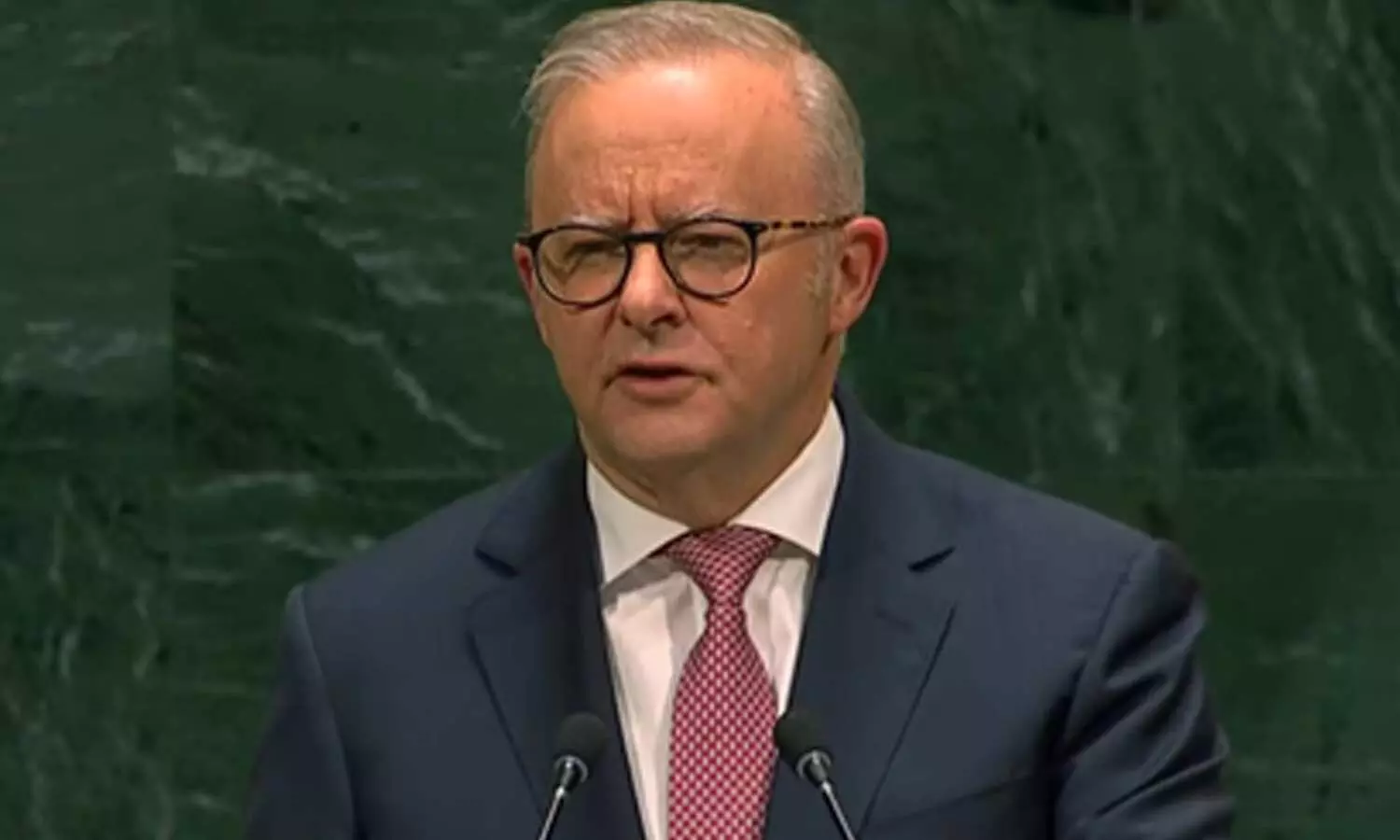
20 nations move to curb social media for kids: Australian PM Albanese at UNGA
In Short
Albanese said Australia’s decision last year to prohibit children below the age of 16 from using social media had helped generate wider international action.

Share :
20 nations move to curb social media for kids: Australian PM Albanese at UNGA
United Nations: More than 20 countries are introducing or considering age restrictions on social media, Australian Prime Minister Anthony Albanese has told the UN General Assembly, as leaders sought stronger safeguards for children facing risks from digital platforms and artificial intelligence.
Albanese said Australia’s decision last year to prohibit children below the age of 16 from using social media had helped generate wider international action.
“Already, more than 20 countries are bringing in or have brought in age restrictions on social media,” he said.
With the European community also taking action, “there are many more to come”, he added.
Australia adopted the restriction after a campaign by parents who said their children had suffered harm linked to social media. Some of those parents had addressed the General Assembly during its previous session.
Albanese presented the measure as an example of countries working together on problems created by rapidly developing technologies.
The UN’s mission could not be “subcontracted to the world’s richest companies or dictated by the pace of technology”, he said.
The warning was echoed by France, which called for greater regulation to protect children and adolescents from technologies affecting their ability to learn.
French President Emmanuel Macron highlighted what he described as a decline in the learning capacity of young people exposed to some digital technologies.
“Let’s not wait for the consequences to come raining down,” Macron said.
He also warned that the debate over artificial intelligence could not be left solely to the United States, China and a small group of private companies because of the technology’s potential impact on governments, hospitals and financial systems.
Britain said artificial intelligence would multiply existing threats in the information environment.
Prime Minister Andy Burnham accused hostile actors of using bots, fabricated websites and falsified news reports to exploit public fears and intensify divisions.
The United Kingdom would work towards common global principles and standards for AI transparency, preparedness and safety, he said.
Fundamental decisions about artificial intelligence “are too important to be left to chance” and should be taken by elected governments serving the public, Burnham said.
South Korean President Lee Jae Myung warned that the AI revolution could deepen economic inequality and increase young people’s anxiety about their future.
South Korea planned to establish a Global AI Hub platform to share the benefits of its technological development with the international community, he said.
Italy also called for rules but cautioned against excessive regulation.
Deputy Prime Minister Antonio Tajani said new technologies risked creating fresh inequalities, dependencies and concentrations of power.
The international community could not surrender its future to a technology without rules, he said. However, “we do not need bureaucratic cages that only some would respect”.
Tajani called for a balance involving transparency, oversight, security and protection of intellectual property.
Argentina offered the strongest defence of a light regulatory approach.
President Javier Milei said fears surrounding previous technological revolutions had not ultimately produced the predicted destruction of employment. Argentina would avoid premature regulation and offer incentives to companies developing AI.
“Fear should not transfer into obedience,” Milei said.
The competing positions reflected a wider debate over whether governments should restrict young people’s access to digital platforms or require companies to redesign services that can expose children to harmful content, addictive features, misinformation and online exploitation.
Break-ups, disharmony & conflicts among families on rise
Trapped In 22-A Issues… Govt neglecting farmers' issues
TG govt out to clear long-pending ULC applications soon
Students in dilemma as govt drags its feet: Studies over, thousands await certificates that hinge on fee dues
The mess around the poll panel is govt’s own making
A great personality committed to nation-building


