






- President Droupadi Murmu arrives in Mizoram on three-day visit
- Abhishek issues whip to Trinamool MPs as CM Adhikari seeks NCPI support for Delimitation Bill
- Rift in MVA: Maha Congress reminds Sharad Pawar of RS backing amid delimitation row
- Mayawati welcomes 33 pc women’s quota, seeks separate reservation for SC/ST women
- Nifty, Sensex snap 4-week rally amid profit booking, higher crude prices
- Delimitation Bill approval clears path for women's reservation in 2029 polls, says UP CM
- Gold and silver rates today 28 Nov, 2026 slashes in Bengaluru and Chennai, check gold prices of 18K, 22K, 24K
- Gold and silver rates slashes today, 28 Nov, 2026 in Delhi, Mumbai, check gold prices of 18K, 22K, 24K
Growing powers give Pakistan military greater scope to act with impunity: Report
In Short
It noted that the Pakistani military’s recent actions have demonstrated the serious risks this concentration of power poses to domestic political opponents, protest movements and neighbouring countries.

Share :
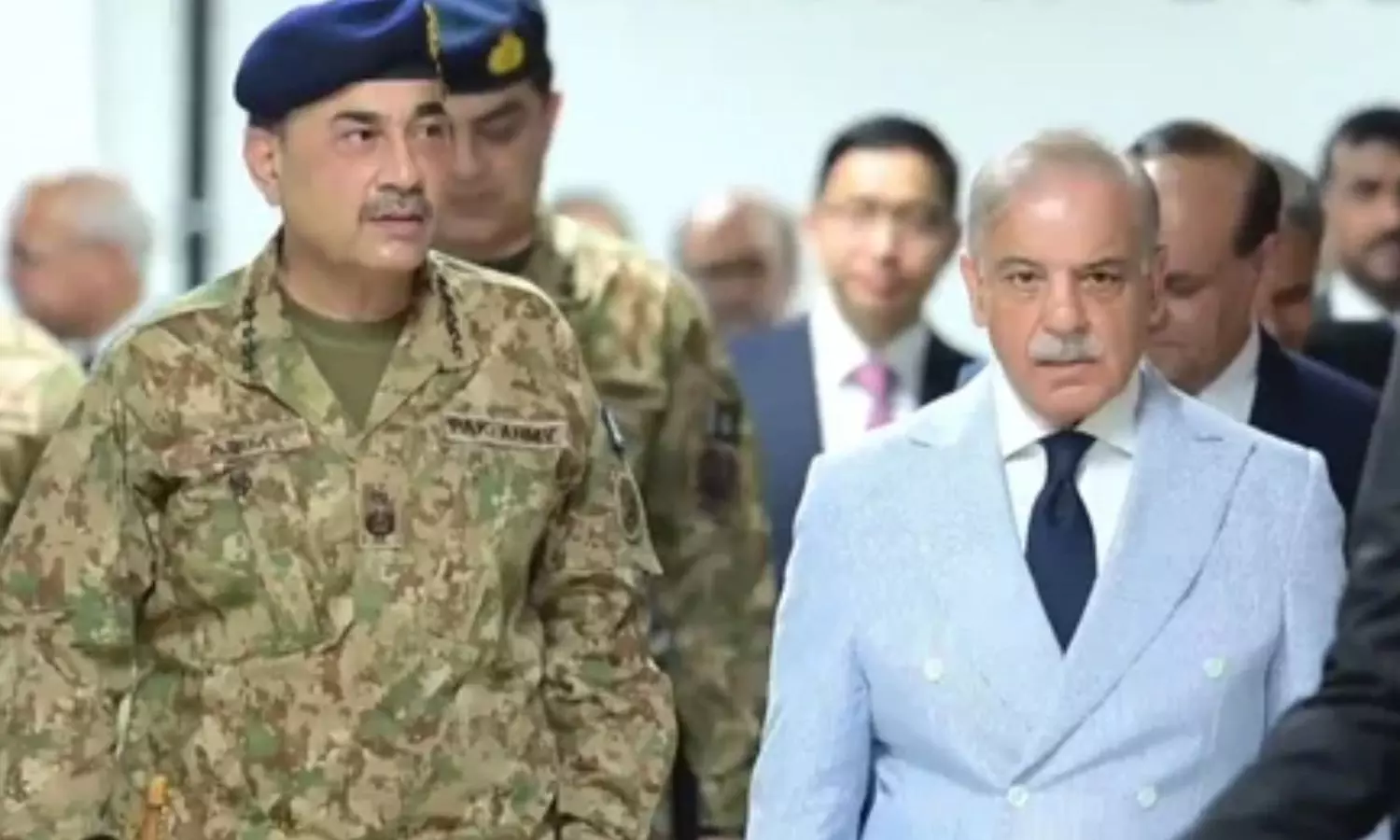
With Pakistani Army chief Asim Munir already wielding considerable influence
London: With Pakistani Army chief Asim Munir already wielding considerable influence, the additional powers granted to him further expand his ability to act with impunity, a report has stated.
It noted that the Pakistani military’s recent actions have demonstrated the serious risks this concentration of power poses to domestic political opponents, protest movements and neighbouring countries.
The Pakistani military has consolidated unprecedented powers, comparable to those enjoyed during periods of direct military rule. Although Pakistan has a history of military coups dating back to the 1950s, its current military dominance is distinct from the circumstances surrounding the country's three major coups, according to a report in ‘9DASHLINE’.
“In the space of just nine months, Pakistan’s ruling Pakistan Muslim League–Nawaz (PML-N) government has overseen one of the most sweeping expansions of military power in the country’s recent history. Last November, Pakistan’s parliament approved the 27th Amendment to the constitution, establishing the new office of Chief of Defence Forces (CDF). This new post, occupied by Field Marshal Asim Munir, has significant influence over the country’s military command structure,” the report detailed.
“This August, the government went further, passing the Defence Forces of Pakistan Act, which granted the CDF operational command and control over all three branches of the Pakistan military and made Munir the principal military adviser to Prime Minister Shehbaz Sharif. Despite widespread concern at the erosion of civilian oversight, the legislation passed through both houses of Pakistan’s parliament at ease, amid a boycott from the opposition,” it added.
The report warned that the military's newly acquired powers could further destabilise Pakistan and make it a more dangerous place, especially for human rights activists and government opponents. Greater suppression of dissent could aggravate existing resentment and deepen the grievances of those already at odds with the state.
In Pakistan-occupied Kashmir (PoK), security forces have already resorted to violent crackdowns against a largely peaceful grassroots movement seeking greater economic and political rights, along with electoral reforms, the report mentioned.
It stated that the weakening of civilian oversight and other institutional checks could further empower the military and security establishment to crush such movements with force,
According to the report, the consequences of this impunity are equally evident beyond Pakistan's borders.
Earlier this year, Pakistani air strikes on Afghanistan killed more than 250 civilians at a drug rehabilitation centre in Kabul, an attack that organisations such as Amnesty International described as a war crime. Yet, neither the Pakistani military nor Munir has been held accountable for the strike.
“By stripping away the remaining constraints that could rein in the military, Pakistan’s constitutional changes risk increasing the chances that such actions will reoccur. This danger is already apparent. This month, Pakistan carried out further air strikes on Afghanistan, placing additional strain on already fraught relations with Kabul. At present, a diplomatic off-ramp remains elusive, and each escalation increases the risk that Pakistan itself will face retaliatory strikes from the Taliban,” the report mentioned.
NDA Explains, Opposition Takes Refuge in Rhetoric
MP: Jitu Patwari opposes delimitation before census, says Cong backs women's quota
INDIA Bloc's Blind Opposition: Long on Rhetoric, Short on Reason
Defiance to Compliance: Supreme Court Makes TVK Government See the Light
K’taka to adopt Japanese models in urban transport, waste management and industrial development
NDA 3.0 completes 200 days in Assam; CM Sarma highlights welfare schemes, jobs


