




- DUSU elections 2026: Over 2.75 lakh students to vote amid tight security
- US secures American’s release in Myanmar
- US lawmakers urge Trump to press China on detained Americans, AI chips ahead of Xi meeting
- US, Lithuania sign critical minerals pact
- Iran's IRGC says 'violating' oil tanker hit in Hormuz Strait
- Rs 40K cr spent on road devpt across TG: Komatireddy
- Kiran Bedi moves Delhi HC, Centre opposes
- ‘Pretend I’m on ballot’: Trump urges voters
US sanctions Cuba’s nickel, military network
In Short
SERCONI supplies tools and services to the nickel industry. CEPRONIQUEL carries out engineering projects and coordinates state-run mineral extraction operations, according to the fact sheet.

Share :
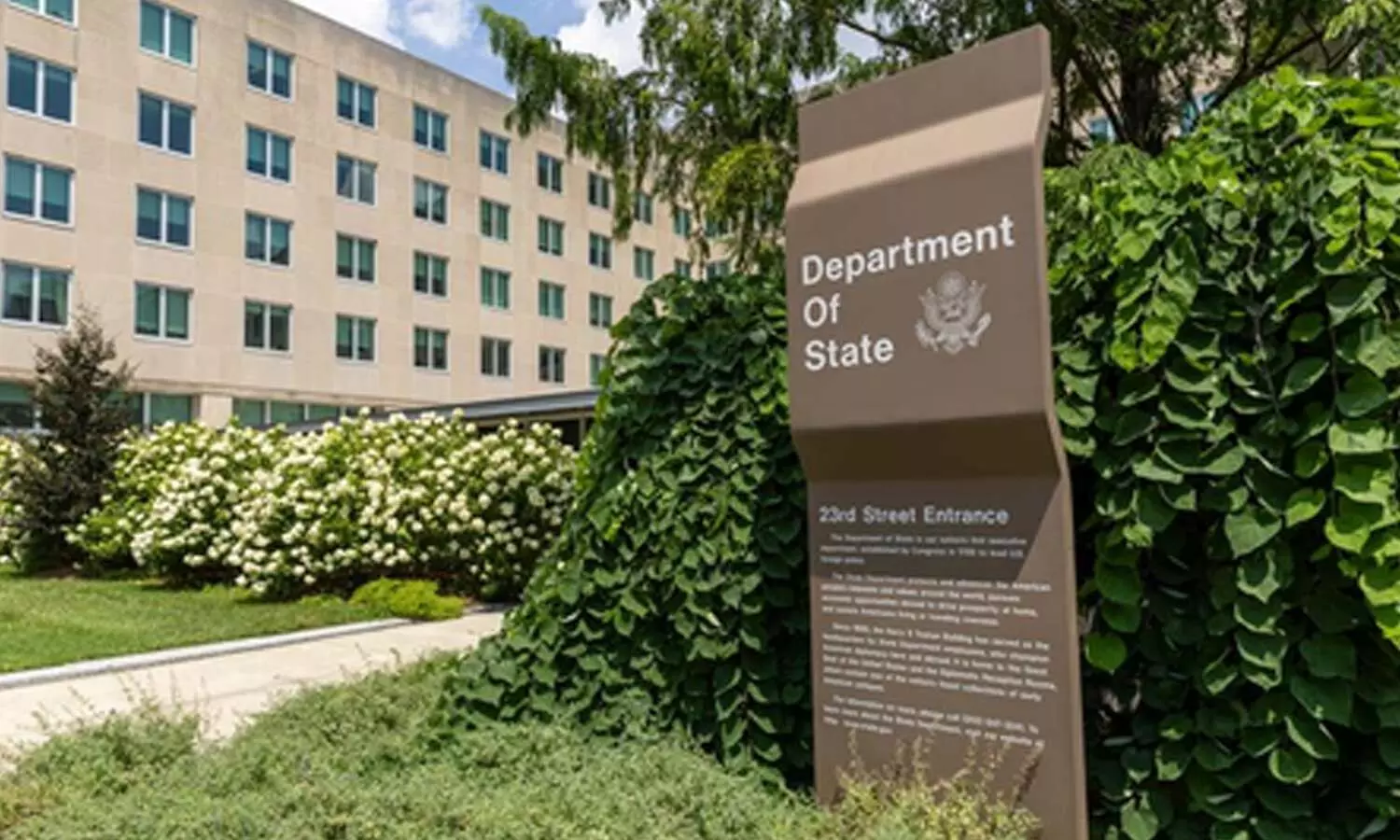
US sanctions Cuba’s nickel, military network
Washington: The United States imposed sanctions on eight Cuban entities and three military officials, targeting the island’s nickel industry and military research establishments in an action that also warned foreign businesses of potential sanctions exposure.
Secretary of State Marco Rubio said the designations covered four state-run enterprises linked to nickel, four military enterprises and three officials leading military research organisations.
The State Department accused the Cuban government of using mineral revenues to sustain its security apparatus rather than benefit ordinary citizens. Those allegations were contained in the US announcement. The supplied material included no Cuban response.
“For decades, the Cuban regime has channeled all of the island’s resources into the hands of a narrow and corrupt military elite, leaving ordinary Cubans without reliable power, food, or dignity,” Rubio said.
The designations were issued under Executive Order 14404, which the department said authorises sanctions related to repression in Cuba and threats to US national security and foreign policy.
The military entities targeted were SIMPRO, CIDNAV, CIDAI and GELCOM. According to the department, their work spans training simulators, naval research, infantry weapons, electronics and communications.
SIMPRO develops and manufactures simulators and provides training for Cuba’s Revolutionary Armed Forces and other government bodies. CIDNAV conducts research for the Cuban navy.
CIDAI works on the development, acquisition, modernisation and evaluation of infantry weapons. GELCOM produces electronics and communications equipment, the department said.
The three officials sanctioned were SIMPRO director general Joaquin Francisco Cancio Monteagudo, CIDNAV director general Dioglis Pedrera Arguello and CIDAI director general Julio Hurtado Betancourt.
The department identified Cancio Monteagudo and Hurtado Betancourt as senior colonels in Cuba’s Revolutionary Armed Forces and Pedrera Arguello as a captain.
The nickel-related designations covered SERCONI, CEPRONIQUEL, CEDINIQ and Pinares S.A. Their activities include technical services, engineering, industrial research and geological surveying.
SERCONI supplies tools and services to the nickel industry. CEPRONIQUEL carries out engineering projects and coordinates state-run mineral extraction operations, according to the fact sheet.
CEDINIQ provides research, development and innovation support for the sector. Pinares conducts geological surveys of Cuban mineral deposits.
The State Department described nickel as a source of hard currency for the Cuban government. It alleged that the earnings sustained the government without benefiting the population.
Under the announced measures, property and interests in property of designated parties held in the United States or controlled by US persons are blocked. Such assets must be reported to the Treasury Department’s Office of Foreign Assets Control.
Entities owned individually or collectively at least 50 per cent by blocked persons are also blocked. Transactions involving designated or otherwise blocked property are prohibited for US persons or within the United States unless authorised or exempt, the department said.
The fact sheet also warned foreign persons, including financial institutions, about dealings with sanctioned parties. Returning assets to a designated party or moving them elsewhere for that party’s potential use could create sanctions exposure, it said.
Washington said the purpose of sanctions was to change behaviour. Designated parties can seek removal through Treasury’s reconsideration process.
India’s chips will go global: PM Modi
People's aspirations benchmark for govt decisions, says CM Revanth
Revenue officials begin probing govt lands at KCR’s farmhouse
Defer 3-language policy for Class 6 till 2027: SC
UPI MDR issue has now become political football
India’s multi-alignment: A strategy or a mirage?


