




- 1984 anti-Sikh massacre trials conducted like institutional fraud, says former judge
- BJP leader Ravi Kumar demands apology from Priyank Kharge over ‘village idiot’ remark
- Karnataka CM Shivakumar to attend LoP Gandhi's meeting in Delhi, call on Union Ministers
- Anil Ravipudi And Venkatesh’s January 12 Vidudala Team Heads To Kazakhstan
- Mahesh Babu Too Heaps Praises On Nitish Tiwari’s Ramayana
- OpenAI Launches GPT-6 Cyber, Uncovers 81 Firefox Flaws and 948 Linux Exploits
- J’khand road accident: President Murmu expresses grief, extends condolences to bereaved families
- Jharkhand HC quashes govt order cancelling JSSC CGL appointments, CID probe to continue
1984 Anti-Sikh Massacre: How the Justice System Shielded Political Patrons
In Short
Speaking at the session, “Murder of Justice”, at the BJP’s 'Zakhm 84 De' conclave, Justice Dhingra laid bare four decades of systemic subversion of the criminal justice system.

Share :
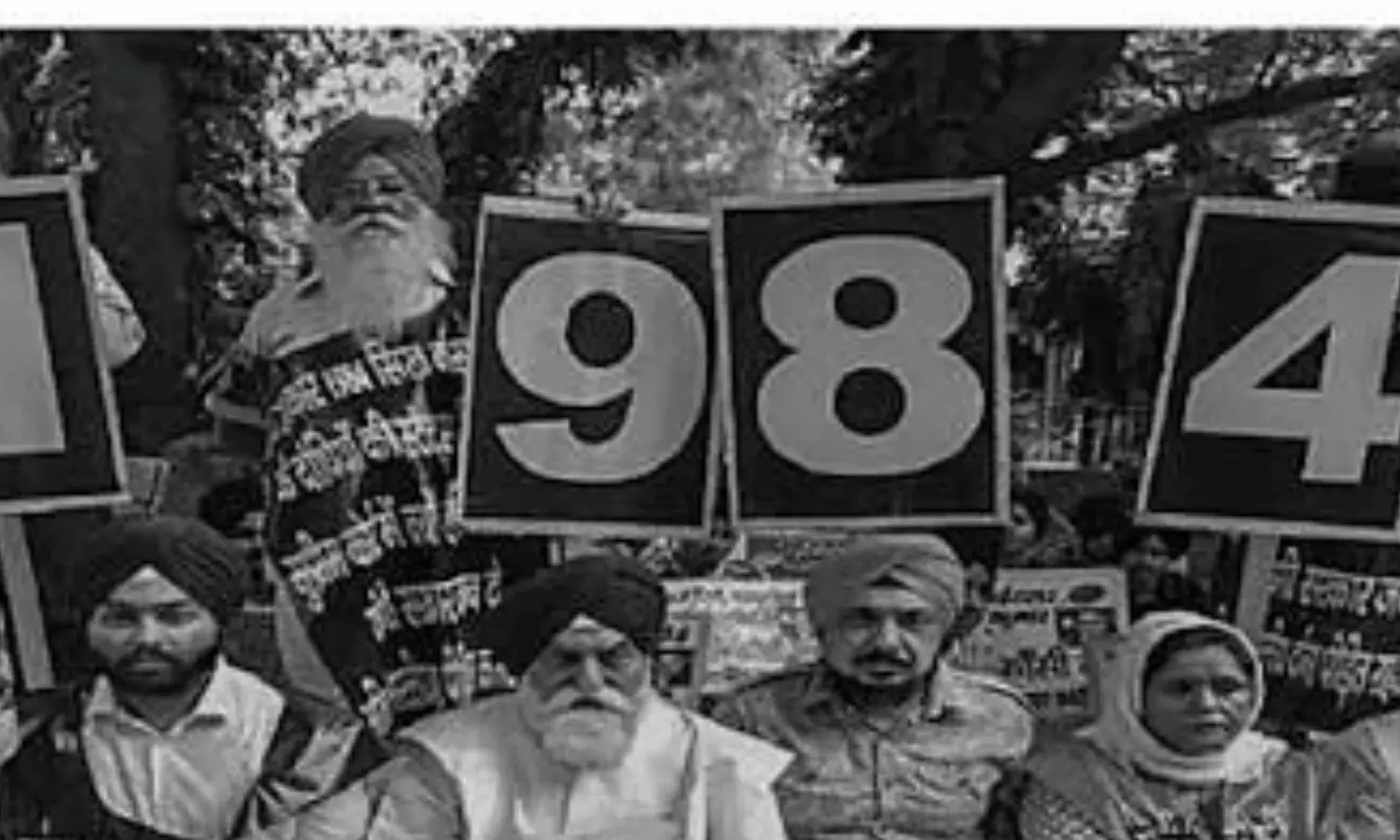
1984 Anti-Sikh Massacre
Congress party keeps talking about saving the Constitution, transparency, and accountability from all public platforms, but the trials following the 1984 anti-Sikh massacre were conducted like an institutional “fraud” designed to shield influential political patrons, said former Delhi High Court judge Justice Shiv Narain Dhingra.
Speaking at the session, “Murder of Justice”, at the BJP’s 'Zakhm 84 De' conclave, Justice Dhingra laid bare four decades of systemic subversion of the criminal justice system. Incidentally, Justice Dhingra had also headed the SIT that was mandated by the Supreme Court in 2018. He explained how the police machinery, procedural technicalities, and political patronage converged to bury accountability.
“No riot takes place on its own; every communal riot is managed and patronised. In 1984, crowds from resettlement colonies were mobilised, armed, and handed specific lists to target Sikh households. What followed in courtrooms was a mockery of justice,” he said.
Justice Dhingra added, “When our justice delivery system operates with a dismal six per cent conviction rate, does an acquittal after two decades represent justice? If the accused brought before the Bench didn't commit the murder, then who did? The state had an obligation to find out, but the system simply rolled over.”
Drawing from his tenure as Additional Sessions Judge at the Karkardooma Special Court handling East Delhi cases, Justice Dhingra highlighted the procedural traps deployed by the then-administration.
He said in the Trilokpuri massacres, police bundled over 200 distinct murders into a single omnibus first information report (FIR). Knowing that criminal procedural law forbids trying more than three offences together, the prosecution let an application to separate the cases languish for years.
Justice Dhingra recalled retrieving the stalled plea, directing independent chargesheets for each murder, and breaking it down into 200 distinct trials, bringing key political figures like H.K.L. Bhagat and local councillors to stand trial.
Successive inquiry panels were rotated between 1984 and 1992 solely to prevent the registration of formal criminal cases.
When FIRs were finally registered, eight years later, following the commission’s recommendations, the state’s defence lawyers cynically used the “unexplained eight-year delay” as the principal ground to secure acquittals in the trial courts.
Recalling an attempt by the CBI to arrest Congress leader Sajjan Kumar, Justice Dhingra recounted that sleuths arriving at 7 a.m. were forced to wait outside while a mob encircled the residence within 15 minutes. Local police refused to assist the central agency; Kumar’s lawyers secured anticipatory bail before noon.
It may be mentioned here that the BJP had made the issue of the 1984 anti-Sikh riots one of its main poll issues in Punjab.
‘Hope You Are Enjoying Delhi Weather’: CJI Flags Vehicular Pollution As Supreme Court Hears Delhi-NCR Air Crisis
1984 anti-Sikh massacre trials conducted like institutional fraud, says former judge
BJP leader Ravi Kumar demands apology from Priyank Kharge over ‘village idiot’ remark
Karnataka CM Shivakumar to attend LoP Gandhi's meeting in Delhi, call on Union Ministers
CM Chandrababu condoles death of seven TN fishermen in boat accident
OpenAI Launches GPT-6 Cyber, Uncovers 81 Firefox Flaws and 948 Linux Exploits
Congress Takes Aim at CEC, but Its Own Punjab Record Comes Back to Haunt It
CM Chandrababu Naidu to visit cyclone affected areas in Bapatla and Guntur districts today
5 TN fishermen found dead after Cyclone Murasu
Tirumala Laddu Case: SC rejects plea to shift trial out of AP


