




- 1984 anti-Sikh massacre trials conducted like institutional fraud, says former judge
- BJP leader Ravi Kumar demands apology from Priyank Kharge over ‘village idiot’ remark
- Karnataka CM Shivakumar to attend LoP Gandhi's meeting in Delhi, call on Union Ministers
- Anil Ravipudi And Venkatesh’s January 12 Vidudala Team Heads To Kazakhstan
- Mahesh Babu Too Heaps Praises On Nitish Tiwari’s Ramayana
- OpenAI Launches GPT-6 Cyber, Uncovers 81 Firefox Flaws and 948 Linux Exploits
- J’khand road accident: President Murmu expresses grief, extends condolences to bereaved families
- Jharkhand HC quashes govt order cancelling JSSC CGL appointments, CID probe to continue
Congress Takes Aim at CEC, but Its Own Punjab Record Comes Back to Haunt It
In Short
The Kerala state Vigilance and Anti-Corruption Bureau has ordered a Preliminary Enquiry into a complaint alleging that CEC Kumar demanded a bribe of Rs 2 crore when he was the PWD Secretary.

Share :
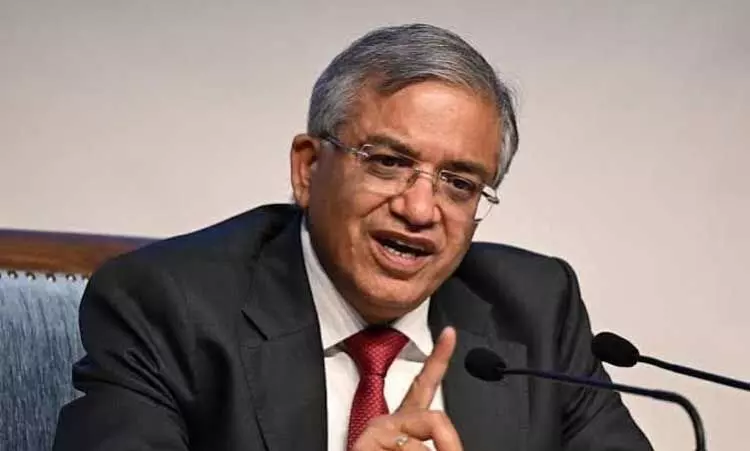
Chief Election Commissioner Gyanesh Kumar
The Congress party is contemplating renewing its agitation demanding cancellation of SIR and removal of Chief Election Commissioner Gyanesh Kumar soon after the Deepawali festival.
It wants to give a new dimension to its proposed new version of the protests by opening two new fronts. One is the vigilance probe ordered against Gyanesh Kumar in a 20-year-old alleged bribery case when he was the Secretary in the Kerala government, and the second is a demand that Modi should “dare” to come for a debate with Rahul Gandhi on the issue of SIR.
The Kerala state Vigilance and Anti-Corruption Bureau has ordered a Preliminary Enquiry into a complaint alleging that CEC Kumar demanded a bribe of Rs 2 crore when he was the PWD Secretary.
Rahul Gandhi has called a preparatory meeting on Friday to host a Deepawali meet of senior party leaders at his house. Among those attending the meeting are AICC president Mallikarjun Kharge, Priyanka Vadra, and other top functionaries. Kerala Chief Minister V D Sateeshan has also reached Delhi and would be participating in the meeting.
It is learnt that this meeting would discuss various issues like the upcoming campaign strategies for UP and Punjab, with special focus on the next course of action to sustain the anti-Gyanesh Kumar campaign the party had taken up.
It will also discuss the need to ensure active participation of other party wings like Indian Youth Congress and NSUI in the protests it undertakes.
This meeting may also discuss the action plan for the next session of Parliament, which is likely to meet later this month.
The question now is whether the Congress-led Opposition will allow the House to function and take up the impeachment motion against the Chief Election Commissioner (CEC), or whether it will once again resort to disruptions and stage protests outside Parliament.
As regards the Punjab elections, the issue of drug menace will be the main issue of the campaign, but unfortunately, the campaign from both sides, the Congress and the AAP, has taken a new dimension, and the criticism has become more personal rather than on issues. The Congress has so far not come up with any alternative concrete proposals and is limiting itself to the allegation that, when the Punjab CM Bhagwant Man was an MP, he used to come to Parliament after consuming alcohol.
Congress came up with a poster of AAP chief Arvind Kejriwal coming out of a poster in Khaki shorts (the dress of the RSS). On the other hand, the AAP has put up posters of a mask coming off Rahul Gandhi’s face with the tagline “Pappu”.
Rahul, during the Sangrur meeting on Thursday, said if Congress is voted to power, it would be the Congress CM sitting in Punjab who would take decisions, unlike remote-controlled governance by Arvind Kejriwal.
But it seems that Rahul has conveniently ignored how Congress CMs do not have the freedom even to decide who should be in the cabinet or whom to put up as a candidate, even for local body elections.
It may be mentioned here that in the 2022 elections, the Congress had won only 18 seats as against 77 in the 2017 elections, which means a decline of 59 seats. The AAP, on the other hand, had won 92 seats.
The Congress lost power in 2022 in Punjab due to Rahul Gandhi’s policies; the Congress changed both the Punjab Pradesh Congress Committee (PPCC) president and the Chief Minister in the run-up to the 2022 Punjab Assembly elections.
Since then, the Congress has not been very active at the ground level, and so far it has not come up with any concrete action plan for Punjab.
The AAP too does not have a very good image. The state is reeling under a serious economic crisis, facing drug menace, cross-border terrorism, and a deteriorating law and order situation, an agricultural crisis, growing unemployment, slowdown of investments, etc.
However, it is also a do-or-die situation for AAP, as Punjab is the only state where it is in power.
In the backdrop of this, the Deepawali meeting of senior leaders hosted by Rahul Gandhi assumes importance.
1984 Anti-Sikh Massacre: How the Justice System Shielded Political Patrons
‘Hope You Are Enjoying Delhi Weather’: CJI Flags Vehicular Pollution As Supreme Court Hears Delhi-NCR Air Crisis
1984 anti-Sikh massacre trials conducted like institutional fraud, says former judge
BJP leader Ravi Kumar demands apology from Priyank Kharge over ‘village idiot’ remark
CM Chandrababu condoles death of seven TN fishermen in boat accident
OpenAI Launches GPT-6 Cyber, Uncovers 81 Firefox Flaws and 948 Linux Exploits
Congress Takes Aim at CEC, but Its Own Punjab Record Comes Back to Haunt It
CM Chandrababu Naidu to visit cyclone affected areas in Bapatla and Guntur districts today
5 TN fishermen found dead after Cyclone Murasu
Tirumala Laddu Case: SC rejects plea to shift trial out of AP


