




- CEO Seeks ECINet Changes To Give Local Poll Officers More Discretion
- Sundeep Kishan’s Sigma Completes Censor Formalities
- SC to hear plea challenging individual exercise of powers by CEC Gyanesh Kumar next week
- Vanessa Hudgens channels Y2K vibes at Paris Hilton’s glamorous party
- AMD acquires World Labs, appoints AI pioneer Fei-Fei Li as chief scientist
- Gold, silver trade up to 1 pc lower amid elevated US yields, geopolitical tensions
- Asian Games: Parveen Hooda marches into boxing final after 5-0 SF win over Li Shu
- Lindsay Lohan, Henry Golding begin work on new film ‘Return to You’
CEO Seeks ECINet Changes To Give Local Poll Officers More Discretion
In Short
Maharashtra Chief Electoral Officer S Chockalingam has sought changes to ECINet during SIR, saying local electoral officers need greater flexibility to exercise powers provided under election law.

Share :
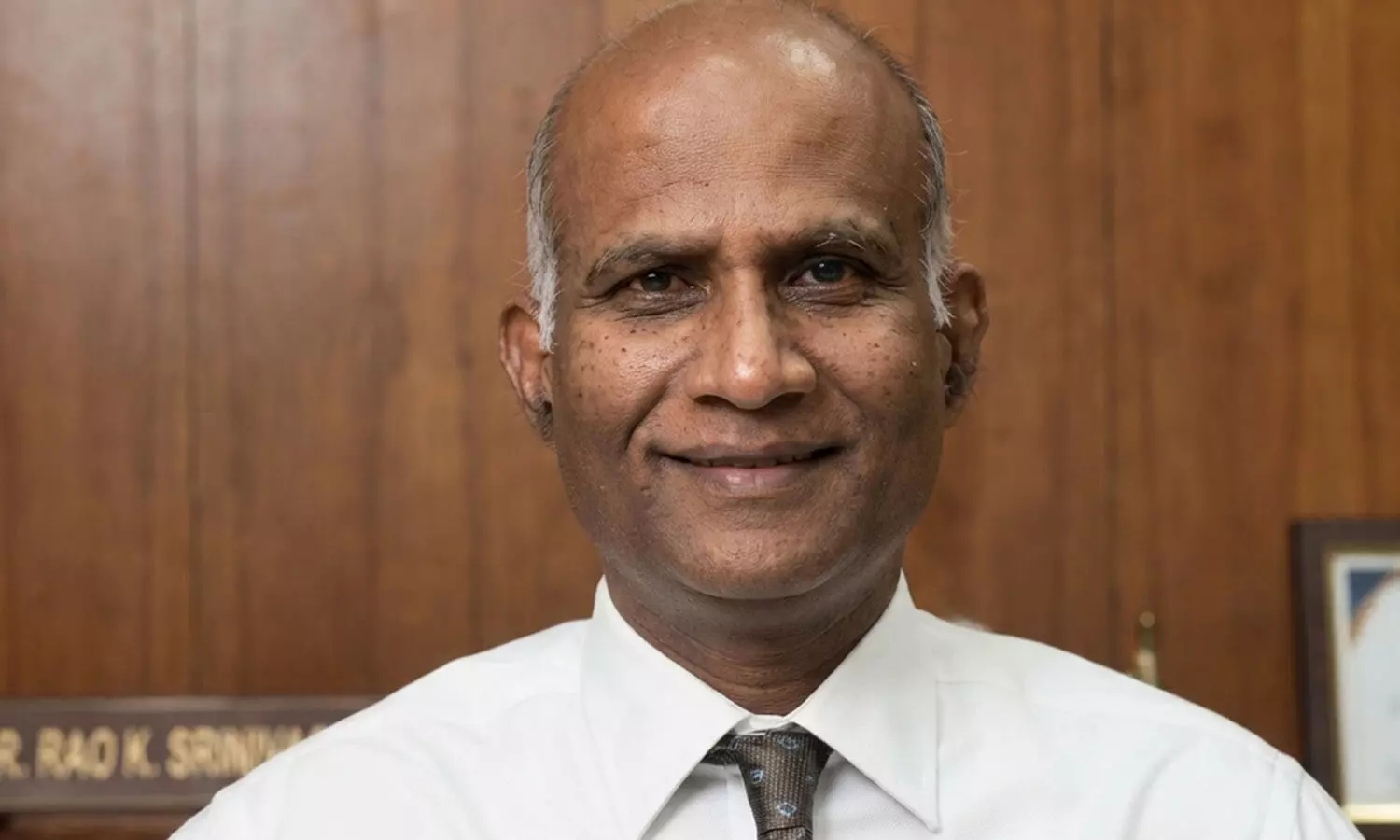
S Chockalingam
Maharashtra Chief Electoral Officer S Chockalingam has sought changes to the Election Commission’s ECINet software to give Electoral Registration Officers (EROs) greater flexibility while conducting the Special Intensive Revision (SIR) of electoral rolls.
In a letter dated September 24, Chockalingam proposed changes that would allow local election officials to exercise certain discretionary powers already available to them under election laws. His requests come amid a wider debate within the Election Commission over the functioning of its electoral-roll software.
The Maharashtra CEO’s concerns broadly echo issues reportedly raised earlier by Election Commissioners Sukhbir Singh Sandhu and Vivek Joshi regarding restrictions on the powers of field-level electoral officials.
Maharashtra CEO Seeks More Flexibility For EROs
Among the proposed changes is an option allowing EROs to exempt voters from personal hearings when they have submitted documents that are considered valid and satisfactory.
The request is particularly relevant for senior citizens, persons with disabilities and other vulnerable groups who could otherwise be required to appear personally before officials.
Chockalingam also sought an additional option allowing voters to submit documents other than the 13 documents listed in SIR notices. He pointed out that people belonging to tribal, homeless and sex-worker communities may not always possess documents from the indicative list.
Request To Let EROs Resolve More Cases
Another proposal concerns cases categorised by ECINet as “logical discrepancies”.
Such a discrepancy does not by itself mean that an individual is ineligible to vote. It refers to a mismatch detected when the system attempts to connect an elector's details with those of a parent or grandparent in an earlier electoral roll.
Examples can include differences in a parent's name or inconsistencies in the ages recorded across electoral rolls.
Chockalingam has sought permission for EROs to dispose of certain such cases themselves when they are satisfied with the evidence, rather than sending supporting documents to district-level officials for verification.
He has also proposed making the upload of an “Extract of Last SIR” optional in discrepancy cases, arguing that the software has already identified the mismatch using the previous SIR roll.
CEO Seeks Written Guidelines For Field Officials
The Maharashtra CEO further requested detailed FAQs and written instructions for EROs covering the process of issuing notices, accepting documents, conducting hearings and disposing of cases.
The request comes from concerns among field officials about the procedure, with Chockalingam stating that oral directions alone were insufficient.
The proposals effectively centre on one issue: ensuring that the software provides local officials with the functionality required to exercise powers assigned to them under election law.
Maharashtra Draft Roll Had 21.1% Fewer Electors
Maharashtra is currently in the notice phase of the SIR exercise. The draft electoral roll published on August 31 contained 21.1 per cent fewer electors than the previous roll, while the final electoral roll is scheduled for publication on November 16.
The SIR process has attracted wider scrutiny, with concerns also being raised about how the centralised digital system handles electoral-roll decisions.
Election Commission Already Announces ECINet Review
The Election Commission, after a full Commission meeting on September 26, announced several measures concerning the SIR process and ECINet.
One of the decisions was to allow EROs to exempt voters flagged for logical discrepancies from personal hearings. Under the revised arrangement, Booth Level Officers can collect documents from voters' homes and upload them to ECINet, after which the ERO can take a decision.
The Commission also announced that ECINet would be reviewed by a committee headed by a senior Deputy Election Commissioner and including an independent expert from an IIT or IIIT.
The ECI said additional flexibility would be provided to field officers wherever required.
Changes Come Amid Wider SIR Dissent
The Maharashtra CEO's letter came shortly after an investigation by The Indian Express reported that Election Commissioners Sandhu and Joshi had raised objections on several occasions over matters related to electoral-roll management and the SIR process.
Their reported concerns included the functioning of ECINet, access to electoral-roll data and the extent of discretion available to state and local election officials.
The Election Commission has maintained that differing views can arise during internal deliberations and has said that decisions relating to SIR were taken unanimously.
The latest developments place ECINet and the role of local electoral officers at the centre of the continuing discussion over how the SIR exercise is being implemented across states.
SIR Row: Can It Reunite Opposition Parties?
ACB raids in NIMS doctor's DA case, seized Rs 7 lakh from barbar shop
J&K Assembly: BJP MLAs stage walkout to protest statehood restoration resolution
CM Revanth for nationwide stir against SIR
Amit Shah to visit Telangana on Oct 4
Fund crunch necessitating capex cut: 2,000 files pending in TG Finance wing


