




- Congress Prez Kharge to Host Lunch for INDIA Bloc MPs
- CBI Raids Bhagwant Mann’s Camp Office: CM Accuses BJP Of Political Vendetta Ahead Of Punjab Polls
- Sidharth Malhotra And Kiara Ali Advani Announce Their Second Pregnancy
- IMF warns of AI, energy and debt crosscurrents
- 'Golden, epoch-making day in history of Indian democracy': HM Shah on PM Modi’s 25 years in public service
- Tamil Nadu CM Vijay inaugurates Aavin laboratory annex building in Chennai
- India Proposes 3-Point Russia-Ukraine Truce Plan Focused On Energy And Black Sea Shipping
- ChatGPT Solves 372 Complex Math Problems After Hugging Face Hack; Altman Reacts
Congress Prez Kharge to Host Lunch for INDIA Bloc MPs
In Short
Meanwhile, the Delhi Police has registered an FIR against Congress leaders Rahul Gandhi and Priyanka Gandhi Vadra and their supporters for allegedly forcibly entering Akashvani Bhawan during the Opposition's march against the CEC on October 6, officials said on Wednesday.

Share :
Mallikarjun Kharge
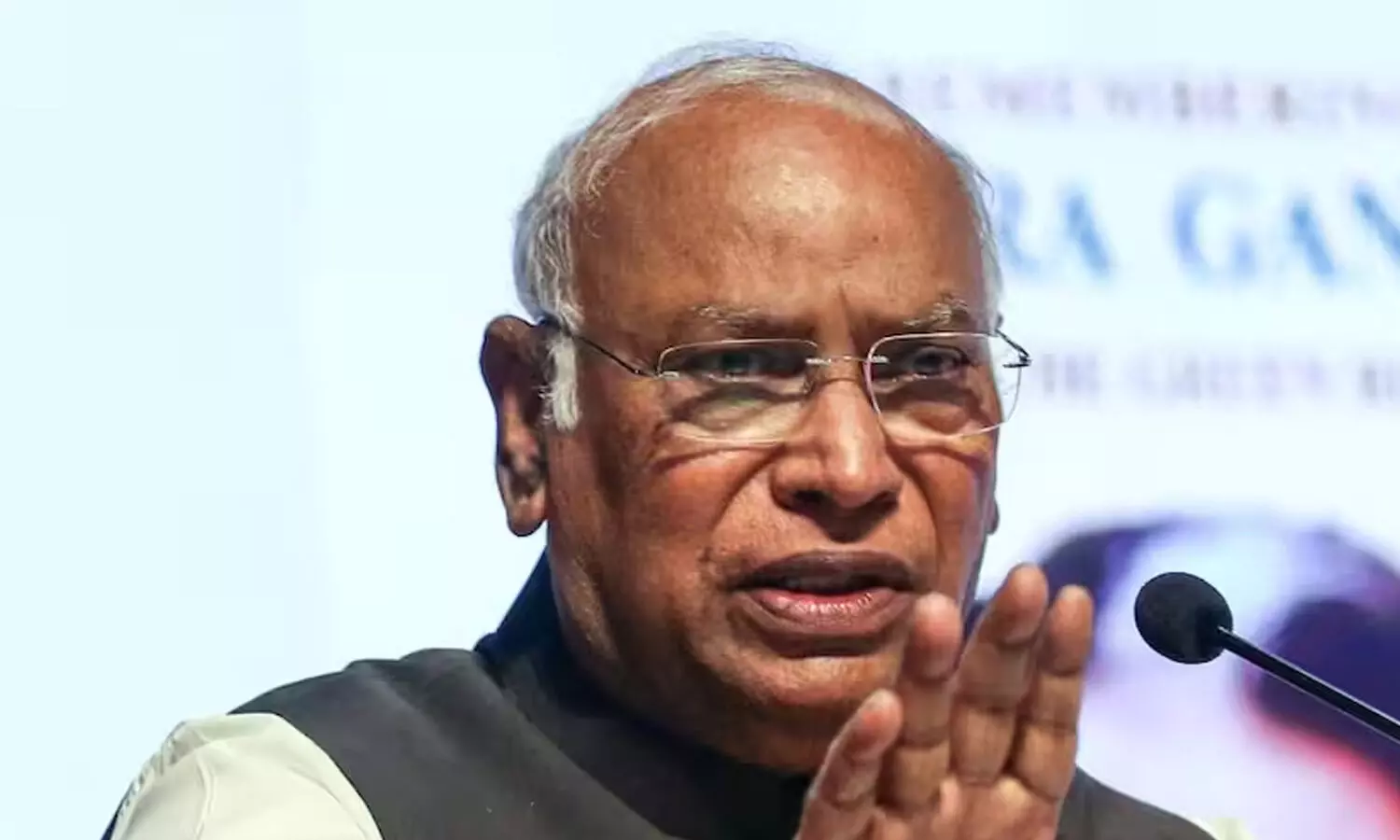
A day after the high drama surrounding the symbolic protests by MPs of the INDIA bloc, Congress president Mallikarjun Kharge is hosting a lunch for the MPs at Sagar Ratna restaurant in New Delhi. The Congress party hopes that the luncheon meeting will help work out the next course of action and step up its protest against Chief Election Commissioner Gyanesh Kumar.
Meanwhile, the Delhi Police has registered an FIR against Congress leaders Rahul Gandhi and Priyanka Gandhi Vadra and their supporters for allegedly forcibly entering Akashvani Bhawan during the Opposition's march against the CEC on October 6, officials said on Wednesday.
It may be recalled that the two leaders got down from the bus after being detained by the police. They allegedly pushed past private security personnel at Gate No. 2 of Akashvani Bhawan, entered the premises and sat on a dharna for nearly eight hours under a banyan tree. They found fault with the police for putting up barricades, claiming that these were causing inconvenience to the common man while the Opposition was holding a peaceful protest.
This is one logic that is difficult to understand. This is not the first time that the police have put up barricades. Whenever there is a protest, the police routinely erect barricades to prevent any untoward incident. It is part of the standard operating procedure during demonstrations.
The FIR was registered after the police received a complaint alleging that Rahul Gandhi, Priyanka Gandhi, their supporters and other MPs accompanying them entered the Akashvani Bhawan premises without permission, Delhi Police officials said. However, the two leaders and their party colleagues argued that it was their democratic right to sit on a dharna.
The BJP reacted by saying that while it was their democratic right to protest, they had no right to enter government premises without permission. The appropriate place for them to raise such issues was Parliament, where they could take on the government through debates and discussions, rather than staging street dramas.
The BJP also criticised the Congress for spreading reports that Priyanka Gandhi Vadra was in touch with the Union Home Secretary to facilitate an appointment with CEC Gyanesh Kumar. The government later clarified that no such request had been made. On the other hand, the Opposition wanted Gyanesh Kumar to come to the Parliament House Annexe to meet 240 MPs. The CEC declined, saying that, as per protocol, anyone wishing to meet him should submit a written request and meet him at the appointed time.
It is not clear whether Samajwadi Party chief Akhilesh Yadav will also attend the luncheon meeting. Akhilesh, soon after being shifted from Sansad Marg following his detention by the police, left for Lucknow.
“We Will Do It”: I Live for a Mission, Not Personal Gains — PM Modi
“These 25 Years Do Not Belong to Modi. They Belong to Every Child of Mother India” — PM
Tamil Nadu CM Vijay inaugurates Aavin laboratory annex building in Chennai
AP cabinet to meet today under auspices of CM Chandrababu, to take key decisions
TTD to release Rs 300 SED tickets today
DRDO successfully tests indigenous high-altitude airship at 21 km


