




- Gujarat Man Allegedly Forced Into Sexual Acts, Made To Drink Woman’s Urine; 9 Arrested
- Congress Prez Kharge to Host Lunch for INDIA Bloc MPs
- CBI Raids Bhagwant Mann’s Camp Office: CM Accuses BJP Of Political Vendetta Ahead Of Punjab Polls
- Sidharth Malhotra And Kiara Ali Advani Announce Their Second Pregnancy
- IMF warns of AI, energy and debt crosscurrents
- 'Golden, epoch-making day in history of Indian democracy': HM Shah on PM Modi’s 25 years in public service
- Tamil Nadu CM Vijay inaugurates Aavin laboratory annex building in Chennai
- India Proposes 3-Point Russia-Ukraine Truce Plan Focused On Energy And Black Sea Shipping
“These 25 Years Do Not Belong to Modi. They Belong to Every Child of Mother India” — PM
In Short
Addressing the mammoth Vikasit Bharat Sankalp Sabha, Modi said, "I remember that when I used to go to school in Vadnagar, our teachers used to teach us various lessons in different ways.

Share :
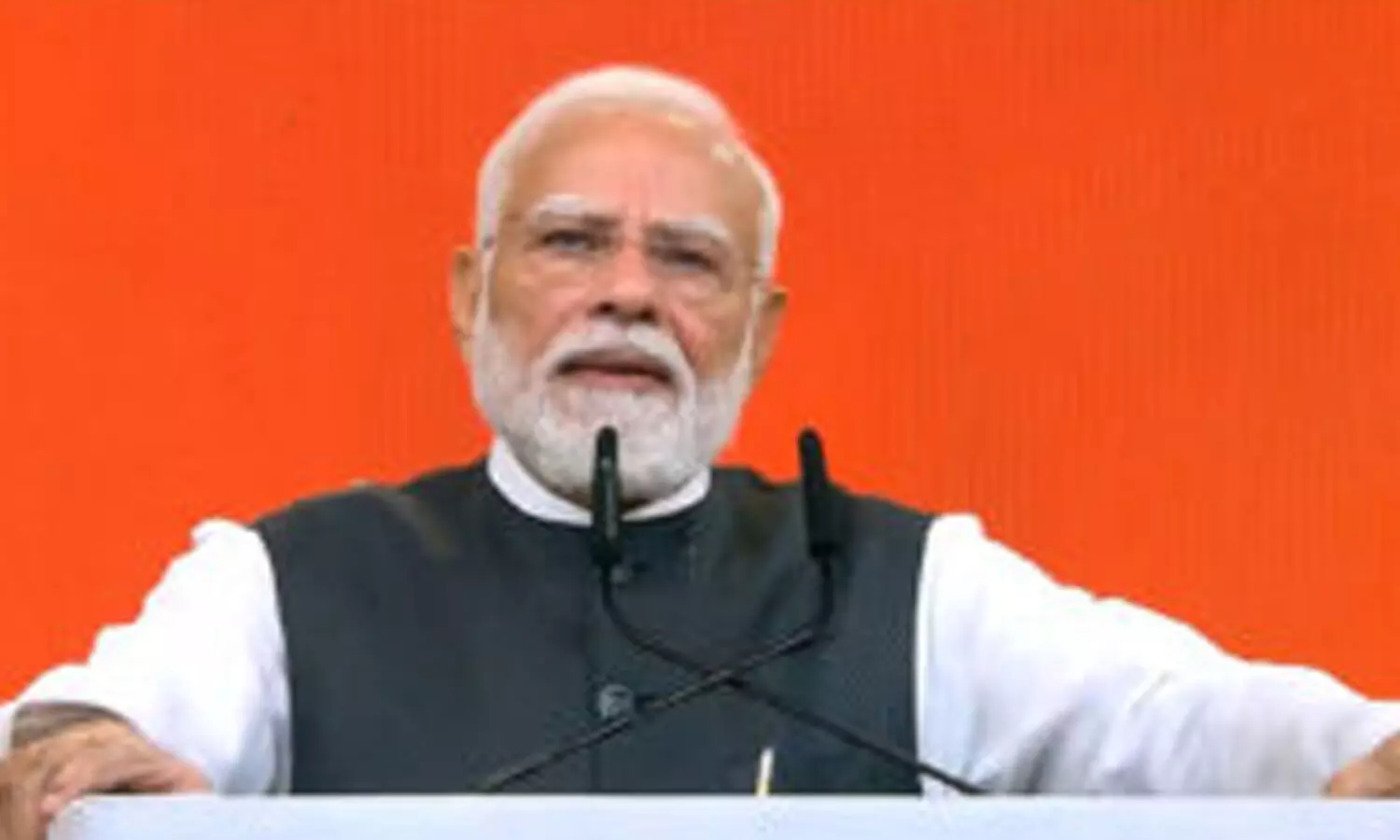
Prime Minister Narendra Modi
Prime Minister Narendra Modi has always been eager to learn. For him, every day was a new day; that eagerness had become part of his life. Even today, at the age of 75, he said he prayed to Lord Ganesha to give him strength to learn more so that, together with 140 crore citizens, a developed India can be built by 2047.
Addressing the mammoth Vikasit Bharat Sankalp Sabha, Modi said, "I remember that when I used to go to school in Vadnagar, our teachers used to teach us various lessons in different ways. And my name was always among the students who reached the class first."
"That eagerness to learn became a part of my life, and even today, I consider myself a student. He said he asked God that his ability to learn should never diminish. “The more I learn, the greater my ability to do something for the country will become," he said.
He said, "I am grateful to every person and every event that has taught me something. Those who made me win taught me to remain humble. Those who brought me down taught me to stand up again. Well-wishers encouraged me, while critics taught me to look within myself. Those who supported me showed me the power of trust. Those who opposed me made me understand the power of democracy," he said.
"Every crisis has been a test of my patience, every success has deepened my sense of responsibility, and every achievement has given me the courage and determination to move towards bigger goals...Today, I can say that no event in my life has been in vain. Every event has taught me something," he said, amid the chants of 'Modi-Modi'.
Comparing the situation of the country before he became the Prime Minister in 2014, he said the country was "immersed in despair and disappointment", compared to the current situation of the country under NDA government led by BJP.
Modi, who normally never attacks any opposition leader directly, took a stinging jibe at the previous governments and said that "formidable challenges" stood before the nation; however, now, he said that the "picture has changed completely". The nation has transformed from “policy paralysis to reform express.”
Recalling the Morbi floods, PM said it showed him the "path of engaging in relief and service work day and night and taught the spirit of service".
"The Bhuj earthquake taught me to remain steadfast in reconstruction. Chandrayaan taught me to rise after failure. The Covid-19 pandemic made me understand the importance of the nation's collective consciousness," he added.
"Every journey in life showed me the path of bringing sensitivity into policymaking. Every village and every poor person taught me that resources may be limited, but dreams should be big and determination should be strong," he said.
Praising media, the PM said that it gave him the "inspiration to move forward through both bitter and sweet experiences". Stating that people and their faith in him was his greatest strength, Modi said every citizen of the country has the “greatest right” over him.
“These 25 years do not belong to Modi. They belong to every child of Mother India,” the Prime Minister added.
“We Will Do It”: I Live for a Mission, Not Personal Gains — PM Modi
“These 25 Years Do Not Belong to Modi. They Belong to Every Child of Mother India” — PM
Tamil Nadu CM Vijay inaugurates Aavin laboratory annex building in Chennai
AP cabinet to meet today under auspices of CM Chandrababu, to take key decisions
TTD to release Rs 300 SED tickets today
DRDO successfully tests indigenous high-altitude airship at 21 km


