




- FASTag Portability Made Easy: Switch Your Bank Without Removing Sticker via OneTag
- Ramanathaswamy Temple takes centre stage at BRICS
- No shortage of funds for development works, says Gujarat CM
- Adarsha Kutumbam Teaser Is A Perfect Blend Of Comedy And Thriller
- India’s 2026 BRICS Presidency deepens gulf partnership beyond oil into tech, food security
- Have informed CM about person who filed ED complaint against me, says Karnataka Minister Satish Jarkiholi
- OPPO A7 Pro launched with 8,000mAh battery and 120Hz AMOLED display
- TTD Chairman and EO meets CM Chandrababu, invites for Salakatla brahmotsavams
Ramanathaswamy Temple takes centre stage at BRICS
In Short
The Ramanathaswamy temple is the only one dedicated to Lord Shiva among the Char (four) Dham shrines, three of which are in the north (Dwaraka, Puri and Badrinath). Of the 12 Jyotirlinga shrines in India, 11 are to the north and only Ramanathaswamy is to the south.

Share :
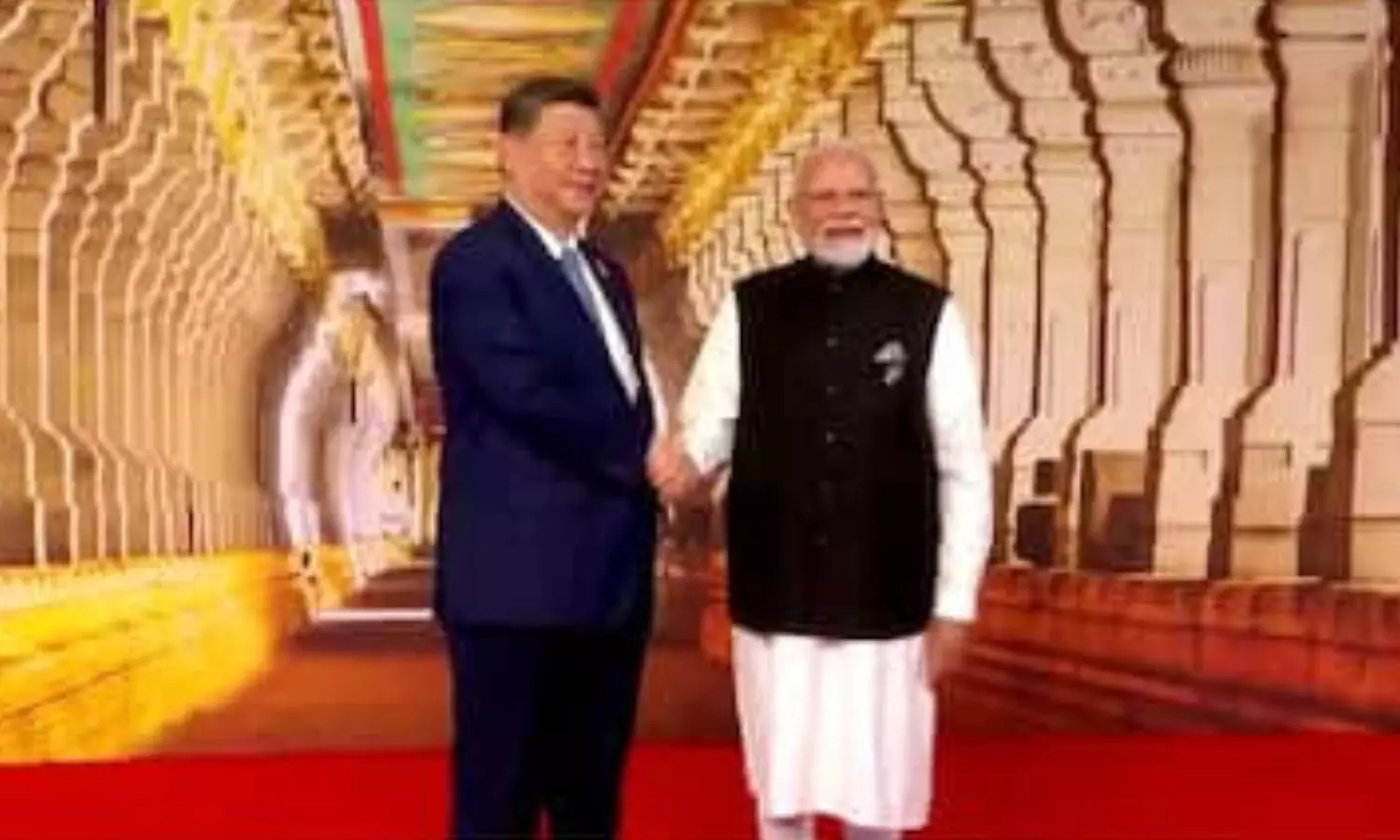
Prime Minister Narendra Modi against the backdrop of Tamil Nadu's iconic Ramanathaswamy temple.
New Delhi: The leaders of the BRICS nations were in for a pleasant surprise as they were welcomed by Prime Minister Narendra Modi against the backdrop of Tamil Nadu's iconic Ramanathaswamy temple.
The Ramanathaswamy temple is the only one dedicated to Lord Shiva among the Char (four) Dham shrines, three of which are in the north (Dwaraka, Puri and Badrinath). Of the 12 Jyotirlinga shrines in India, 11 are to the north and only Ramanathaswamy is to the south.
It is also important because this temple is one of the Char Dham shrines where Lord Ram is believed to have performed puja after his victory over demon king Ravana.
Rameswaram is a great pilgrimage destination not only for Saivites, but also for Vaishnavas.
Considered one of the most important religious duties of Hindus, the Kasi Rameswaram Yatra begins at Kasi and ends after worshipping Lord Ramanathaswamy in Rameswaram
According to a Tamil Nadu government website, the historic shrine was under the care of a monk up to the 10th century A.D.
In the 12th century A.D., Parakiramabaghu, the King of Ceylon, built the sanctum sanctorum of the temple.
In the 15th century A.D., Ramanathapuram King Udayan Sethupathi and a Vaisya from Nagoore built the western tower and compound walls.
Following this, a wealthy person from Madurai built the Amman Sannadhi corridor and carried out other renovation works.
Subsequently, between 1897 and 1904, the 126-foot high nine-tiered East Rajagopuram was completed by the family of Devakottai Zamindar AL. AR. of the Nagarathar family of Nattukkottai.
According to the Puranas, Lord Ram arrived here along with Sita and Laxman, and consecrated and worshipped the Shivalinga to expiate the sin of killing Ravana, who was a Brahmin.
This theme, it is said, has a Global South message: BRICS is being positioned by India not simply as an economic grouping but as a platform representing the Global South and civilisational diversity. Modi's summit messaging has stressed a more representative world order. The leaders who were received by the Prime Minister included Russian President Vladimir Putin, Chinese President Xi Jinping and Iranian President Masoud Pezeshkian. He shook hands with them and later all posed for pictures against the backdrop of this historical temple. Modi later explained to Xi the significance of this temple.
It may be mentioned here that Xi Jinping’s last visit to India before his current September 2026 visit was in October 2019, when he met Prime Minister Narendra Modi at Mamallapuram (Mahabalipuram).


