




- Denmark Open: Sindhu faces daunting An Se-young test; Satwik-Chirag set to return (Preview)
- Rahul Gandhi, 10 other INDIA bloc leaders file petition before SC against SIR of electoral rolls
- UP CM Yogi releases Rs 493 Crore subsidy to over 9 Lakh farmers hit by crop damage
- Newly elected Assam BJP MP rushes accident victim to hospital in his car
- No option but to meet Chief Justice of India: Karnataka CM Shivakumar
- Calcutta HC Chief Justice asks district judges to install metal detectors at court entrances
- 20 of 33 lakh Delhi SIR notice cases resolved, says CEO
- WhatsApp May Soon Let Users Schedule Messages, Photos And Videos
“SIR Tandav vs Hawa Hawai Politics”
In Short
It may be ‘SIR Tandav’, as Congress calls it, or ‘Hawa Hawai ’, as the BJP named it, but the fact is Monday saw high drama on the roads of Delhi, where life in Central Delhi in particular came to a standstill.

Share :
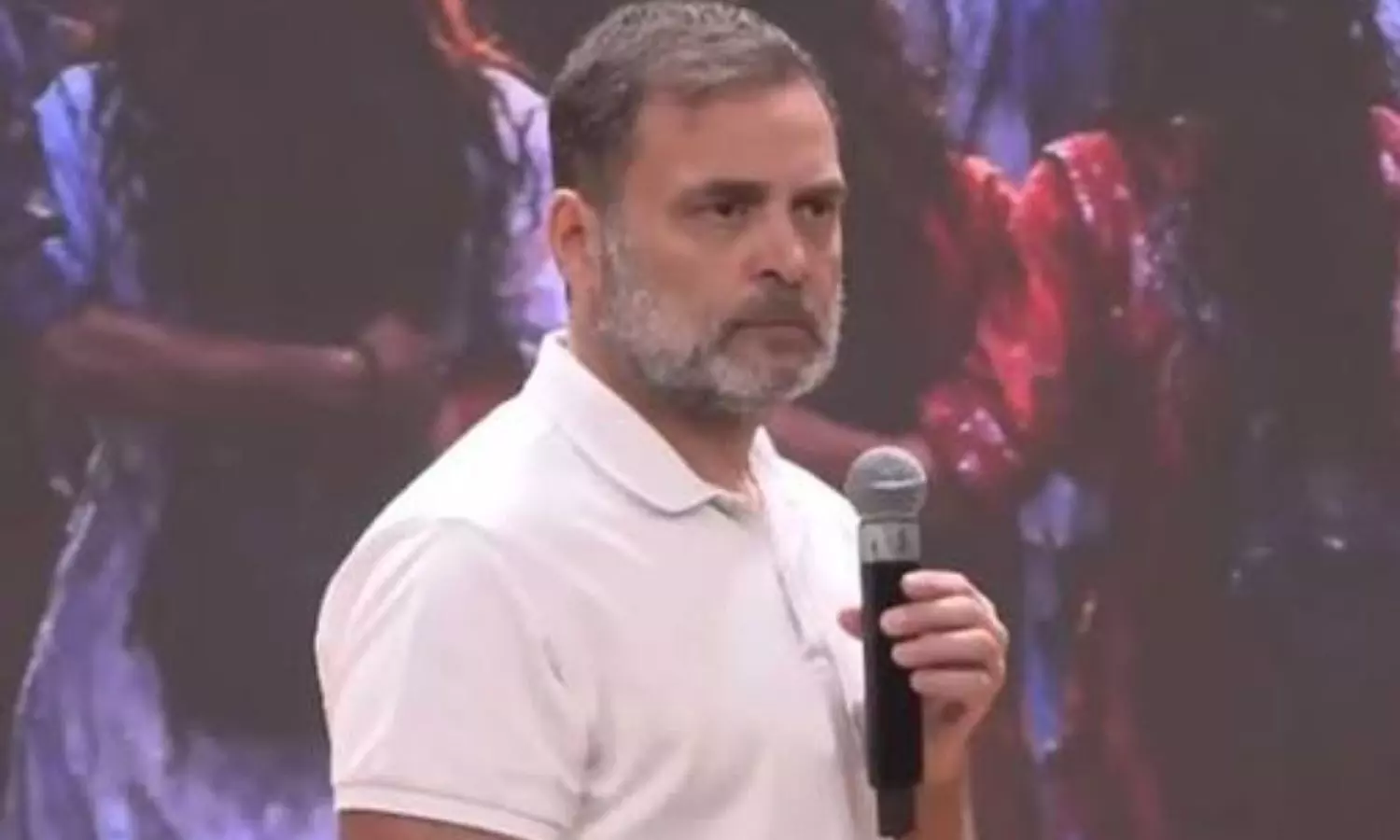
Rahul Gandhi
It may be ‘SIR Tandav’, as Congress calls it, or ‘Hawa Hawai ’, as the BJP named it, but the fact is Monday saw high drama on the roads of Delhi, where life in Central Delhi in particular came to a standstill.
The Congress party had mobilized party workers from across different states and leaders, including PCC presidents and Chief Ministers of Telangana and Himachal Pradesh, following an open call by Rahul Gandhi for all to join, since the earlier protests did not find many party workers, leading to a flood of activists from the Samajwadi Party, RJD, left parties, particularly the SFI and AISF, etc which resulted in the blocking of all roads in Central Delhi.
The crowd was so large that even Rahul Gandhi found it difficult to protect his sister Priyanka Vadra from walking freely towards the Supreme Court, as many wanted to go close to her. Finally, the leaders decided to get onto an open truck but still could not reach the Supreme Court in time. They reached the SC premises around 6 pm for more for the purpose of optics.
As a result, the team of lawyers led by Abhishek Manu Singhvi filed the petition on behalf of Rahul Gandhi, and 10 others are likely to be taken up on Tuesday. The Supreme Court is already seized of the issue of the allegations regarding SIR, and the matter was listed to be heard on Tuesday. The bench would take up the Rahul vs ECI petition also along with it.
Among the petitioners, apart from Rahul, are Congress president Mallikarjun Kharge, Trinamool Congress leader Saugata Roy, Samajwadi Party chief Akhilesh Yadav, Rashtriya Janata Dal leader Tejashwi Prasad Yadav, Shiv Sena (UBT) leader Sanjay Raut, CPI(M) leader M.A. Baby, CPI leader D. Raja, Jharkhand Mukti Morcha leader Mahua Majhi, NCP (SP) leader Supriya Sule and Indian Union Muslim League leader E.T. Mohammed Basheer as petitioners.
The writ petition, filed on Monday, names the ECI and Chief Election Commissioner (CEC) Gyanesh Kumar, Election Commissioner Sukhbir Singh Sandhu and Election Commissioner Vivek Joshi as respondents.
Meanwhile, the Bharatiya Janata Party (BJP) launched a sharp attack on the INDIA bloc, accusing it of turning the SIR controversy into a political spectacle.
Some legal luminaries also felt that the Congress should not have tried to meet the CJI. It is just like a petitioner trying to meet the Judge before his case comes up for hearing in the court. Legally, such practice is wrong.
What they had done in the evening by filing a petition was the right method they should have adopted. Politics should not be used to turn the apex court into a political battleground, they felt. They also said that if any political party thinks that it can put pressure on or intimidate the Supreme Court, it only means that they have not understood the judiciary.
On the other hand, the BJP felt that the Supreme Court had already endorsed the SIR, and asking them to stop wherever the process was was not acceptable and amounts to directing the apex court. Having raised certain questions through due legal process, they should wait for the outcome rather than indulge in street politics.
Meanwhile, the Maharashtra Chief Minister Devendra Fadnavis on Monday launched a scathing attack on Rahul Gandhi and the INDIA bloc, accusing them of executing a deliberate strategy to pressure and delegitimize India's constitutional institutions, including the Supreme Court, the Comptroller and Auditor General (CAG), and the Reserve Bank of India (RBI).
The Chief Minister’s strong reaction came as INDIA bloc leaders, led by Rahul Gandhi, staged a high-voltage march in New Delhi towards the Supreme Court.
The opposition leaders are demanding the removal of Chief Election Commissioner (CEC) Gyanesh Kumar, accusing him, Prime Minister Narendra Modi, and Union Home Minister Amit Shah of subverting electoral integrity and "robbing the nation".
Questioning the rationale behind marching to the apex court to force a meeting with the Chief Justice of India (CJI), CM Fadnavis asked, "Which section of the Constitution empowers a political march to demand an audience with the Chief Justice of India? Attempting to exert pressure on the Supreme Court is a direct insult to Dr Ambedkar's Constitution."
CM Fadnavis asserted that Congress's repeated electoral failures have driven it to resort to anarchy.
Karnataka Congress Chief Alleges CJI Is Behaving Like a BJP Member
Rahul’s Big Claims: 200 Officers Feeding Him Information, Police and CRPF Backing Opposition; Protests to Intensify
Why Is CJI Not Meeting Us?” Congress Asks
Don’t Turn SC into a Political Battleground, CJI
‘Maan Na Maan,’ We Will March to SC. SIR Campaign Enters a New Political Phase
Fight the Government, Not the Common Man


