






- Delhi HC refuses bail to man accused of robbing Rapido driver
- Hema Malini Remembers Dharmendra On His First Death Anniversary
- Anthropic Launches Claude Ship to Review and Approve Code Changes
- Drone strikes in Sudan threaten humanitarian operations: UN
- Schools across Denmark receive bomb threats, police say threats not 'credible'
- ‘Takes a toll on bowlers’ bodies; we were happy’: Daryl Mitchell on India’s decision to settle for draw in 1st Test
- Delhi Police reunites two minor sisters from Madhya Pradesh with father after nearly two months
- Varanasi imposes traffic restrictions ahead of Dev Deepawali celebrations today
SP-Congress Tussle for Big Brother Status, Seat-Sharing Still Elusive
In Short
While the SP is not willing to give more than 26 seats and says the only criteria was winnability, the Congress is learnt to have revised its wish list and demanded about 130 seats.

Share :
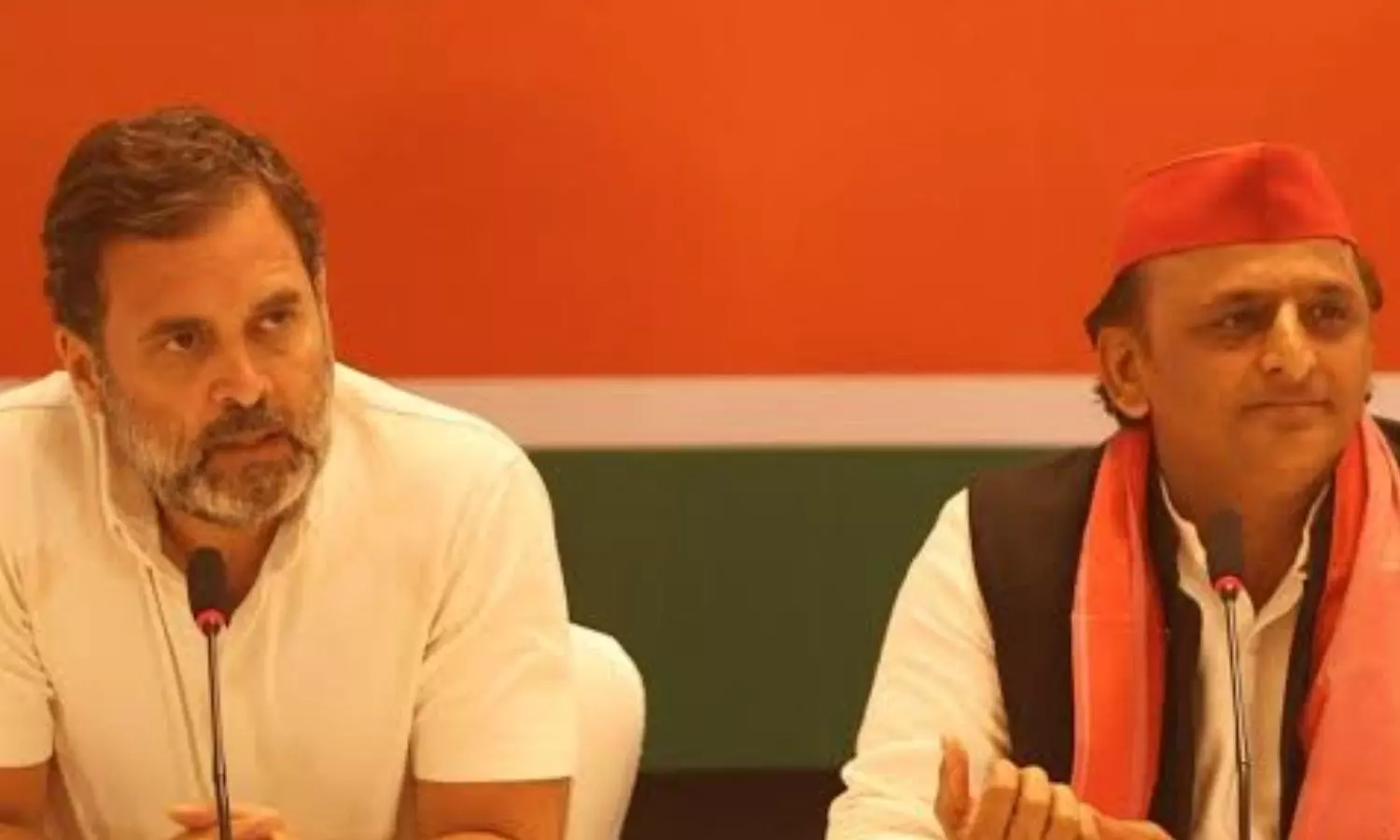
SP-Congress Tussle for Big Brother Status, Seat-Sharing Still Elusive
At the end of the round two meeting between the Samajwadi Party and Congress, both the parties still seem to be struggling over the issue of seat sharing.
While the SP is not willing to give more than 26 seats and says the only criteria was winnability, the Congress is learnt to have revised its wish list and demanded about 130 seats. There are a total of 403 Assembly seats in Uttar Pradesh.
Unlike the BJP which had accepted SAD as its big brother in Punjab, the Congress is unwilling to accept SP as its big brother in UP. But the SP on record said that at the national level Congress may be the big brother, but as far as UP is concerned it will have to play second fiddle.
Before the meeting on Tuesday, SP General Secretary Ram Gopal Yadav stated that his party had proposed allocating 26 seats to the Congress, with further discussions to follow.
"We have proposed offering two seats that the Congress won in the 2022 Assembly elections. Additionally, there are four seats where the Congress finished in second place, and 20 other seats where the SP secured between 60,000 and 70,000 votes, while the Congress received only about 2,000 votes," he told reporters.
The meeting on Tuesday, held at the residence of senior Congress leader Pramod Tiwari, was attended by the party's Uttar Pradesh in-charge Rajendra Pal Gautam, state president Aradhana Misra-Mona, working president Imran Masood, and Congress Legislative Party leader Virendra Chaudhary.
They also indicated that the seat-sharing arrangement would be finalised within the next two to four days.
The talks lasted just "20 minutes" on Monday, and the Congress said the quick wrap-up on opening day became possible as both parties arrived at the negotiating table with a positive mindset.
Reacting to the seat-sharing talks between the Samajwadi Party (SP) and the Congress, Uttar Pradesh minister Dayashankar Singh described the two parties as "opposite poles", alleging that they are coming together solely for their own narrow political interests.
The BJP has won two back-to-back terms in UP since 2017, an outcome the SP is desperate to change this time.
The SP and Congress contested the 2022 Uttar Pradesh Assembly polls independently. The two contested together as part of the INDIA bloc in the 2024 Lok Sabha elections, and the alliance won 43 of the state's 80 seats.
SP-Congress Tussle for Big Brother Status, Seat-Sharing Still Elusive
Karnataka CM interacts with Kannadigas in Japan, visits waste-to-energy plant in Osaka
Union Minister Kishan Reddy to lead ‘Nasha Mukt Bharat’ march from tomorrow
Kerala forms expert panel to probe air pollution, AQI discrepancies in Kochi and Thiruvananthapuram
CM Chandrababu express shock over eight deaths in road accidents
Karthigai Deepam Row: Religious Dispute Turns Political Flashpoint


