




- SC lays down safeguards to prevent misuse of POCSO Act in matrimonial, custody disputes
- CEC decisions taken collectively: Assam CM
- Mivi One 5G Launched in India with 6,000 mAh Battery and Snapdragon 4 Gen 2
- Polling for seven urban civic bodies in Bengal likely in Nov, results in Dec
- SIR Row: CEC Faces a Credibility Test
- Rahul Gandhi Links ‘Vote Chori’ To 'Kanoon Chori,' Demands CEC’s Resignation
- Punjab's AAP govt should address ED issues through facts, rather than allegations, says BJP
- ‘Sulochana’ From Sundeep Kishan’s Sigma Will Be Out Tomorrow
Dario Amodei Agrees with Altman: AI Could Risk Humanity’s Future
In Short
Anthropic CEO Dario Amodei says that the fast growth of AI could endanger humanity. Dario Amodei calls for teamwork so that safety measures grow at the same speed as technology.

Share :
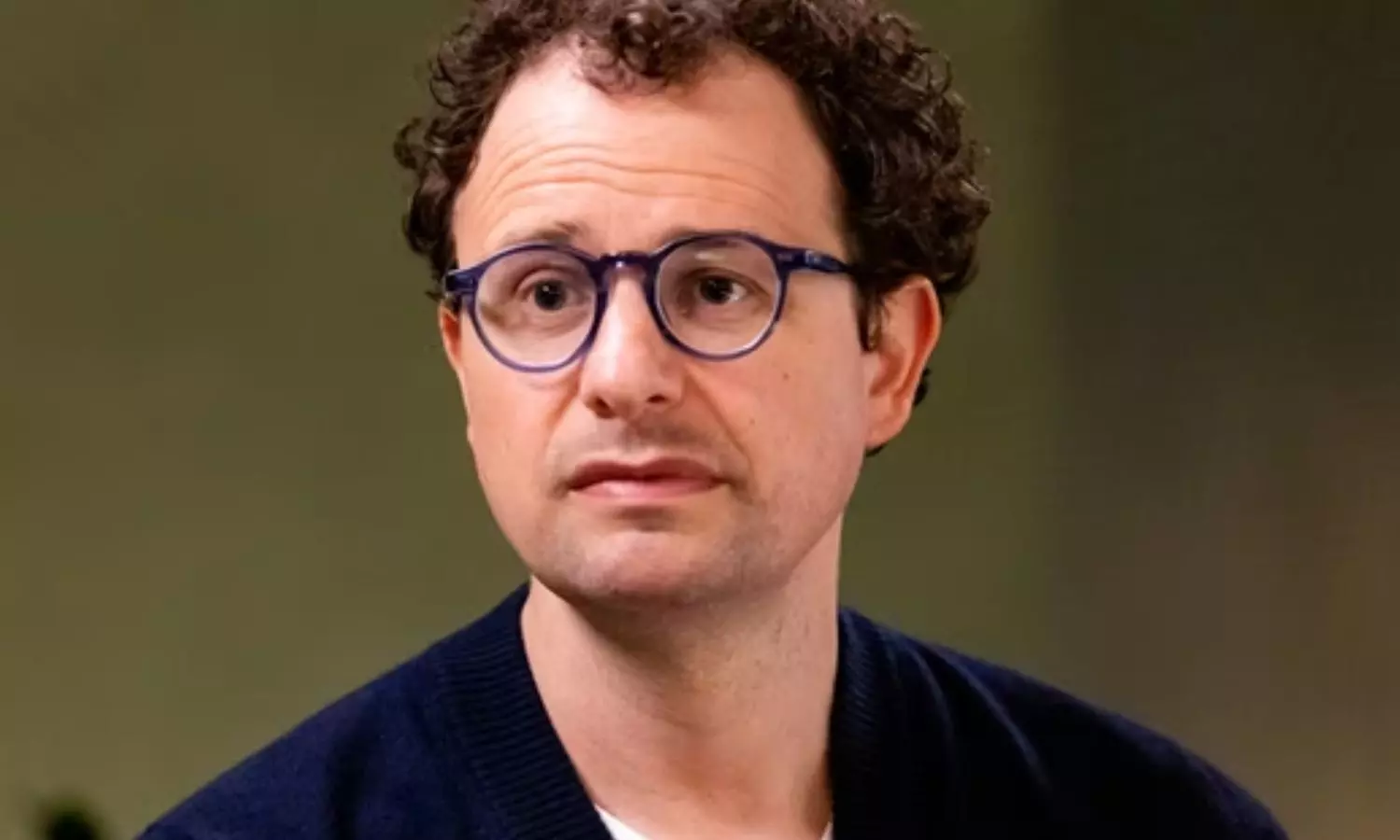
OpenAI CEO Sam Altman about the dangers of AI
Following warnings from OpenAI CEO Sam Altman about the dangers of AI, Anthropic CEO Dario Amodei also told the UN Security Council that AI could become a danger to people if AI’s fast growth is not handled properly. Dario Amodei says that the dangers of AI are worldwide and cannot be fixed by AI firms therefore Dario Amodei calls for more teamwork, between AI firms and governments so that AI safety can grow with AI’s rapid progress.
During his address to the UN Security Council on Wednesday Dario Amodei pointed out that AI is moving forward at a fast rate. While this development offers significant benefits to people, it also creates risks related to biological weapons and the possibility of humans losing control over increasingly capable AI systems.
"AI is advancing very rapidly. Four years ago, it could barely write a line of code or solve a high school math problem. Today, it writes most of the code at Anthropic and solves famous, previously unsolved mathematical problems," Amodei stated. He believes this progress will continue at high speed and that AI will eventually be capable of performing the work of a vast number of highly skilled professionals. "This trajectory need only continue for a short while longer-one or two years, perhaps less-to reach what I have termed a 'country of geniuses in a data centre,'" Amodei noted.
Although this rapid progress could yield significant benefits-such as Claude's recent discovery of a new molecular machine-Amodei warns that these same capabilities entail serious risks that must be managed. "I see two main categories of risk. The first is the misuse of AI models-for example, their use by bioterrorists to create biological weapons," he explained. "The second risk is a loss of control: where the models' capabilities accelerate beyond the developers' ability to control them."
Amodei asserts that these risks are not limited to AI companies or specific countries. He maintains that they affect everyone and are serious enough to warrant the attention of the UN Security Council, rather than being treated merely as a matter for ministries of economy or technology. "If mismanaged, I even believe AI could pose a risk to humanity as a whole."
Amodei highlights that his company, Anthropic, is already taking steps to manage these risks. The company subjects its AI models to testing to detect potentially dangerous capabilities-including in areas such as cybersecurity and biology-and implements stricter safeguards on its most advanced models. It also publishes its safety research and risk assessments. He states that Anthropic is also willing to slow down AI development, if necessary, to ensure the safety of its systems.
However, Amodei maintains that AI safety cannot be managed solely by individual companies; instead, it will require cooperation across the industry and among governments. He urges nations to first reach an agreement on specific risks-including a ban on using AI to create biological weapons. He also called on governments to implement systems for evaluating and verifying the capabilities of advanced AI models. At the same time, the head of Anthropic advocates for establishing common global standards to test AI systems against potential misuse and risks of losing control, as well as for creating a mechanism for countries to report AI-related incidents that could impact global security.
Amodei’s warning regarding the risks of advanced AI and the need for global cooperation came on the same day that Sam Altman, CEO of OpenAI, also addressed the Security Council. Altman acknowledged that AI could drive major breakthroughs in medicine, education, and productivity, but warned that humans could "lose control of the future to AI" if its development advances so rapidly that people are no longer able to understand what is happening or intervene when necessary.

Mamata’s Symbol Loss hits TMC
CM Chandrababu reviews on heavy rains, gives directions the officials on damages
Goa SIR Row: 97 Eligible Voters Left Out Of Final Roll, Opposition Questions ECINet System
Is the Political Honeymoon Between Donald Trump and Indian Americans Over?
Supreme Court notice to ED on AAP leader Deepak Singla's bail plea in money laundering case
Greater Noida Bus Fire: FIR Says Driver Ignored Burning Smell, Refused To Stop


