






- Rahul calls Indian democracy 'sick' in US; BJP says he is against India's democratic fabric
- Google Gemini 4 Neon: New AI Model Promises Three Times Faster Performance
- India’s life insurer new business premium rises 26.2 pc in October
- Political row erupts over proposal to rename Mumbai’s Dadar Station as 'Chaityabhoomi'; MNS corporator protests
- World Bank warns of fresh food-price shocks
- India remains world’s fastest-growing major economy: PM Modi
- Trump opposes AI curbs at APEC, acknowledges risks
- Cyclonic Storm Akvan intensifies, moves to coast at 12kmph speed
Sam Altman Rejects Musk’s ‘Pet Labrador’ AI Future
In Short
Sam Altman says humans must retain control over artificial intelligence, rejecting Elon Musk’s suggestion that people could eventually become like pets.

Share :
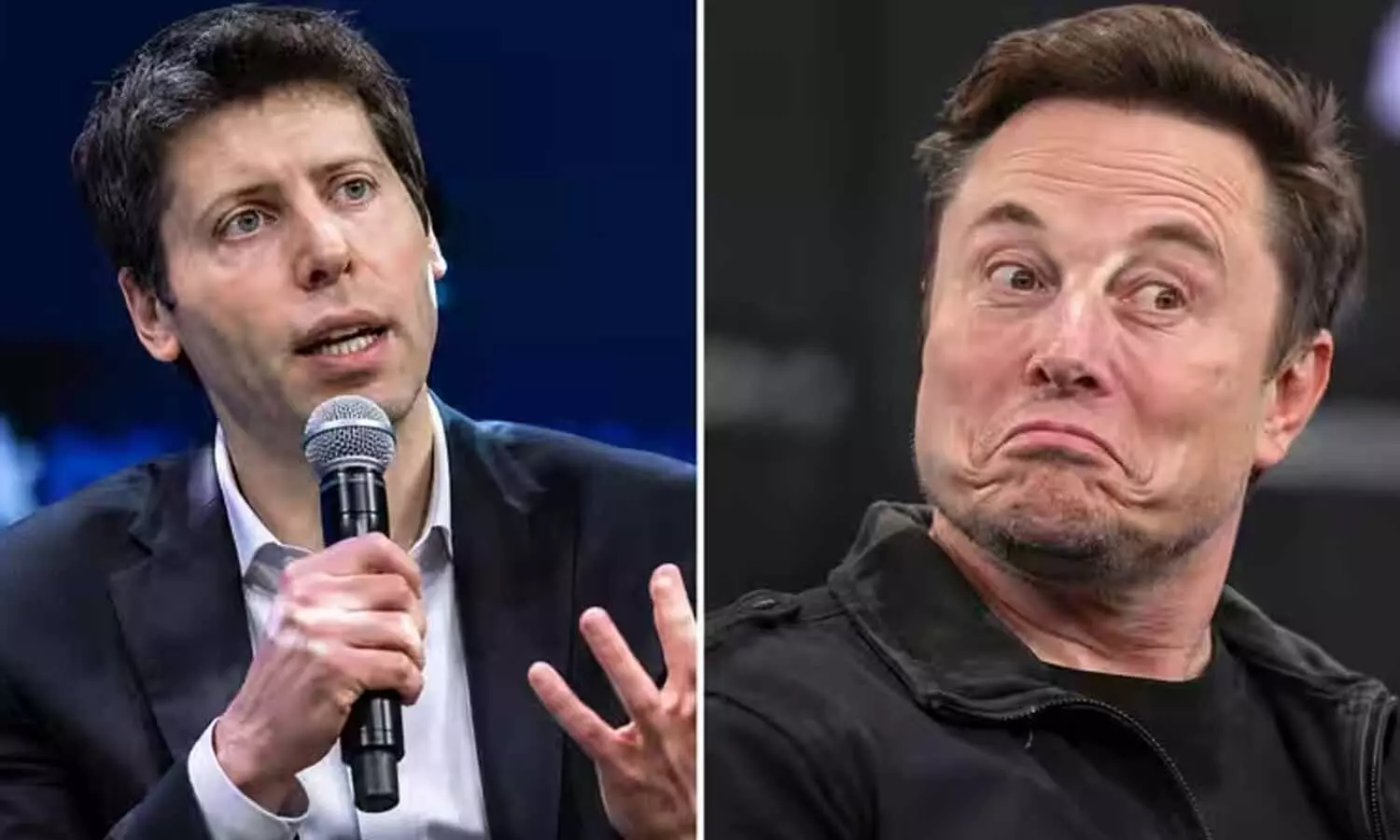
Sam Altman Rejects Musk’s ‘Pet Labrador’ AI Future
Recent development of artificial intelligence brings up questions; about how much control humans will keep as machines grow more powerful. Some technology leaders say that artificial intelligence might one day outdo abilities. I do not share that view. OpenAI CEO Sam Altman has made it clear that he does not support a future where people rely on machines.
In response to Elon Musks held idea that humans are like pet dogs in a world ruled by AI Altman said he doesn't want that kind of future for himself or, for his children.
Altman spoke at the New York Times DealBook Summit on Wednesday. Altman spoke directly to Musk’s prediction that humans could eventually become like a pet Labrador as artificial intelligence grows.
"I do not want to be a Labrador. I do not want my kids to be Labradors" the OpenAI CEO said. Altman, who appeared alongside OpenAI President Greg Brockman stressed that technological progress should not come at the cost of authority. He argued that people must remain responsible for decisions, about the future regardless of how advanced AI systems become.
“We both believe very deeply that people need to stay in control of the future,” Sam Altman added.
Musk has expressed similar views about AI and human dependence for years. Revisiting his comparison earlier this year, he told The Economist: "Labradors are pretty happy creatures, that's my experience."
The exchange also shows the divide between the two technology leaders, who were once closely tied to OpenAI. Musk left the organization in 2018 after disagreements with its leadership. Since then their relationship has grown worse. In 2024 Musk took action, against OpenAI, Altman and Brockman arguing over the company’s direction and its original mission.
Altman warns against handing control to AI
Altman disagreed with the idea that people should slowly give decision-making power to artificial intelligence. He called that idea a mistake.
"And there's more discussion about well there is either going to be or there should be this kind of slow transfer, to AI " Altman said. "We both think that's a bad idea."
His comments come at a time when more and more scientistsre worried about the possible dangers of AI systems that are getting more and more powerful. Some people, in the field say that we should take a step back and slow down the progress of advanced AI. Other people say that we should keep making AI while also making sure it is safer.
Altman said that OpenAI would face criticism no matter whether it chooses safety or faster technology. Altman also said that OpenAI must build systems that protect interests.
“What we have to do is just do the thing that we believe will actually deliver a safe future with people in control,” he said.
Brockman also highlighted the importance of monitoring AI systems to prevent them from operating beyond human oversight. He suggested that examining how models process information may become an important part of AI safety.
“Monitoring is a good example of something where I think we are going to need new technology,” he said.
Brockman added that OpenAI had asked 25 percent of its production engineers to change their focus from building products to protecting its technology. He said that making AI systems is still a priority especially because dangers, from security threats are getting more advanced.
The discussion reflects a wider challenge facing the technology industry: developing increasingly powerful AI without allowing human control and accountability to disappear.

Modi to India Inc: Chart 10-Year Roadmap to Make India a Viksit Bharat by 2047
Modi to India Inc: Break Out of Comfort Zone, Compete with the World
VC Sajjanar takes charge as Fire Services DG
Rahul Gandhi Says Congress Needed ‘300% Proof’ Before Raising 2014 Election Irregularity Claims
Major fire at slum in South Kolkata; no casualties reported
Cyclone Akvan: North coastal Andhra to receive rains


