




- Nasha Mukt Telangana: Alai Balai Foundation Plans Outreach Across 33 Districts
- Sam Altman Praises Indians for Their Positive Outlook on AI
- Allu Arjun Extends His Best Wishes To The Entire Team Of Ramayana
- 13-Year-Old Hyderabad Girl Saves Six Lives Through Organ Donation After Fatal Road Accident
- Indian Railways posts record October freight loading, passenger traffic rises
- Sreeleela Joins The Ensemble Cast of Rajinikanth’s Dharman
- Sam Altman says humans must control AI, warns against superintelligence
- Tabu Is Introduced As ‘Mahanthi Jhansi Rani' From Nagarjuna’s King 100
Nasha Mukt Telangana: Alai Balai Foundation Plans Outreach Across 33 Districts
In Short
Alai Balai Foundation plans a statewide Nasha Mukt Telangana campaign across all 33 districts, focusing on drug awareness, parental involvement, education, counselling and rehabilitation.

Share :
Nasha Mukt Telangana: Alai Balai Foundation Plans Outreach Across 33 Districts
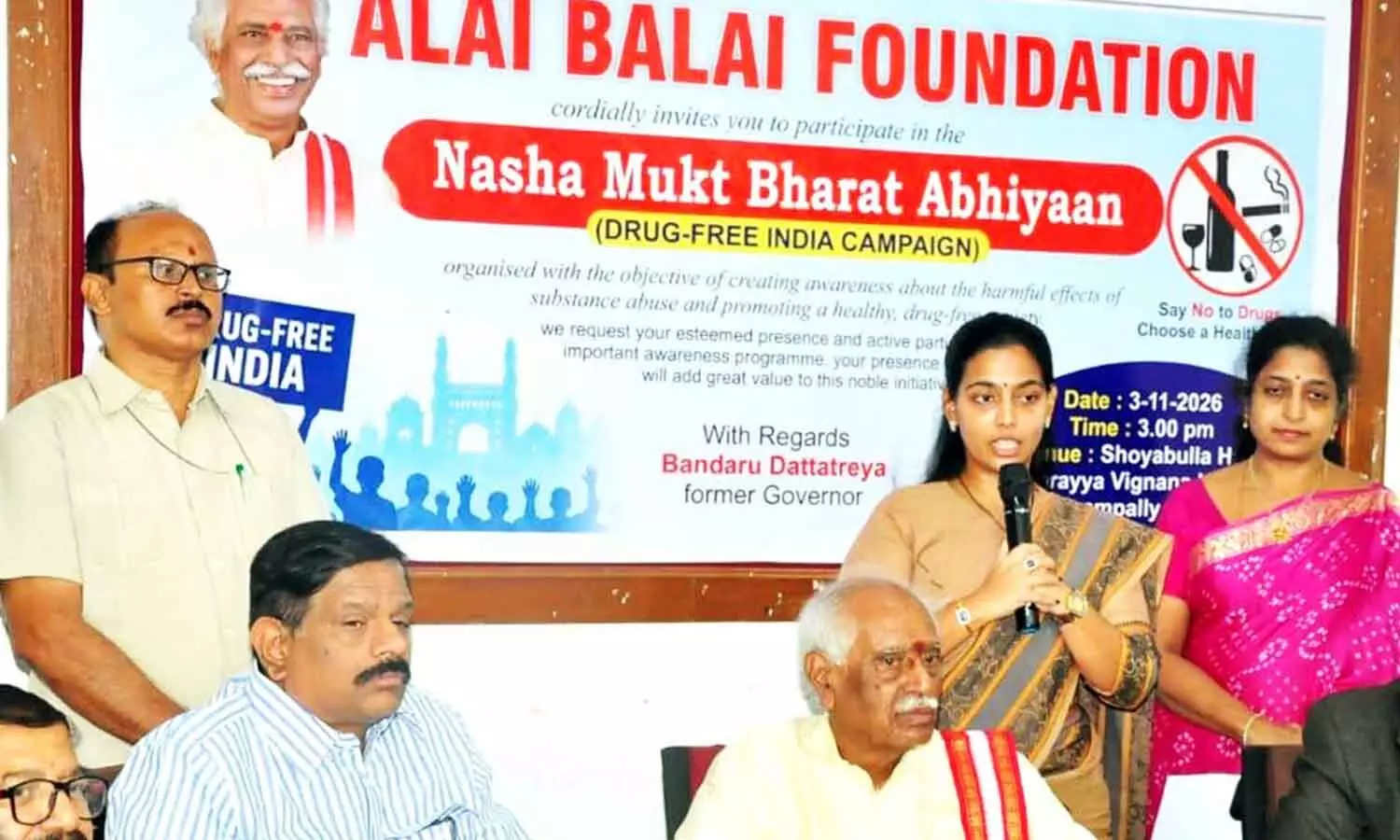
The Alai Balai Foundation in Telangana has launched a new campaign, “Nasha Mukt Bharat–Nasha Mukt Telangana,” to create social awareness about the growing menace of drug abuse among youth.
The foundation proposes to adopt a multi-pronged approach to reach out to people across Telangana. It has drawn up an elaborate plan to spread awareness through various initiatives, including direct interaction with educational institutions and involving civil society organisations, NGOs, community leaders, media organisations, law enforcement agencies, retired IAS and IPS officers, and intellectuals.
The outreach programme will cover all 33 districts of Telangana. It proposes sustained engagement with individuals and organisations working to bring about positive change in society.
According to foundation chairman Vijaya and former Haryana Governor Bandaru Dattatreya, the plan is to work with various social organisations and institutions to create awareness about substance abuse, provide mental health counselling to affected individuals, and extend support to their families. A comprehensive strategy for coordinating these efforts was discussed at the meeting.
At a preparatory meeting held on Tuesday, participants felt that the vision of Nasha Mukt Bharat should be to create a society in which young people are free from the influence of narcotic drugs and psychotropic substances, families are protected from the devastating consequences of addiction, and individuals struggling with substance dependence receive treatment, rehabilitation and an opportunity to rebuild their lives.
So, the question is: How do we tackle this menace?
The members said the solution rests on three important pillars: awareness, community participation, and treatment and rehabilitation.
However, we must recognise one fundamental truth: drug addiction cannot be eliminated through police action alone or through legislation. It requires a sustained partnership involving parents, the government, educational institutions, the media, civil society and the community.
According to a national survey conducted by the Ministry of Social Justice and Empowerment in collaboration with AIIMS around 2018, approximately 16 crore people in India were estimated to consume alcohol. Around 3.1 crore people were estimated to use cannabis products, while approximately 2.26 crore were estimated to use opioids. Nearly 60 lakh people were estimated to need help for opioid-related problems.
These figures are based on the 2018 survey, and the actual numbers may have changed since then. Nevertheless, they demonstrate the scale of the challenge facing the country.
Young people are especially vulnerable to experimentation, peer pressure, the misuse of social media, stress, misinformation and the easy availability of addictive substances, the members said.
Some argue that educational institutions must become the first line of defence against drug abuse. But the first line of defence must begin at home, with parents. It is primarily their responsibility to keep a close watch on what their children are doing, who their friends are, what kind of content they are watching on social media platforms, and whether they are exhibiting any behavioural changes. Parents must take timely measures to guide their children and help them correct their course, the members said.
They must maintain open communication with their children. Instead of reacting with anger or humiliation when they discover substance use, parents should show empathy, understand the underlying problem, and seek professional guidance and treatment at the earliest opportunity.
Then comes the role of educational institutions.
Schools and colleges should not restrict themselves to occasional lectures or ceremonial anti-drug pledges. Drug awareness must become a continuous part of the educational curriculum.
At least once a week, educational institutions should devote one or two periods to age-appropriate lessons explaining the physical, psychological, social and financial consequences of drug abuse.
They should also establish student volunteer groups under the guidance of trained teachers to promote drug-free campuses. Elocution and essay-writing competitions, debates and skits should be organised to highlight the harmful consequences of drug abuse and educate students on how to protect themselves from this menace.
Educational institutions should also provide counselling facilities. Students showing signs of distress or substance dependence must receive confidential professional assistance free of charge.
Regular parent-teacher sessions should be organised to help parents recognise early warning signs.
Strict campus vigilance is equally important. The sale of tobacco products within 100 metres of educational institutions is prohibited under the law. This restriction must be strictly enforced, and drug peddling in and around campuses must be prevented. This is not an easy task, as there could be tremendous pressure, but it is nevertheless extremely important, the members added.
Media organisations must take up this movement in mission mode. They can rope in industries, including pharmaceutical companies, doctors, hospitals and institutions specialising in counselling and rehabilitation, to sponsor specially curated programmes and campaigns under the Nasha Mukt Bharat initiative, the committee said.
Newspapers, television channels and digital platforms must run sustained awareness campaigns. Drug addiction should not become a subject of discussion only when a celebrity is involved or a major drug racket is exposed. Social media platforms must be encouraged to act against online drug marketing, illegal supply networks and content that normalises substance abuse.
The foundation has unveiled a clear roadmap and proposes to launch on-ground activities soon after Deepawali.
Vote Chori’ Rally: Congress Suspends Youth Wing Functionaries
Drug Menace Takes Centre Stage as Rahul Launches Punjab Poll Campaign
AP Home Minister Anitha Reviews Cyclone Relief Efforts
Telangana aims for $3T Economy Through Deep Tech: Bhatti Vikramarka
AP SEC Reviews Arrangements for MPTC and ZPTC Polls
AP Govt Seeks Rs 4500 cr Immediate Central Assistance for Twin Cyclone Damages


