






- iPhone 17 Pro price drops to Rs 54,990 at Reliance Digital with offers
- Irumudi Actress Priya Bhavani Shankar Ties The Knot With Her Long-Time Boyfriend Raj
- Maharashtra CEO debunks claims of polling irregularities in 2024 elections
- Matwada Woman Constable Wins Two Medals in Police Sports Meet
- Praveen’s Latest Update Raises Buzz Around Chiranjeevi’s Vishwambhara
- Siddhu Jonnalagadda’s 10th Movie Gets Launched Officially
- Kalvakuntla Kavitha Urges Graduates to Register to Vote
- TOMCOM to Hold Registration Drive for Overseas Jobs in Mahabubabad on November 13
SP's Promising Start Losing Steam as Akhilesh Drifts to Old Issues
In Short
Akhilesh Yadav intensifies his attack on the BJP over demonetisation, corruption and law and order as political campaigning heats up ahead of the Uttar Pradesh Assembly elections.

Share :
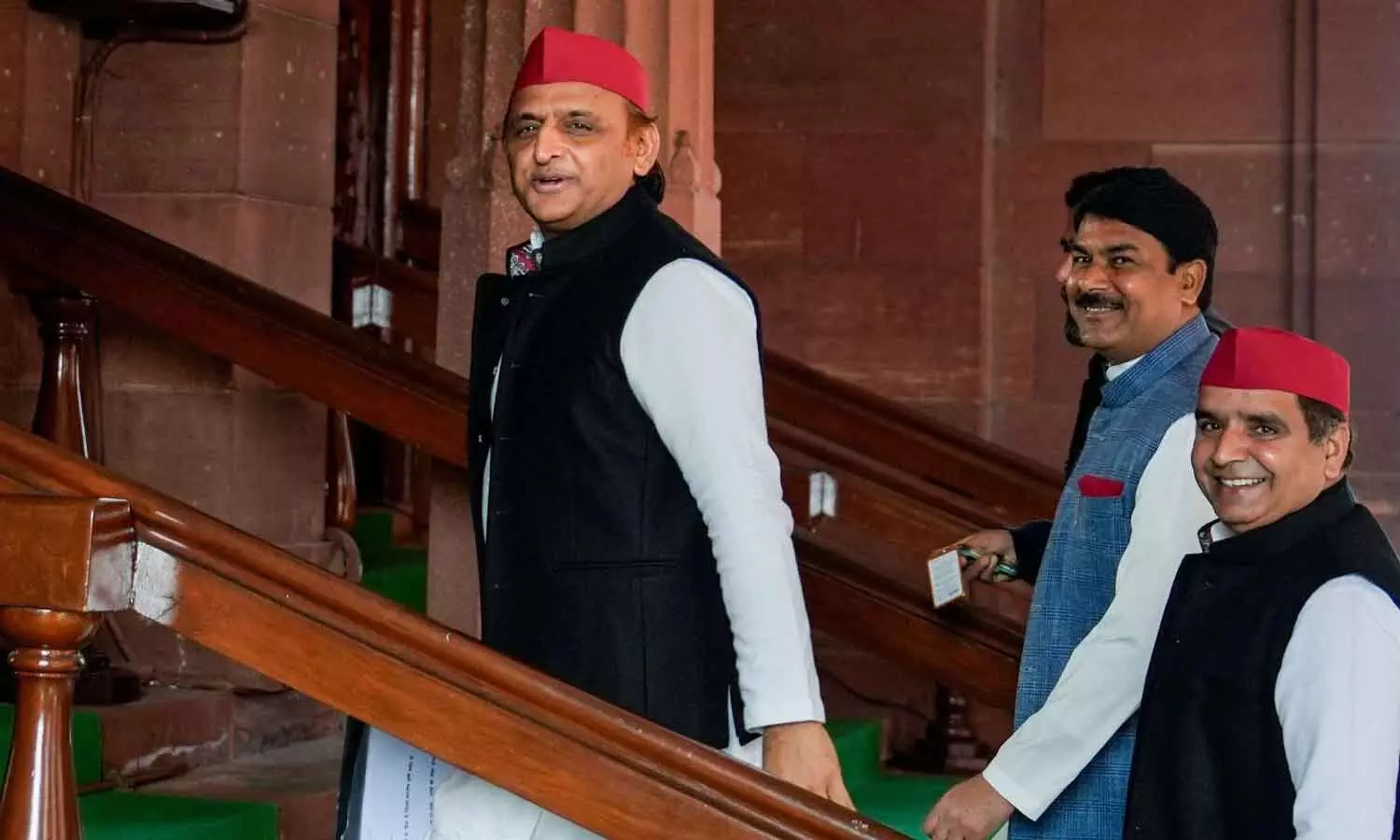
SP's Promising Start Losing Steam as Akhilesh Drifts to Old Issues
The Opposition parties in Uttar Pradesh, including the Samajwadi Party (SP), seem to be getting entangled in non-issues during their election campaign.
Samajwadi Party president Akhilesh Yadav, who had so far been giving Chief Minister Yogi Adityanath a tough time by raising policy issues, including alleged bulldozer justice, now seems to be drifting towards issues such as demonetisation, which have largely become a non-issue.
In a scathing attack on the BJP, Akhilesh termed demonetisation (the note ban) the "most corrupt decision in the world's history" and warned that it would prove to be a "vote ban" for the ruling party in the state.
Addressing a press conference, Akhilesh Yadav said the country's economy had suffered a death blow due to the note ban imposed by the Narendra Modi government in 2016, with the Micro, Small and Medium Enterprises (MSME) sector suffering the worst setback.
He alleged that demonetisation had failed to achieve its stated objectives, hurt small businesses and MSMEs, and damaged the country's banking system.
Notably, the Central government had announced the demonetisation of high-value currency notes, effective from November 8, 2016, with the stated objectives of curbing tax evasion and tackling black money.
He also predicted that the electoral battle in UP would be 95:5, indicating that the BJP would be wiped out. His remark was in response to Chief Minister Yogi Adityanath's assertion that the contest would be 80:20, with the SP facing a major defeat.
Such claims may make good headlines and serve political rhetoric, but the ground situation, as of now, indicates that the SP cannot come to power on its own. It is also not receiving the kind of support it expected from the Congress, which is yet to enter the serious campaign fray.
Akhilesh also took a 'Khazanchi' dig at the BJP, stating that the boy born during demonetisation had now turned ten, yet the BJP had never celebrated his birthday.
"The BJP should now 'adopt' him—though not in the same way its leaders 'adopted' villages. To this day, it is the Samajwadi family that continues to look after Khazanchi and his education," he remarked.
The SP president also targeted the Yogi Adityanath government over the state's law-and-order situation, alleging that corruption in Uttar Pradesh had reached its peak. Citing incidents such as the Hathras case, he questioned the government's handling of law and order.
He expressed confidence that the BJP would suffer a crushing defeat in the Assembly elections.
CM Chandrababu assigns lift schemes to Jalaharati Corporation
SP's Promising Start Losing Steam as Akhilesh Drifts to Old Issues
Low Pressure Area system may affect the coastal belt, AP to receive rains
Winter Chill Sets in the Hills, Political Heat to Rise in UP and Punjab
Things will be known at appropriate time: Sunetra Pawar on NCP merger talks
Vijayasai Reddy launches new political party, emphasised


